
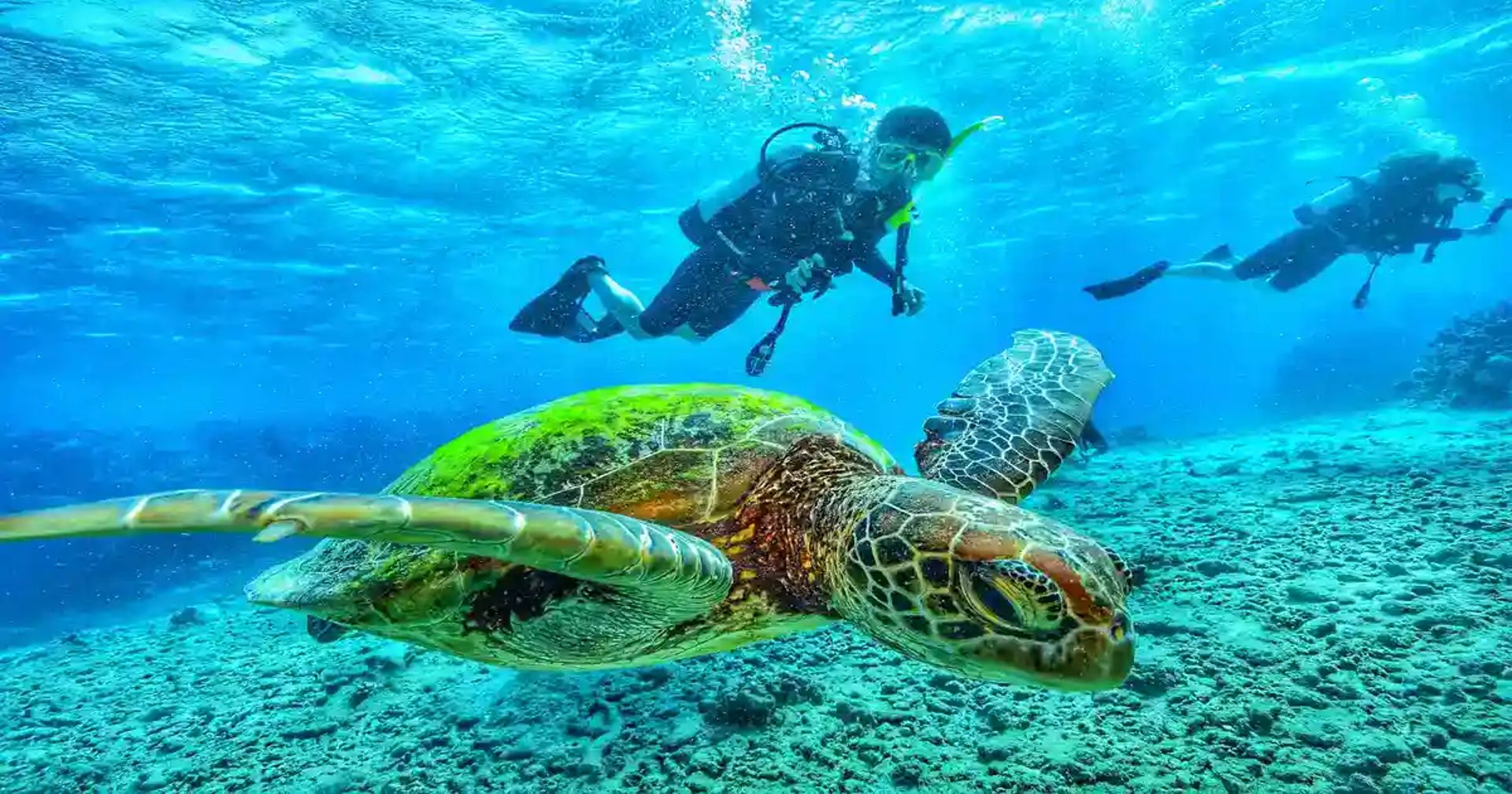
Abu Dabbab is the best-known turtle spot on this coast, and for good reason. The bay is sheltered, the water is shallow near the sand, and the seagrass below is food. Where there is food, green turtles come, and you can watch them from just a few strokes out.
It is also a good place to be honest about wildlife. Turtles are usually there. A dugong is not. Both are wild, and neither works to a timetable.
The bay itself
The bay is a curve of pale sand with a gentle slope into the water. Seagrass grows in patches on the sandy floor, and the turtles move between those patches to graze. Further out the bottom drops and small coral heads appear, with reef fish around them.
Because you walk in from the beach, there is no ladder, no boat deck and no jump. That is a real plus for nervous swimmers and for families with older children.
The sand gets hot by late morning, so keep your sandals on until you reach the water. There is little shade on the beach itself, and sun beds and umbrellas are not part of our trip. A hat and a long-sleeved rash vest are the cheapest shade you can bring.
How the morning runs
- 07:30 – pick-up from your hotel
- 08:30 – arrive at the bay
- 08:45 to 11:30 – snorkel over the seagrass, with free time on the sand
- 11:30 – tea and a light snack
- 12:30 – transfer back to your hotel
The guide briefs the group on the beach, checks your mask fit, and points out where the turtles tend to feed that day. After that you are free to swim at your own pace. Many people go in twice, with a rest on the sand between.
Many people ask whether it is better to go early or late. Our trip starts early on purpose. Mornings are usually calmer, the light is soft, and the bay has fewer people in it. By midday the wind can pick up, and the water gets choppier.
How to behave around turtles
Green turtles need to surface to breathe. If you crowd one, it may skip a breath or swim off in alarm. Float quietly, let it come and go, and keep your fins still when it passes below you.
Do not chase, ride or grab. Do not stand on the seagrass either, since it is the whole reason the turtles are here. Your guide will remind you, and it takes care of the bay for the next visitors.
A good rule is to let the turtle make the decisions. If it swims toward you, hold still. If it swims away, let it go. Turtles that feel safe will often keep feeding right beside you, and that is when you see them at their best.
About the dugong
A dugong grazes in the area now and then. People who see one often remember it for years. But it is rare, shy and unpredictable, so we never list it as a promise. If one appears, the guide will tell the group and ask everyone to keep still and keep back.
Dugongs are related to manatees and feed on seagrass much as turtles do, which is why they are sometimes found in the same bay. They are quiet, slow animals and easily disturbed. Keeping still and keeping back gives them the best chance of staying.
When to go
The bay is open all year. Winter water is around 22 to 24 degrees Celsius, and a thin wetsuit top helps if you chill easily. Late summer water is closer to 28 to 30 degrees, and the sun is fierce, so cover your back. Early morning light is calm in both seasons.
Visibility is generally good in the morning, though wind and swell can stir the sand. If the guide tells you the bay is rough, they may suggest a different part of the beach. Trust their read of the water on the day.
Plan with us
Swimming with turtles at Abu Dabbab: what to expect
What a morning at Abu Dabbab Bay is really like: the seagrass, the turtles, the chance of a dugong, how to behave in the water and when to go.