
Our promise ·
The most responsible thingwe do is be Egyptian.
There's a lot of 'eco' language in this industry and not much behind it. So here's ours, said plainly. We're a Cairo-based company. Your guide is a licensed Egyptologist we've worked with for years, your drivers are on our payroll and paid above market, and the money you spend largely stays in Egypt. This is a short letter about what responsible travel means when the operator lives where you're going.
– Suhaila & the Cairo desk

The case, briefly
Most Egypt trips are sold by companies that have never had an office here. They mark up a package, subcontract the ground work to whoever's cheapest that season, and keep the margin abroad. The guide you meet was hired for the morning. The driver is on a day rate that clears barely anything after the middleman. That's the model responsible travel is quietly up against – and it's why a badge on a website means so little.
We've run Egypt from Egypt for 38 years. Our guides are licensed Egyptologists we've worked with for years, our drivers and boat crews are on the payroll and paid above market, and we follow the antiquities protocols because these sites are our history before they're your holiday. None of it is dramatic. It's just what happens when the company is Egyptian and the money stays home. Three pillars below, then a plain ledger of what we actually commit to.

The person guiding you works here. Year-round, on payroll, paid properly.
How it actually works
Three pillars. People, places, footprint.

The people
The same Egyptologists, year after year
Every guide is a licensed Egyptologist we've worked with for years – not a freelancer booked for the morning and dropped at noon. They're independents, because the good ones in Egypt prefer keeping their own diary, and we'd rather work with the ones in demand. The person telling you about Karnak has guided for us many times before and will again.
See how
The places
We travel the sites the way they're meant to survive
We follow the Ministry of Tourism and Antiquities visitor caps and the no-touch, no-flash protocols at every site – and we time our visits against the coach rotation so groups thin out, not pile up. Preservation isn't a line in a brochure here; it's the reason there's anything left to show you.
See how
The footprint
The money stays in Egypt, the flights stay honest
Drivers, guides, boat crews, hotel staff – paid above local market and paid on time. We add domestic flights only when train or road genuinely won't work, and we say so when a slower option is the greener one. An Egyptian company keeps Egyptian money circulating; that's the quiet part most operators skip.
See how
The plain ledger
What we commit to, without the badge language.
- Guides
Licensed Egyptologists, the same ones each season
Credentialed independents we book year after year. Not day-hire strangers.
- Wages
Drivers and crew paid above local market
Above-market, on time, every trip. The ground team is ours, not a subcontract.
- Sites
MoTA visitor caps and no-touch protocols
We honour the caps, the no-flash rules, and the coach-avoidance timing at every site.
- Carbon
Domestic flights only when road or rail won't do
We default to train and road where they work, and say so when the slower way is greener.
- Local spend
Egyptian-owned, so the money stays here
No overseas head office skimming margin. What you spend largely circulates in Egypt.
- People
No AI-generated faces, no staged 'locals'
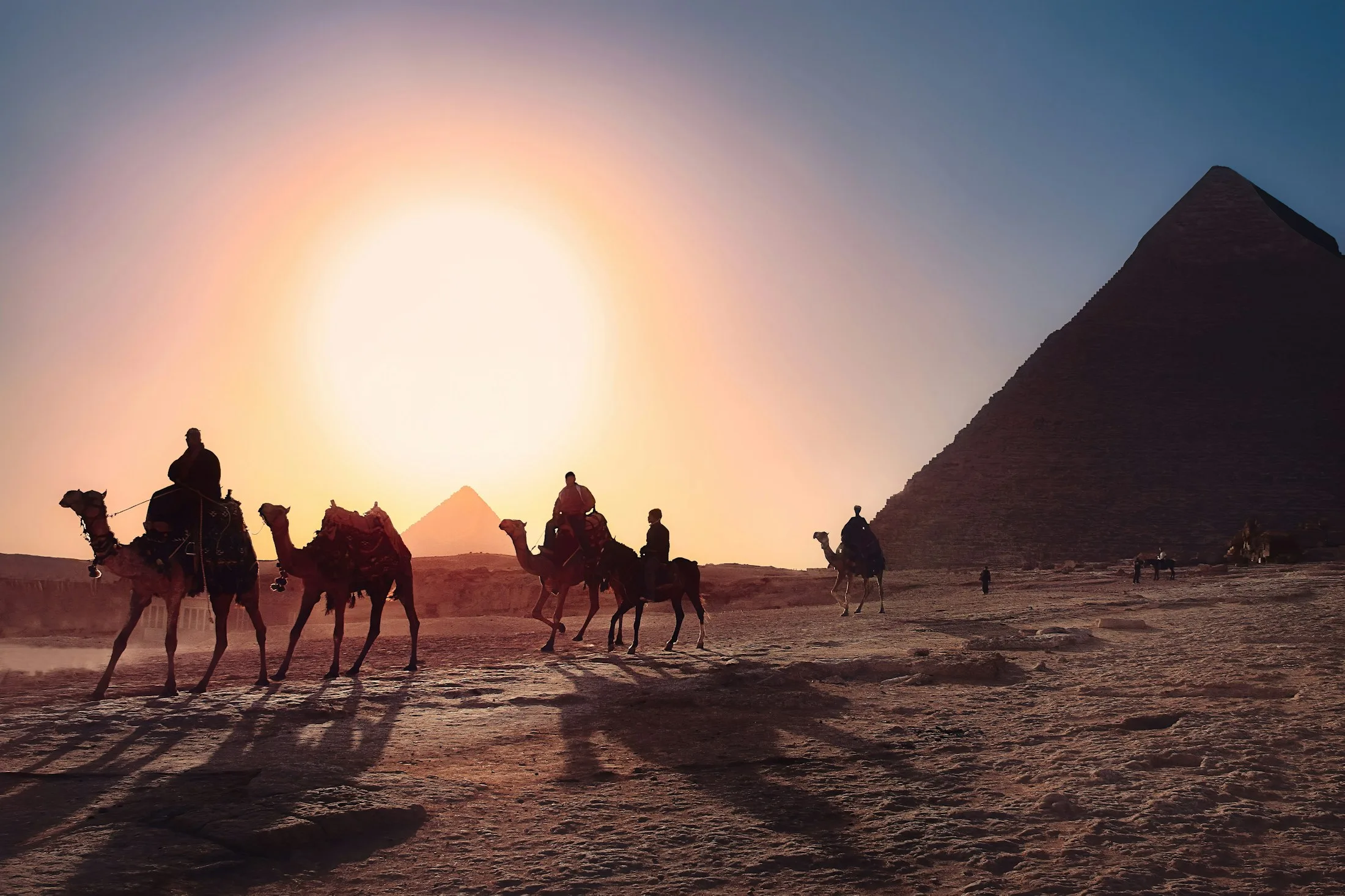
The people in our photos are our actual team and real crews. We color-grade images to match; we never invent a person or a monument.
Travel it the way it's meant to last.
The honest questions
Six things worth asking before you book anyone.
01What makes an Egypt-based operator more responsible than a Western one?
The money. When you book through a London or New York operator, a large slice of what you pay stays abroad as margin, and your ground handling is subcontracted to whoever's cheapest that week. We're the ground handler. Drivers, boat crews and office staff are on our payroll; the Egyptologists are licensed independents we've worked with for years. Everyone is paid above local market and paid on time. The bulk of your spend circulates inside Egypt, which is the single biggest thing 'responsible travel' can actually mean.
02Are your guides really employed, or freelancers you call 'staff'?
Neither, and the honest answer is more useful than either. Our Egyptologists are licensed independents, not salaried staff — because in Egypt the good ones don't want to be. A guide in demand would rather keep their own diary than be tied to one company, and we'd rather work with the ones who are in demand. What we do instead is use the same small circle, year after year. The person explaining Karnak to you has very likely guided for us dozens of times and will again next month. We're not going to call that employment. But it is the opposite of taking whoever an app offers you on the morning, which is the thing the question is really asking about.
03How do you protect the sites you visit?
We follow the Ministry of Tourism and Antiquities visitor caps and the no-touch, no-flash rules at every monument – and, just as importantly, we time visits against the coach-group rotation our offices watch daily, so you arrive when a site is quiet rather than adding to a crush. Over-crowding is what wears the sites down; avoiding it is preservation in practice.
04What about the carbon of flying to Egypt and flying internally?
We can't pretend a long-haul flight is green – it isn't, and we won't sell you a carbon-offset badge to feel better. What we control is the ground. We default to train and road between cities where they work, and add a domestic flight only when the alternative genuinely doesn't – and we'll tell you plainly when the slower option is the lower-carbon one.
05Do you use AI-generated or stock photos of 'happy locals'?
Partly – and here is exactly where the line sits, because a flat 'no' would be the easy answer rather than the true one. The people are always real: our own team and the crews you will actually travel with. We never generate a face, and we never generate a monument – a model invents detail that is not there, and you would arrive to find something different from the picture that sold it to you. Where we do use AI is in the finishing. Our images reach us from many places – suppliers, different cameras, different years, wildly different light – so we color-match and tidy them rather than publish a page that looks like six unrelated postcards. The scene in the frame is real; the grading is ours. The only fully AI-made pictures here are atmospheric – a texture, a pattern, a mood – never a place you can book, and never a person.
06Can I ask you to make my trip lower-impact?
Yes, and we'd welcome it. Ask for the rail-and-road version instead of internal flights, smaller vehicles, locally-owned hotels, or a dahabiya under sail instead of a motor cruiser. Tell us what matters and we'll build the itinerary around it – it's easier for us to do because the whole operation is ours to arrange.
Ask us to build your trip the lower-impact way. Rail over flights, smaller vehicles, locally-owned hotels, a dahabiya under sail. We'll come back within a working day.
Write to the Cairo desk– Suhaila · Discovery Tours Egypt