
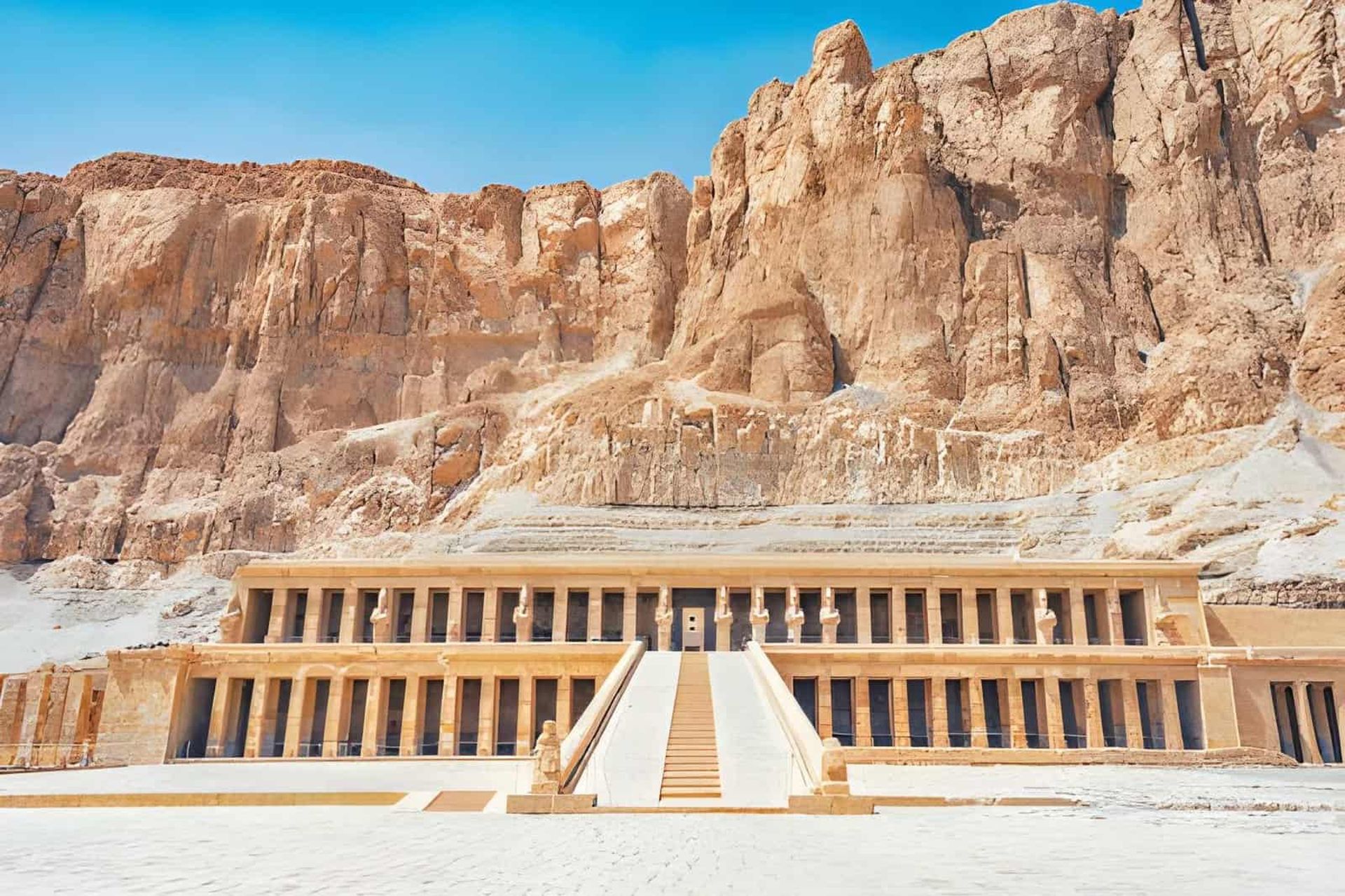
Temple of Hatshepsut at a glance
The Temple of Hatshepsut is a terraced temple at Deir el-Bahari on Luxor’s West Bank, built during the reign of Queen Hatshepsut (about 1473–1458 BC). It is open every day from 6:00 am to 5:00 pm, and foreign adults pay EGP 440 to enter.
- Where: Deir el-Bahari, on Luxor’s West Bank, directly across the Nile from Karnak Temple
- Hours: 6:00 am to 5:00 pm, every day
- Ticket: EGP 440 for foreign adults, EGP 220 for foreign students
- Time needed: 45 minutes to 1.5 hours
- Best time: early morning, and October to April if you can choose
We checked the price and hours on the Ministry of Tourism and Antiquities page on November 20, 2026. Rates change, so look again before you go. If you would rather have it arranged, we sell a Hatshepsut temple ticket and run guided days on the West Bank.
What is the Temple of Hatshepsut?
Its ancient name was Djeser-djeseru, “the Holy of Holies.” Senenmut, the queen’s chief steward, designed it as a mortuary temple, where her cult was kept up after her death. It is also a temple of Amun, with shrines to Hathor and Anubis and an open-air altar to the sun god Ra-Horakhty.
The temple stands against a limestone cliff, with three colonnaded levels rising in a straight line. It is easier to read than the crowded tombs of the Valley of the Kings, and easy to walk on a guided visit.
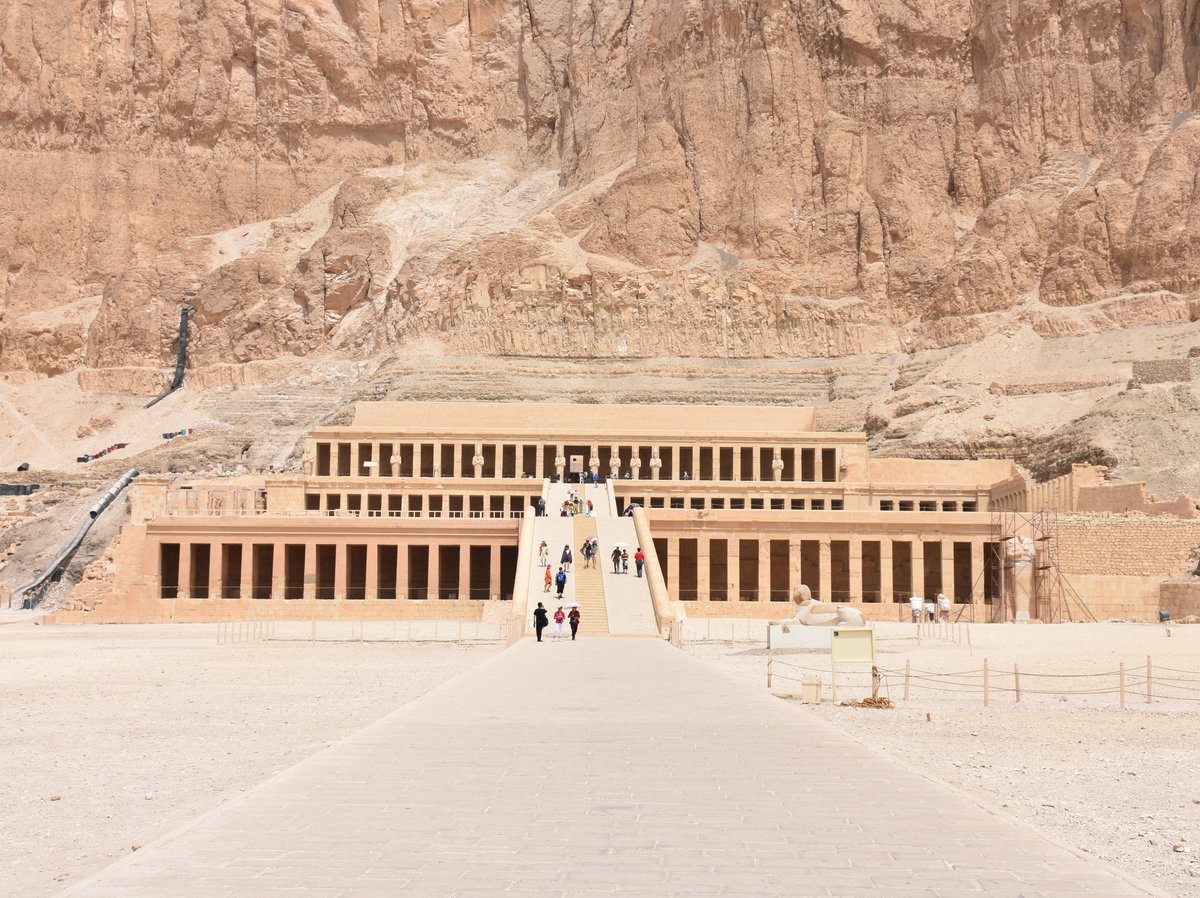
Tickets, opening hours and how to get there
Foreign visitors pay EGP 440 for adults and EGP 220 for students. Egyptian citizens pay EGP 40 and EGP 20. The temple is open daily from 6:00 am to 5:00 pm. Tickets are sold at the site’s ticket office.
The temple is on the West Bank, a short drive from the river crossing at Luxor town. Most visitors arrive with a private driver, a taxi or a guided tour. From the ticket area, a small electric shuttle usually runs toward the temple for a small extra fee. Ask on arrival, because it can change.
Our private West Bank day tour takes in the temple, the Valley of the Kings and Medinet Habu with an Egyptologist, and handles the driving.
Who was Queen Hatshepsut?
Hatshepsut ruled Egypt in the 18th Dynasty. She was the daughter of Thutmose I and the wife of Thutmose II. After her husband died she ruled first as regent for the young Thutmose III, then took the throne as pharaoh.
Statues and reliefs show her in full royal dress, including the ceremonial false beard. Her reign is remembered for trade and building more than for war, and this temple is the best-known result.
Why Deir el-Bahari, and how the temple is laid out
Deir el-Bahari was already a sacred place. Building here tied her temple to earlier kings and set it in the cliff-backed bowl of the West Bank, opposite Karnak. The plan is simple and symmetrical: three levels joined by long ramps, each with a colonnade at the far end.
- Lower terrace: the open forecourt, once planted with trees
- Middle terrace: the best-known reliefs, plus the chapels of Hathor and Anubis
- Upper terrace: an open courtyard with statues of Hatshepsut as Osiris, and the sanctuary of Amun cut into the rock
What to look for inside the temple
On the middle terrace, the left side of the portico records the expedition to Punt, a land thought to lie near modern Eritrea. The reliefs show ships, villages, exotic animals and the goods carried home.
The other side makes her case as rightful king. She says her father Thutmose I named her heir, and that her true father was the god Amun himself.
- The Punt reliefs: ships, incense trees and animals brought back to Egypt
- The birth scenes: Amun’s claim that Hatshepsut was his child
- The Hathor and Anubis chapels on the middle terrace
- The Osiris statues leaning on the pillars of the upper courtyard
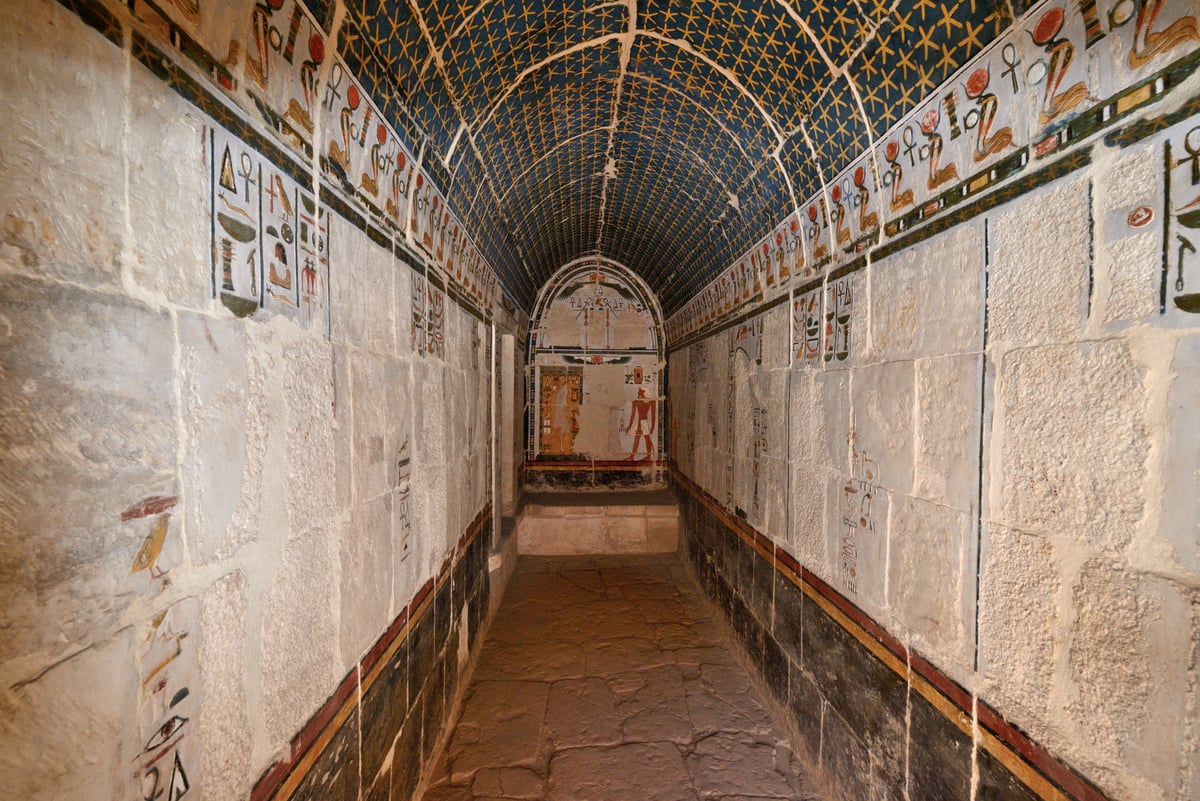
Where was Hatshepsut buried?
Not here. The temple was for offerings and memory. Her tomb, KV20, is in the Valley of the Kings. Howard Carter cleared it in 1903–04 and found her sarcophagus and canopic chest, but not her mummy.
In 2007, Egyptian authorities announced that a female mummy from a smaller tomb, KV60, was Hatshepsut, based on a CT scan of a tooth found in a box bearing her name. Some Egyptologists remain cautious about the identification. For the tombs that are open to visitors, see our Valley of the Kings ticket.
How long to allow and what to bring
Plan 45 minutes to 1.5 hours. Shade is limited and the limestone reflects the sun, so go early. Wear sturdy shoes and bring water and a hat. Ramps and steps are steep and uneven, and wheelchair access is limited beyond the lower terrace.
Combine it with the rest of the West Bank
Most visitors pair the temple with the Valley of the Kings, the Colossi of Memnon and Medinet Habu in a single day. Our guide to choosing a Luxor day trip compares the options, and our Luxor page shows what else we arrange there.
Winter is the easiest season for the open terraces. See the best time to visit Egypt month by month for weather and prices.
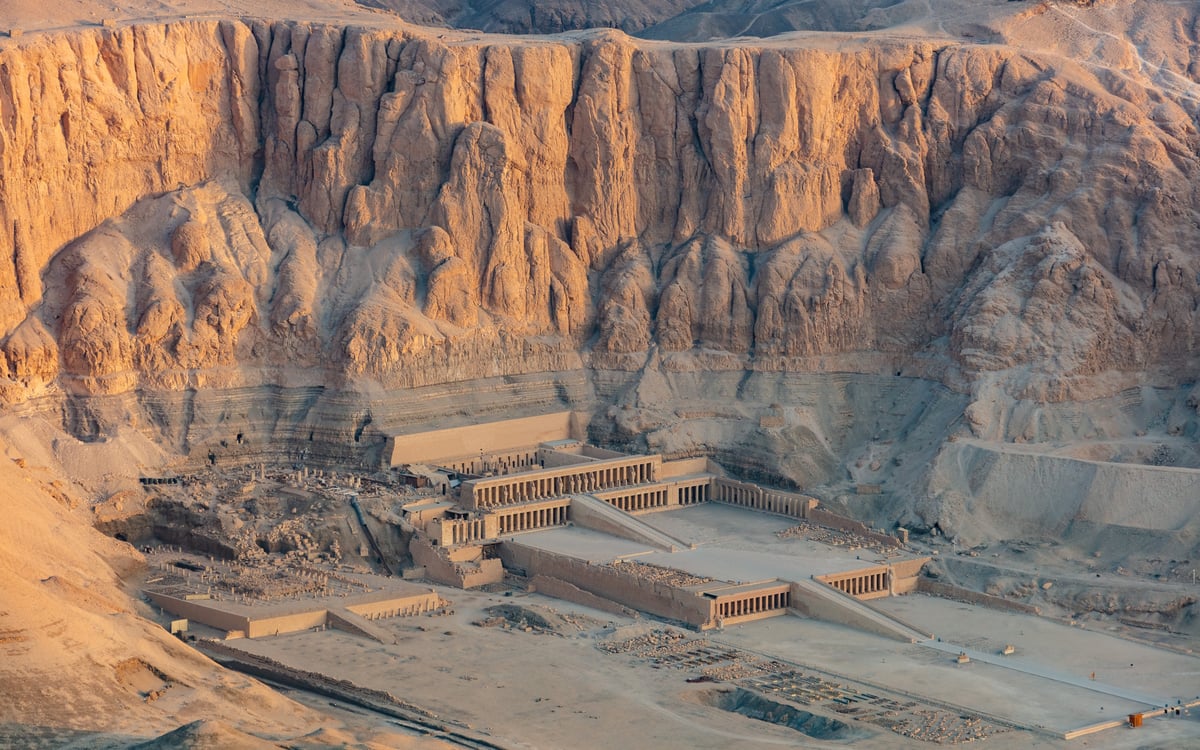
Why the temple still matters
Many images of Hatshepsut were defaced after her death, likely under Thutmose III, yet the temple survived. A Polish-Egyptian expedition, founded in 1961 by Kazimierz Michałowski, has worked to reconstruct it since then, as the expedition’s own site explains. The temple is part of Ancient Thebes with its Necropolis, a UNESCO World Heritage Site.
Plan with us
Temple of Hatshepsut (Deir el-Bahari): Tickets, Hours and Visitor Guide
Visiting Hatshepsut’s temple at Deir el-Bahari? Official ticket price (EGP 440), opening hours, how to get there, what to see and how long to allow.