
What makes Luxor the City of Monuments and Ancient Wonders?
Luxor: The City of Monuments and Ancient Wonders is the easiest place in Egypt to see major ancient sites in one trip. The city sits on the Nile in Upper Egypt and holds temples, royal tombs, and riverfront views that explain why travelers keep coming back.
Luxor works because the monuments are close together, but the experience still feels varied. You can spend the morning inside painted tombs, cross the river, then finish with a sunset sail or an evening temple visit.
Which Luxor attractions should you see first?
The Valley of the Kings, Karnak Temple, Luxor Temple, the Temple of Hatshepsut, and the Colossi of Memnon are the core stops in Luxor. Those sites give you the clearest picture of royal burial, temple ritual, female rule, and ancient monument building.
Why start with the Valley of the Kings?
The Valley of the Kings is Luxor’s most famous tomb site and the burial place of powerful Pharaohs, including Tutankhamun. The painted corridors are the main draw, and the site is best visited earlier in the day before heat builds.
Travelers usually remember the colors inside the tombs more than the valley itself. The rock-cut chambers are narrow, so move slowly and give your eyes a moment to adjust to the details.
What should you know about Karnak Temple?
Karnak Temple is one of Egypt’s largest and most important religious sites, and the complex spans more than 200 acres. The Hypostyle Hall is the best-known part of the site, with huge columns that make the scale easy to feel on the ground.
Karnak rewards a guide because the site is large and layered with additions from different reigns. The sacred lake is another point worth seeing if you want a break from the main temple axis.
Why do travelers stop at Luxor Temple after dark?
Luxor Temple is centrally located and is known for its evening atmosphere. Amenhotep III began the temple, Ramses II expanded it, and the site was tied to the Opet Festival and the idea of kingship and renewal.
The temple feels different at night than it does in daylight. Lights pick out the columns and statues, and the city traffic fades into the background once you are inside.
Why visit the Temple of Hatshepsut and the Colossi of Memnon?
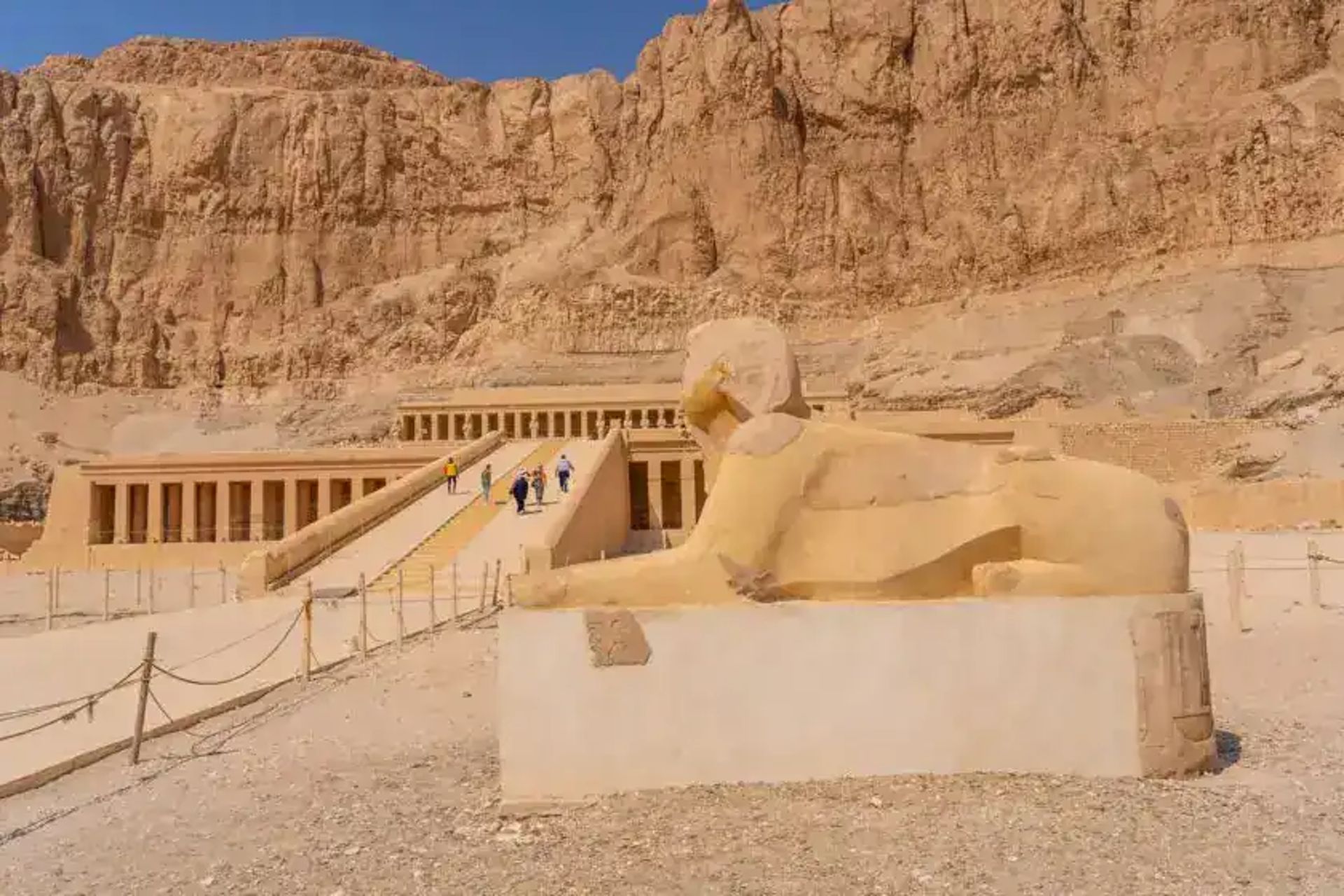
The Temple of Hatshepsut sits at Deir el-Bahari and was built for one of Egypt’s most powerful female rulers. Its terraces and reliefs make the site one of the most distinctive monuments on the west bank.
The Colossi of Memnon stand at 18 meters tall and mark the remains of Amenhotep III’s mortuary temple. Many travelers stop briefly here on the way to other west bank sites, which makes the statues an easy add to a packed day.
When is the best time to visit Luxor?
October through April is the most comfortable time to visit Luxor because temperatures are cooler. That matters in a city where temple courtyards, tomb entrances, and open monuments can feel intense under direct sun.
Morning works best for tombs and open-air sites on the west bank. Late afternoon and evening suit Luxor Temple and a Nile crossing, especially if you want softer light and less heat.
- Start early for the Valley of the Kings and Hatshepsut Temple.
- Save Karnak for late morning or midday if your schedule is tight.
- Visit Luxor Temple in the evening when the atmosphere is better.
- Leave time for a felucca ride if you want a calmer finish to the day.
How should you fit a felucca ride into a Luxor day?
A felucca ride on the Nile is the best low-effort break between monument visits. Sunset is the most pleasant time because the river looks calmer, the heat drops, and the west bank turns softer in color.
Feluccas work well after a full day of temple visits because you can sit down, slow the pace, and see Luxor from the water. That simple shift in perspective is part of what makes the city memorable.
What should you expect on a guided Luxor visit?
A guided Luxor visit helps you connect the sites instead of treating them like separate stops. Discovery Tours Egypt uses local Egyptologist guides, which matters in Luxor because the temples and tombs make more sense when someone explains the names, rulers, and ritual use on site.
Guided touring also helps with pace. The Valley of the Kings, Karnak Temple, and the west bank sites all take time to absorb, and a clear route keeps the day from feeling rushed.
How do you plan a better Luxor itinerary?
A strong Luxor itinerary puts the Valley of the Kings and the Temple of Hatshepsut on one side of the river, then pairs Karnak Temple and Luxor Temple with your east bank time. That layout cuts backtracking and keeps the day logical.
- Begin on the west bank for tombs and cliffside monuments.
- Cross back to the east bank for Karnak and Luxor Temple.
- Add a Nile sail if you want a quieter end to the day.
- Use a guide if you want the history tied together clearly.
Travelers who want a broader Egypt plan can combine Luxor with other Upper Egypt stops through an Egypt itinerary or a Nile cruise. Those options work well when you want the monuments without managing every transfer yourself.
Plan with us
Luxor: The City of Monuments and Ancient Wonders
Plan a smarter Luxor visit with top temples, tombs, and Nile views, plus the best timing for a guide-led day in Upper Egypt.