
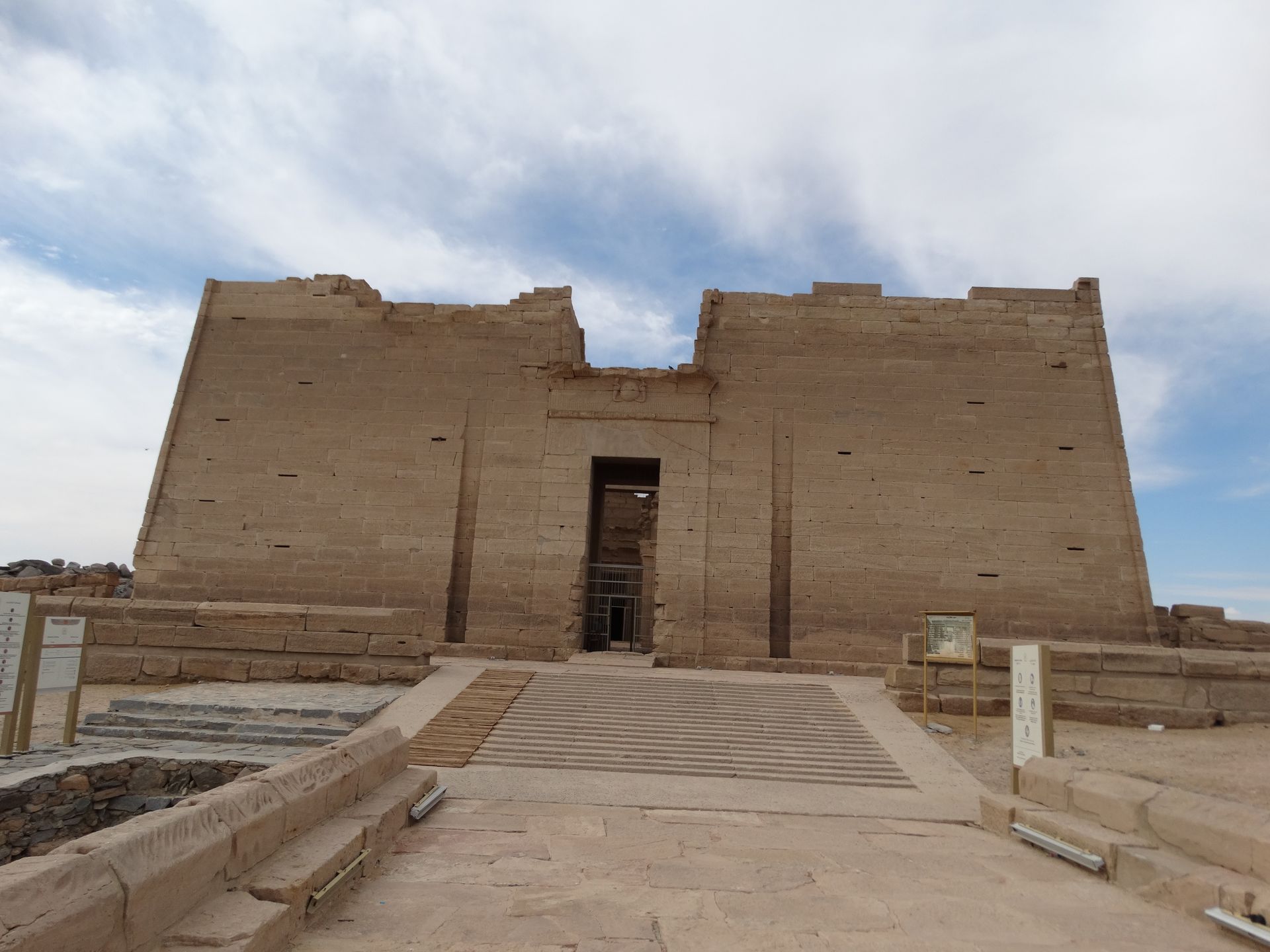
Most visitors to Aswan see Philae, which is rightly popular. Kalabsha is the other great temple moved from the old Nubian valley, and it receives only a fraction of the visitors. If you like quiet places and a good story, it is worth the boat ride.
The temple belongs to the Roman period. It was dedicated to the Nubian god Mandulis, and it is among the largest free-standing temples in Egyptian Nubia.
The move
When the High Dam was built in the 1960s, the rising waters of Lake Nasser threatened many Nubian monuments. Kalabsha was dismantled and rebuilt on a new site near the dam. It was carried out as part of an international rescue effort.
Your guide can show you how the blocks were numbered and reassembled. The sense of scale is part of the appeal, as the temple stands on an island with the lake around it.
Getting there by boat
The trip starts at a small harbor beside the High Dam. A private motorboat takes you across the water to the island. The ride is short, and it sets the mood for the visit: open water, a low horizon and no crowds.
What you see
- The main temple with its pylon, court and halls
- The Kiosk of Qertassi, a small graceful structure
- Beit el-Wali, a small rock-cut temple with scenes of Ramses II
- Views across Lake Nasser
Inside the main temple you can climb stairs to the roof for a view over the lake. Relief carvings show the emperor making offerings to the gods, a typical Roman-period theme in Egypt.
Pairing it with the Nubian Museum
Our private half-day tour combines Kalabsha with the Nubian Museum in town. The museum tells the story of Nubia across thousands of years, and it has a garden. The two together take about five hours and give a good view of the region's history.
Kalabsha is a good second temple day in Aswan, after Philae. It also works well for travelers who prefer a calm pace and who want something that few others have seen.
Why it is quiet
Kalabsha is not on the usual cruise-ship route, so tour groups rarely come. The boat transfer from the High Dam also keeps casual visitors away. The result is a site where you can walk around without a crowd, which is rare in Egypt.
The quiet makes it easier to notice details. Look at the carved scenes of the emperor before the gods, the staircase to the roof and the way the stones are fitted together after the move.
Take a moment at the edge of the island to look at the lake. The water is wide and still, and the desert comes down to the shore. It is a different feeling from the narrow green Nile valley further north.
If you only have time for one Aswan temple, Philae is the classic. If you have two, add Kalabsha.
Wear sunscreen and bring a hat, as there is little shade on the island. The boat ride back gives you a few more minutes of lake views, so keep your camera ready until the end.
Plan with us
Kalabsha Temple: a visitor guide
Kalabsha is a Nubian temple on an island near the High Dam, reached by boat. What you will see, how to get there and why it is quiet.