
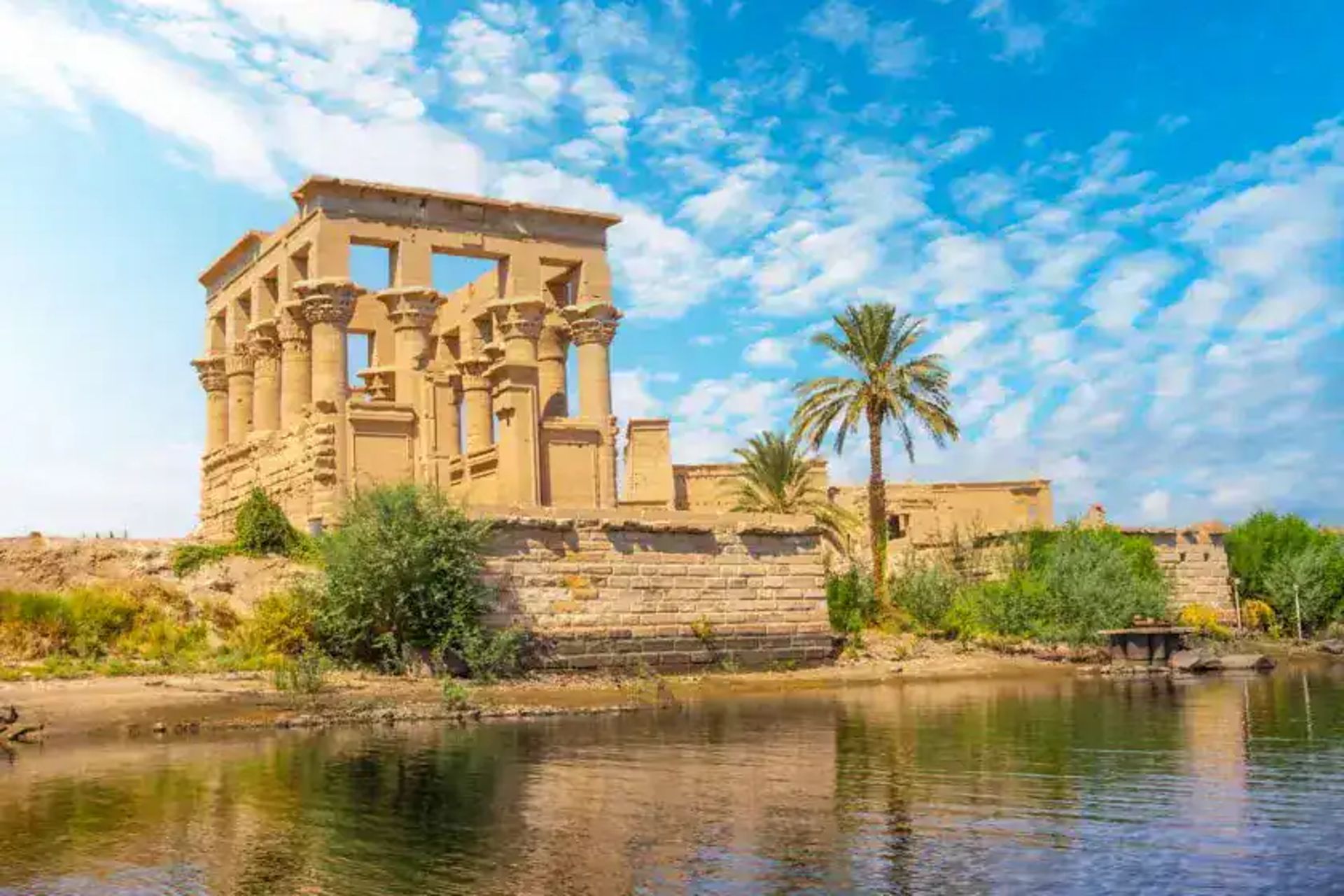
Top 5 Must-See Temples in Egypt gives you a focused way to plan temple time without trying to see everything. Karnak, Luxor, Philae, Edfu, and Hatshepsut each tell a different part of Egypt’s story, and each site feels different on the ground.
Which temples in Egypt should be on a first trip?
A first temple itinerary in Egypt should include Karnak Temple Complex, Luxor Temple, Philae Temple, Edfu Temple, and Hatshepsut’s temple at Deir el-Bahari. These five sites give you the clearest mix of size, preservation, setting, and historical meaning without turning your trip into a checklist.
Karnak is the place to start if you want scale. Luxor Temple gives you a strong evening visit. Philae adds a boat ride and island setting. Edfu is the temple that feels most intact. Hatshepsut’s terraces show how Egyptian temple design could change when a ruler wanted something different.
- Karnak Temple Complex, Luxor
- Luxor Temple, Luxor
- Temple of Philae, Aswan
- Temple of Edfu, Edfu
- Temple of Hatshepsut, Deir el-Bahari, Luxor
Why is Karnak Temple Complex so important?
Karnak Temple Complex is Egypt’s most imposing temple site because of its size, its many building phases, and its Great Hypostyle Hall. The hall alone has 134 columns, and the whole complex makes the scale of ancient Egyptian state religion easy to feel.
Karnak sits in modern Luxor, on the east bank of the Nile. Ancient Thebes grew around this religious center, and rulers expanded it over centuries. The result is not one temple, but a large sacred district that rewards slow walking and a good guide.
What makes Luxor Temple worth seeing at night?
Luxor Temple is worth seeing at sunset or after dark because the lighting makes the stonework easier to read and the river setting feels calm. The temple faces the Nile, which separates it from many other Egyptian temples that were aligned more directly with the sun.
The avenue of sphinxes once linked Luxor Temple to Karnak and was used for the Opet Festival procession. Walking the site now, you can still trace that ceremonial idea even though the city around it has changed completely.
Why do travelers go to Philae Temple?
Travelers go to Philae Temple for the island approach, the connection to Isis, and the rescue story that saved the complex from rising waters in the 1960s. The boat ride adds a clear sense of arrival that most mainland temples do not have.
Philae sits on Lake Nasser now, after being moved from its original island location. That relocation makes the site more than a temple visit, because the place also shows what modern archaeology can do when major monuments are threatened.
What is special about the Temple of Edfu?
The Temple of Edfu is special because it is one of Egypt’s best preserved ancient temples. Sand covered it for centuries, and that burial helped protect the structure and much of its carved detail.
Edfu is dedicated to Horus, and the walls carry scenes that explain rituals, offerings, and other parts of temple life. The carved scenes are detailed enough that the temple feels more like a visual record than a ruined monument.
Why does Hatshepsut’s temple stand out?
Hatshepsut’s temple stands out because it breaks from the more familiar pylon-and-column layout seen at Karnak and Luxor. The terraced design at Deir el-Bahari rises in layers against the cliffs, and the setting makes the whole complex feel architectural and dramatic at once.
The temple is tied to one of Egypt’s most famous rulers, and the mountain backdrop gives it a strong sense of place. Sunrise is a good time to visit because the light reaches the terraces early and the site feels more open before the heat builds.
How should you plan a temple day in Egypt?
A temple day in Egypt works best when you start early, carry water, and keep the pace realistic. Morning visits usually feel cooler and calmer, while late afternoon can work well at Luxor Temple and other open-air sites.
A knowledgeable guide helps you read the carvings, place each temple in its historical setting, and avoid treating all ruins as the same experience. Discovery Tours Egypt uses local Egyptologist guides, which matters when the site text and layout carry most of the story.
- Start early to avoid the strongest heat
- Wear comfortable walking shoes
- Bring water and sun protection
- Use a guide if you want the carvings explained clearly
- Give yourself enough time for the largest sites, especially Karnak
How do you choose the right Egypt temple tour?
The right Egypt temple tour depends on how much time you have and how far you want to travel between sites. A Luxor-focused trip works best for Karnak, Luxor, and Hatshepsut, while Aswan adds Philae. Edfu usually fits into a longer Upper Egypt route.
Discovery Tours Egypt builds temple travel around local guides and practical routing, which helps when you want to see the main sites without wasting time on transfers. Temple visits work especially well inside broader Egypt tours or Nile cruise plans.
What should you not skip at these temples?
Do not skip the Great Hypostyle Hall at Karnak, the Sphinx avenue and river-side setting at Luxor Temple, the boat approach to Philae, the reliefs at Edfu, or the terraces and cliff backdrop at Hatshepsut. Each site has one defining feature that gives the visit its main payoff.
Time is usually better spent on those signature areas than on trying to photograph every wall. Strong temple visits in Egypt come from paying attention to one or two main spaces, then moving on before fatigue takes over.
Plan with us
Top 5 Must-See Temples in Egypt
See the top 5 must-see temples in Egypt, with practical notes on Karnak, Luxor, Philae, Edfu, and Hatshepsut for travelers.