
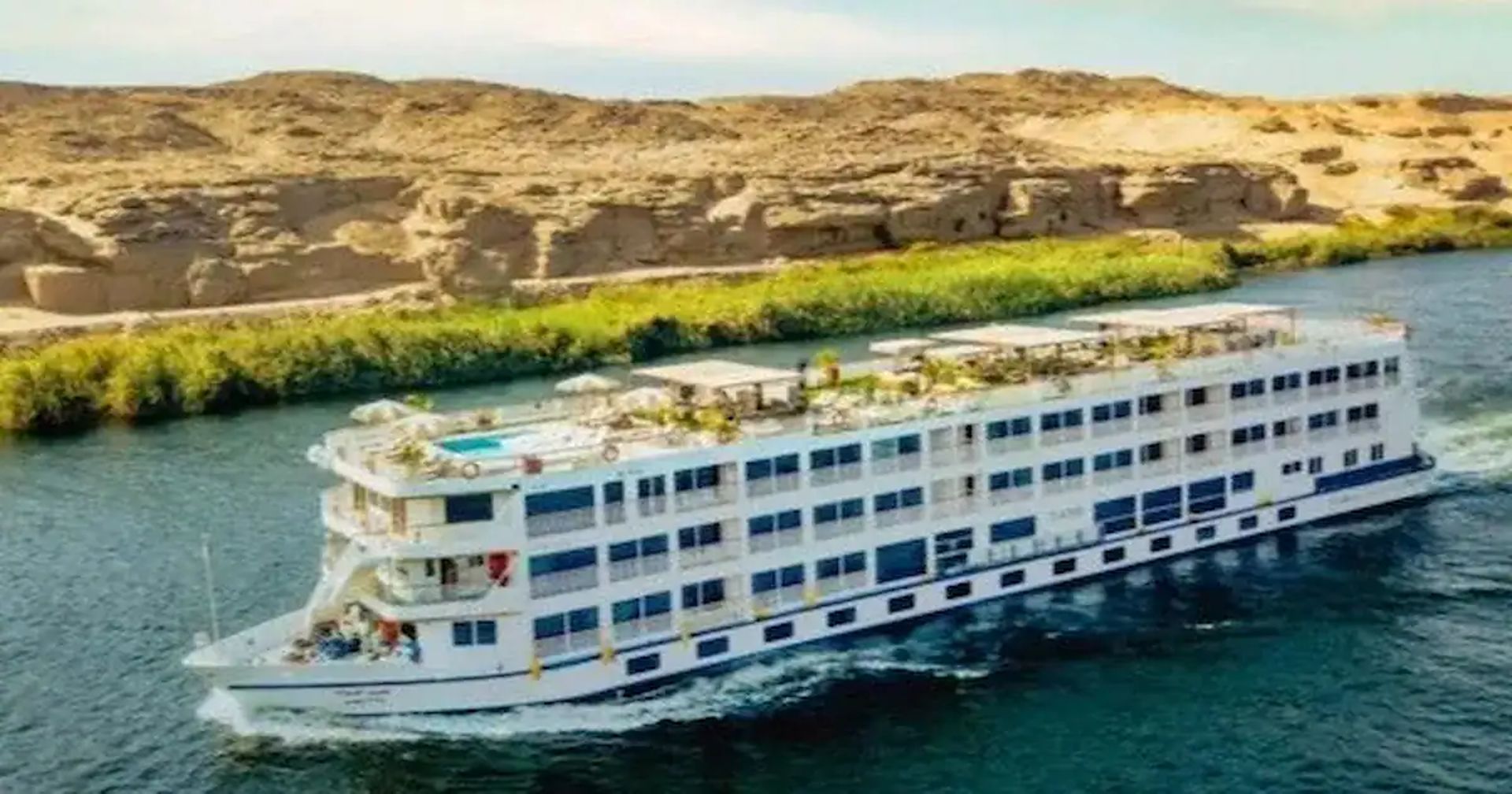
What does a typical day on a Nile cruise look like?
Most days follow an easy rhythm. You visit the big sites in the cooler morning hours with your private Egyptologist, then return to the ship for lunch and cast off. The afternoon is yours as the riverbanks slide past, and evenings bring dinner, a drink on the sundeck, and something to keep the mood going.
It never feels rushed. You are not packing and unpacking every night or hunting for restaurants. Your floating hotel simply follows the same route you do, so the sightseeing and the downtime fold neatly into each other.
Will I get seasick on the Nile?
Almost certainly not. The Nile is a calm inland river, not open sea, so the motion aboard is minimal even on a sailing dahabiya. Travelers who steer clear of ocean cruises because of motion sickness are nearly always perfectly comfortable here.
The water is smooth and the pace is gentle. Most guests forget they are moving at all until they glance up and notice a new stretch of palm groves drifting by.
Is there Wi-Fi on board?
Every 5-star and deluxe ship carries satellite Wi-Fi. The speed is modest rather than fast, but it handles messaging, email, and the occasional photo upload just fine. Signal can dip between towns, which is normal on a moving vessel.
Traditional sailing dahabiyas are usually offline, and honestly that is part of the appeal. If staying connected matters, choose a larger motor ship; if you want to unplug, the dahabiya does it for you.
Motor cruiser or sailing dahabiya, which is right for me?
A motor cruiser is the classic Nile experience: sundeck pool, full amenities, satellite Wi-Fi, and typically 40 to 80 cabins. It is social, comfortable, and moves at a steady clip between sites.
A dahabiya is a small sailing boat with just a handful of cabins. It moves with the wind, moors at quiet spots the big ships skip, and trades Wi-Fi and a pool for intimacy and silence. Both sail the same river; they just feel completely different.
- Motor cruiser: pool, satellite Wi-Fi, more cabins, lively, great for first-timers
- Dahabiya: 6 to 12 cabins, wind-powered, offline, moors at hidden coves, wonderfully quiet
- Both include a private Egyptologist, all temple admissions, and full board
Which temples and stops are on the route?
Nile cruises sail the storied Luxor to Aswan stretch, in either direction. Along the way you moor to explore the riverside temples that make this route famous, each one led by your Egyptologist so you understand what you are looking at.
- Luxor: Karnak, Luxor Temple, and the West Bank tombs
- Edfu: the superbly preserved Temple of Horus, often reached by horse-drawn carriage
- Kom Ombo: the twin temple on the riverbank, glowing at sunset
- Aswan: the island Temple of Philae, the High Dam, and felucca sailing
What are the meals and evenings like?
Full board is standard, so breakfast, lunch, and dinner are all included, usually as generous buffets with both Egyptian and international dishes. Afternoon tea often appears on the sundeck, and drinks are available at the bar.
Evenings are relaxed. Many ships host a galabeya night, where you can borrow a traditional costume and join the fun, plus live music, a belly-dance show, or a quiet nightcap under the stars. Dress is smart-casual after dark.
What exactly is included in the price?
A Discovery Tours Egypt cruise bundles the parts that matter so there are no surprises. Your fare covers the cabin, full board, a private Egyptologist guide, and every temple admission on the itinerary.
- Your cabin and full board (breakfast, lunch, dinner)
- A private, licensed Egyptologist guide throughout
- All temple and site admission fees on the route
- Onboard sundeck, pool on motor ships, and evening entertainment
Tips for the crew and guide are extra and appreciated, and we hand you a printed tipping guide at embarkation so you are never guessing.
Plan with us
What to Expect on a Nile Cruise: A Day Aboard
What a day on a Nile cruise really looks like: temples with your Egyptologist, sailing, meals, Wi-Fi, seasickness, and what's included. An honest guide.