
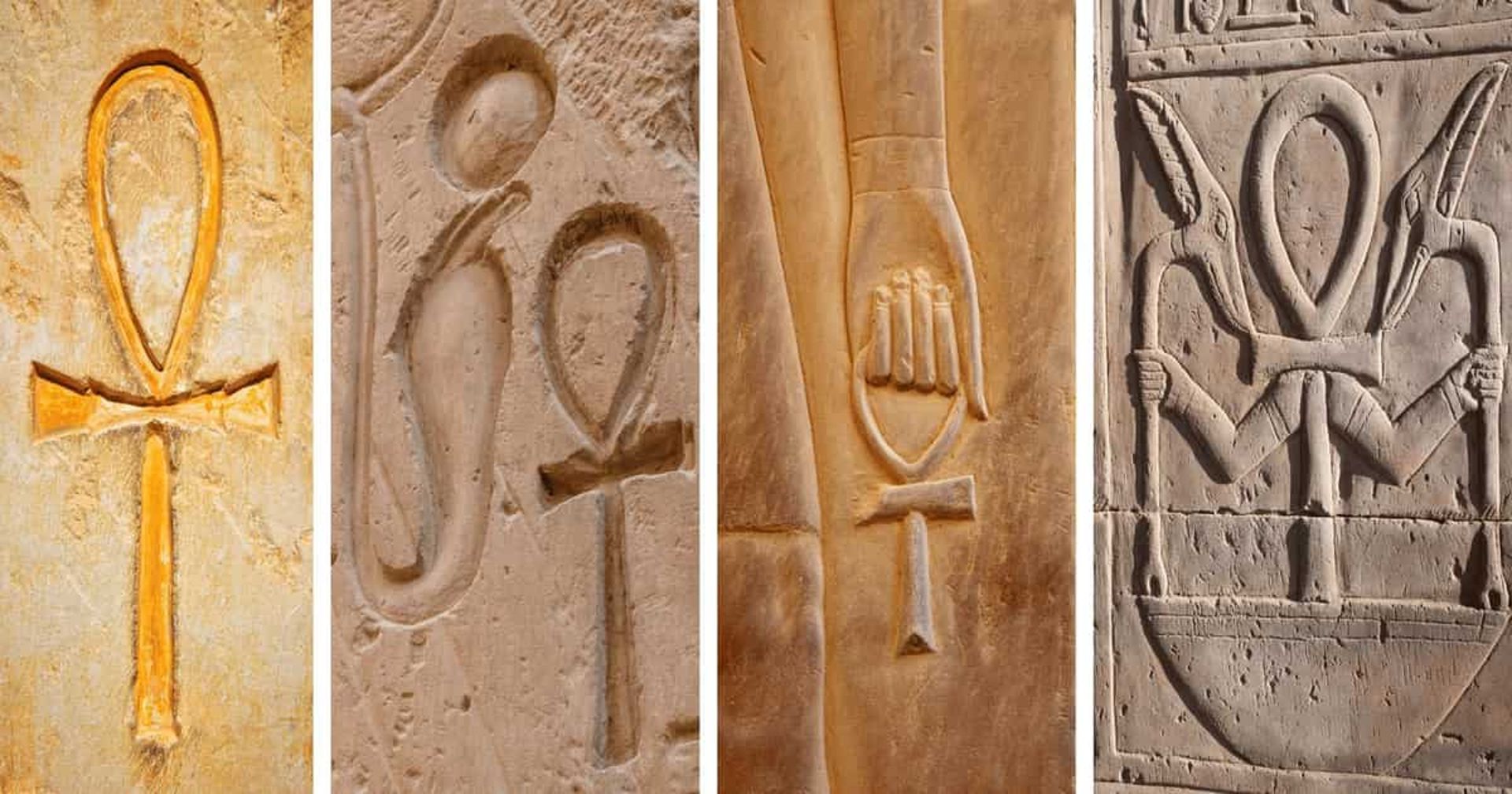
What is the symbol of rebirth in ancient Egypt?
The symbol of rebirth in ancient Egypt is usually the ankh, a sign of life that appears again and again in tombs, temples, and jewelry. Ancient Egyptians also used the scarab, lotus, Djed pillar, and Bennu bird to show renewal, resurrection, and the hope of life after death.
Egyptian rebirth symbolism was not decoration alone. Artists placed these signs where people would see them in funerary scenes, on amulets, and in sacred spaces, so the meaning stayed clear: death was a passage, not a stop.
Why was rebirth so important in ancient Egyptian belief?
Rebirth mattered in ancient Egypt because people saw it in the world around them. The sun returned each morning, the Nile flooded and then fell, and crops grew again. Those cycles shaped Egyptian ideas about the human soul and the afterlife.
The story of Osiris gave that idea a sacred form. Osiris died, was restored by Isis, and became ruler of the underworld. Egyptians linked the dead king, and later ordinary people, to that pattern of death followed by return.
Which symbols of rebirth should you know first?
Four symbols matter most when you are reading ancient Egyptian art. The ankh means life, the scarab means transformation, the lotus means renewal, and the Djed pillar means stability and restored order. Each one appears in different settings, but all point back to rebirth.
- Ankh, the clearest sign of life and immortality.
- Scarab beetle, tied to Khepri and the morning sun.
- Lotus flower, linked to sunrise and creation.
- Djed pillar, tied to Osiris and renewal after death.
- Bennu bird, a solar bird associated with rebirth and self-creation.
How does the ankh work as a rebirth symbol?
The ankh is an Egyptian hieroglyph for life, and it is the most familiar rebirth sign in ancient Egyptian art. Gods often hold it toward a Pharaoh’s nose or mouth, a visual way of giving life, breath, and divine protection.
The shape is simple, but the meaning is broad. The ankh stands for physical life, spiritual survival, and the hope that life continues after death. Travelers often spot it on wall carvings, painted coffins, and temple reliefs.
What does the scarab mean in Egyptian rebirth symbolism?
The scarab beetle is a major symbol of Egyptian rebirth because it was linked to Khepri, the god connected with the morning sun. Egyptians saw the beetle’s movement as a sign of creation and daily renewal.
Scarab amulets were common in burial goods. Egyptians also used heart scarabs in funerary practice, and those amulets were meant to protect the dead during judgment in the afterlife.
Why is the lotus flower a sign of rebirth?
The lotus flower is a rebirth symbol because it closes at night and opens in the morning. Ancient Egyptian creation stories used that cycle to explain how light, life, and the sun come back each day.
The lotus also connects to primeval waters in Egyptian mythology. In art, the flower often points to birth, renewal, and the first appearance of the sun from water and darkness.
What does the Djed pillar add to rebirth symbolism?
The Djed pillar stands for stability, endurance, and the restored body of Osiris. Ancient Egyptians treated it as a sign that order could return after death or disorder.
Priests performed the Raising of the Djed ceremony in religious contexts. The rite linked the pillar to resurrection and to the return of balance in the universe.
Where can you see rebirth symbols in Egypt today?
You can see Egyptian rebirth symbols in museums, temples, and tombs across the country. Cairo, Luxor, the Valley of the Kings, Karnak, and Philae all preserve carvings, painted scenes, and objects that show the ankh, scarab, lotus, and other sacred signs.
The Egyptian Museum in Cairo and the Grand Egyptian Museum are strong places to start. In Luxor, tomb walls in the Valley of the Kings and temple reliefs at Karnak and Philae show how these symbols worked in real religious settings.
How should you read Egyptian rebirth symbols on a visit?
Ancient Egyptian symbols make more sense when you look at where they appear, who holds them, and what surrounds them. A sign in a tomb can mean protection. A sign in a temple can mean divine power. Context changes the reading.
Start with the main figure, then scan for repeated images. Gods often present life to kings, while funerary scenes use the same symbols to show safe passage into the afterlife. A local Egyptologist guide helps connect the image to the belief behind it.
- Look for the ankh near gods, kings, and funerary scenes.
- Watch for scarabs on amulets and burial objects.
- Check for lotus flowers in creation scenes and decorative bands.
- Ask how the symbol changes between temple art and tomb art.
What should travelers skip and what should they focus on?
Travelers should focus on original carvings, painted tomb scenes, and museum pieces with clear labels. Small souvenir copies are easy to find, but they do not explain the symbols as well as the real objects do.
If your time is limited, put the Egyptian Museum or Grand Egyptian Museum at the top of your Cairo plan, then add Luxor if you want the strongest tomb and temple context. That combination gives you the best view of how Egyptian rebirth symbolism worked in daily belief and royal burial practice.
Plan with us
Symbol of Rebirth in Ancient Egypt: What It Means and Where to See It
Learn the main Egyptian rebirth symbols, what they meant, and where travelers can see them in temples, tombs, and museums.