
What are ancient Egyptian temples?
Ancient Egyptian temples are sacred buildings built for the gods, not ordinary public worship. Priests cared for divine statues inside sanctuaries, while kings used temples to support religious power and state authority. The best surviving temples in Egypt still show this clear plan in stone, from gateway pylons to inner chapels.
The classic temple layout starts with a pylon, then moves through open courts, column halls, and a sanctuary at the back. Walls carry carved scenes, royal names, hymns, and ritual texts. In Upper Egypt, especially Luxor and Aswan, you can still walk through these spaces and see how the sacred route was designed.
Which ancient Egyptian temples should you see first?
The best temples to visit first are Karnak, Luxor Temple, Abu Simbel, Philae, Edfu, Kom Ombo, and Medinet Habu. These sites give you the clearest picture of ancient Egyptian religion, temple design, and royal history. Travelers short on time usually focus on Luxor and Aswan first.
- Karnak Temple Complex, for scale and column halls.
- Luxor Temple, for easy access and strong evening lighting.
- Abu Simbel, for cliff-carved statues and the famous solar alignment.
- Philae, for island setting and the story of the rescue project.
- Edfu and Kom Ombo, for two of the best-preserved temples in Egypt.
- Medinet Habu, for reliefs and fewer crowds than the top names.
What makes Karnak Temple Complex so important?
Karnak Temple Complex is the largest temple complex in Egypt and one of the largest religious buildings ever constructed. The site grew over more than 2,000 years in Luxor, and the Great Hypostyle Hall is the part most travelers remember. Its 134 sandstone columns make the hall feel far bigger than a single building.
Karnak is dedicated mainly to Amun-Ra, with other temple areas for Mut and Khonsu. The Avenue of Sphinxes once connected Karnak with Luxor Temple along a ceremonial route used for the Opet Festival. That connection helps explain why Karnak remains the first stop for many travelers interested in Egyptian temples.
Why do travelers spend time at Luxor Temple?
Luxor Temple is one of the easiest major temple sites to visit and one of the best at night. The temple sits in the middle of modern Luxor, partly buried for centuries before excavation. Ramesses II’s statues stand at the entrance, and one obelisk still remains in place.
Luxor Temple is tied to the renewal of kingship, not just one deity. Visitors often come after sunset because the lighting gives the colonnades and statues a strong visual contrast. The mosque built on part of the site adds a clear layer of later city life on top of the ancient stones.
Why is Abu Simbel one of Egypt’s most famous temples?
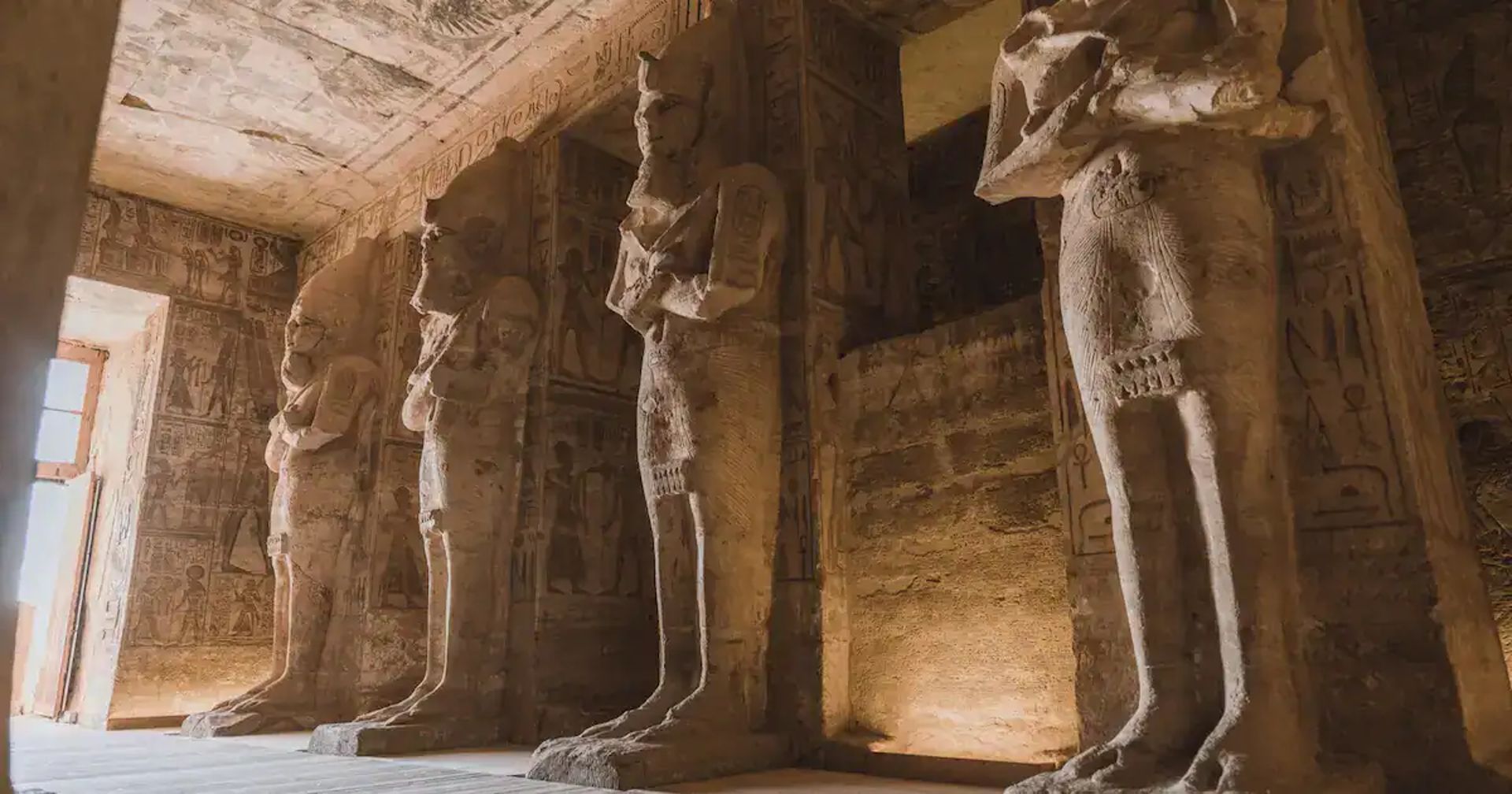
Abu Simbel is famous because of both its scale and its rescue. Ramesses II had the temple cut into a sandstone cliff near the Sudanese border, and the facade is marked by four giant seated statues of the king. The site is also known for a solar event that lights the inner sanctuary twice a year.
UNESCO coordinated the move of Abu Simbel in the 1960s, and the temple was cut into more than 1,000 blocks and rebuilt higher ground to protect it from Lake Nasser. That effort makes Abu Simbel more than a monument. Abu Simbel is also a major preservation story that travelers can still read in the stone itself.
What should you know before visiting Philae, Edfu, and Kom Ombo?
Philae, Edfu, and Kom Ombo are the best temple stops for travelers who want a strong mix of history and easy sightseeing. Philae sits on an island near Aswan and is reached by boat. Edfu is known for its preservation, and Kom Ombo stands out because it is dedicated to two gods.
Philae is tied to the cult of Isis and was also moved during the Lake Nasser rescue campaign. Edfu belongs to the Ptolemaic period and gives visitors a full temple sequence that is easy to follow. Kom Ombo has a rare double plan, one side for Sobek and one side for Horus the Elder, plus a small museum with mummified crocodiles.
Is Medinet Habu worth adding to your temple list?
Medinet Habu is worth a stop if you want a temple with strong reliefs and fewer crowds than Karnak or Luxor Temple. Built by Ramesses III on Luxor’s west bank, the site is best known for its fortified entrance and battle scenes. The carvings are some of the clearest historical images in Luxor.
Medinet Habu helps travelers understand that Egyptian temples were not all the same. Some honored major gods, some supported royal ritual, and some recorded military events. Medinet Habu gives you that broader picture without a long detour.
How should you plan a temple day in Egypt?
A good temple day starts early or late, when temperatures are lower and the light is better for photos. In Luxor and Aswan, moving between sites takes time, so you should group visits by bank and city. A licensed Egyptologist guide also helps you understand the carvings instead of just passing through them.
Many travelers pair a Nile cruise with temple visits because the route between Luxor and Aswan includes Edfu, Kom Ombo, and Philae. That keeps the trip simple and cuts down on backtracking. Bring water, a flashlight for darker chambers, and modest clothing for active religious sites.
- Start early to avoid the strongest heat.
- Group East Bank sites in Luxor together.
- Use a Nile cruise for Edfu, Kom Ombo, and Philae.
- Give Karnak several hours instead of a quick stop.
- Save Abu Simbel for a full morning.
What is the best first route for temple travelers?
The best first route for most travelers is Luxor, then Aswan, then Abu Simbel. That order reduces long transfers and puts the biggest names in a logical sequence. Travelers with more time can add a Nile cruise between Luxor and Aswan for a smoother pace and easier access to temple stops.
Discovery Tours Egypt helps travelers pair temple visits with local Egyptologist guides and practical routing. The result is less guesswork and more time inside the sites that matter most.
Plan with us
Ancient Egyptian Temples: A Traveler’s Guide
Plan visits to Egypt’s major temples, from Karnak and Luxor to Abu Simbel, Philae, Edfu, and Kom Ombo, with practical travel advice.