
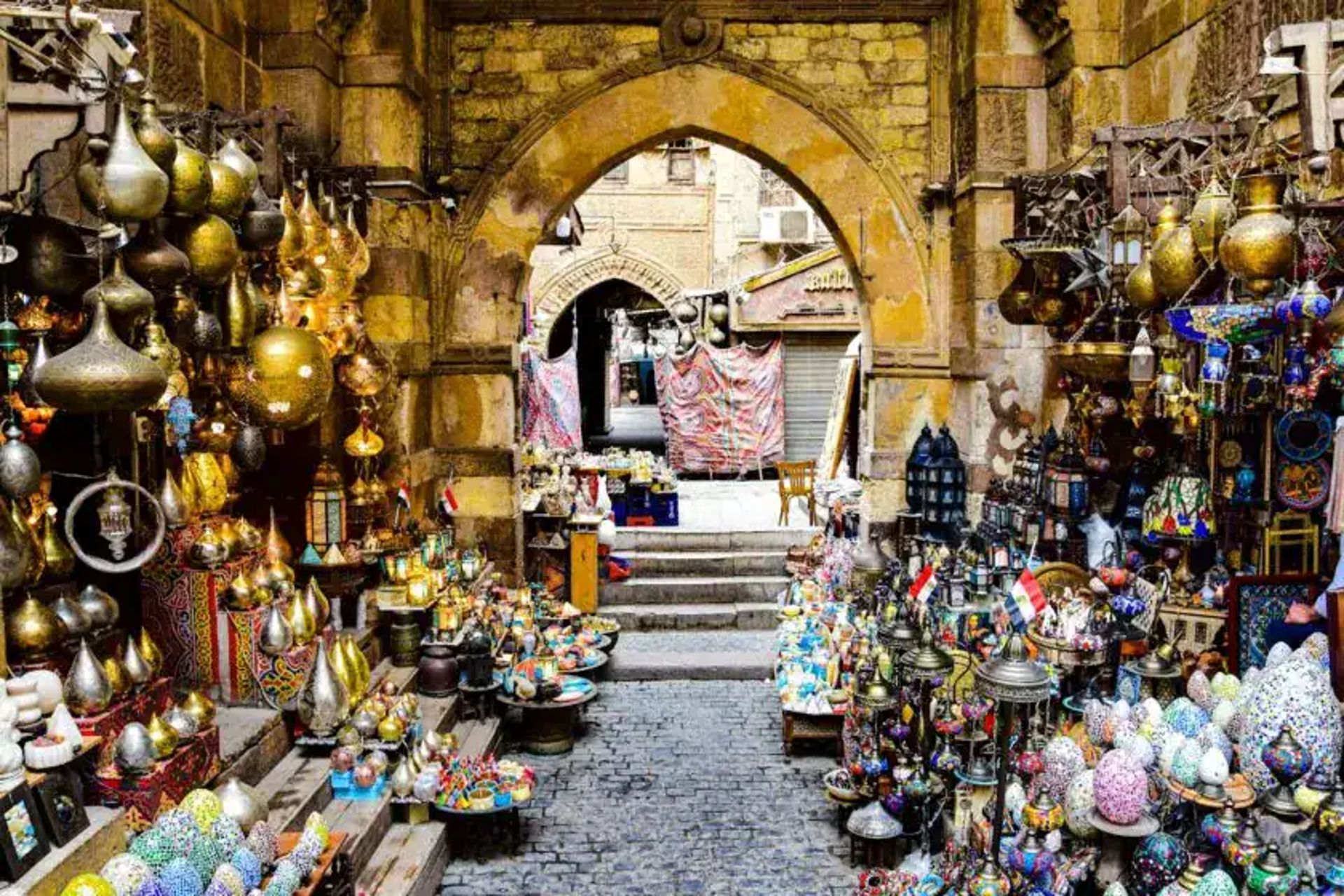
What should you buy in Egypt?
What to buy in Egypt depends on whether you want something useful, decorative, or easy to pack. The best souvenirs are usually papyrus, alabaster, Egyptian cotton, handmade jewelry, and spices. Those items are tied to Egyptian craft, food, and daily life, so they make better keepsakes than generic trinkets.
Egyptian markets also sell leather goods, perfume oils, scarves, brass lamps, and small religious or symbolic pieces. Travelers who want gifts for friends usually pick items that fit in a carry-on and survive the flight home. Travelers who want something for themselves often look for one larger statement piece, like a lamp or alabaster vase.
What are the best things to buy in Egypt?
The best things to buy in Egypt are items with clear local craftsmanship and practical use. Papyrus scrolls, alabaster crafts, Egyptian cotton products, handmade jewelry, and spices appear on most shopping lists because they are easy to recognize and easy to explain later. Those categories also give you a good mix of price points.
- Papyrus scrolls, often painted with hieroglyphs, gods, or scenes from ancient Egypt
- Alabaster items such as vases, lanterns, and small sculptures, especially from Luxor
- Egyptian cotton items such as scarves, bedding, and clothing
- Handmade jewelry with scarabs, the Eye of Horus, or silver designs
- Spices and herbs such as cumin, hibiscus, and dukkah
Not every souvenir shop sells the same quality. Handmade detail matters more than packaging, and a good shopkeeper should be able to explain where the item came from. If the price feels too good for a carved stone piece or a textile labeled as premium cotton, ask questions before you pay.
Where should you shop in Cairo, Luxor, and Aswan?
Cairo, Luxor, and Aswan are the main places to shop for souvenirs in Egypt. Cairo has the widest selection, Luxor is known for alabaster and smaller craft buys, and Aswan is a strong place for Nubian-inspired handicrafts. Each city has a different feel, so the best stop depends on the item you want.
Khan El Khalili in Cairo is the best-known market in the country and a classic place to browse jewelry, lamps, spices, clothing, and papyrus. Aswan Market is a good place to look for colorful textiles, baskets, and pottery. Luxor Souk usually feels calmer than Cairo and works well if you want alabaster goods or simple gifts without a long search.
How do you tell if a souvenir is authentic?
Authentic souvenirs in Egypt usually show small hand-finished details, not a perfect factory look. Genuine crafts often have slight differences from piece to piece, and sellers should be able to explain the material, the workshop, or the making process. That matters most for papyrus, cotton, metalwork, and carved stone items.
- Ask where the item was made and who made it
- Check for hand-finished details and small variations
- Compare the weight, texture, and paint quality
- Be careful with labels that say ancient, rare, or museum quality
A few items need extra caution. Antiques and animal-based products can create legal or customs problems, so avoid anything questionable. Before you travel home, check your own country's import rules if you plan to buy carved artifacts, shells, leather, or anything that could be restricted.
Can you bargain in Egyptian markets?
Bargaining is common in many Egyptian markets, especially in places like Khan El Khalili. Sellers often expect a back-and-forth, and the first price is usually not the final price. Fixed-price shops also exist, so read the room before you start negotiating.
A calm tone works better than hard pressure. Ask about the item, compare a few stalls, and decide what the piece is worth to you. If you do not want to haggle, shop in stores with marked prices or buy from larger retail shops that keep things simple.
What souvenirs are easiest to pack home?
The easiest souvenirs to pack home from Egypt are flat, light, and durable items. Papyrus sheets, scarves, spices, small jewelry pieces, and perfume oils fit well in luggage. Larger alabaster pieces and lamps can travel safely too, but they need more padding and more care.
If you want low-stress shopping, avoid fragile or bulky items unless you have space and packing material. Many travelers buy one or two larger pieces and fill the rest of their bag with smaller gifts. That keeps the return flight simpler and lowers the chance of breakage.
What should you avoid buying in Egypt?
You should avoid buying anything that may be illegal, restricted, or falsely presented as ancient. That includes suspicious antiques, animal-based items, and objects with unclear origin. If a seller cannot explain what the item is or where it came from, walk away.
The same caution applies to items that claim to be museum-grade or genuinely ancient. Most travelers are happier buying honest crafts from current artisans. Those pieces are easier to pack, easier to explain, and easier to enjoy when you get home.
Plan with us
What to buy in Egypt: a practical souvenir guide
Find the best souvenirs to buy in Egypt, where to shop in Cairo, Luxor, and Aswan, and how to spot authentic pieces.