
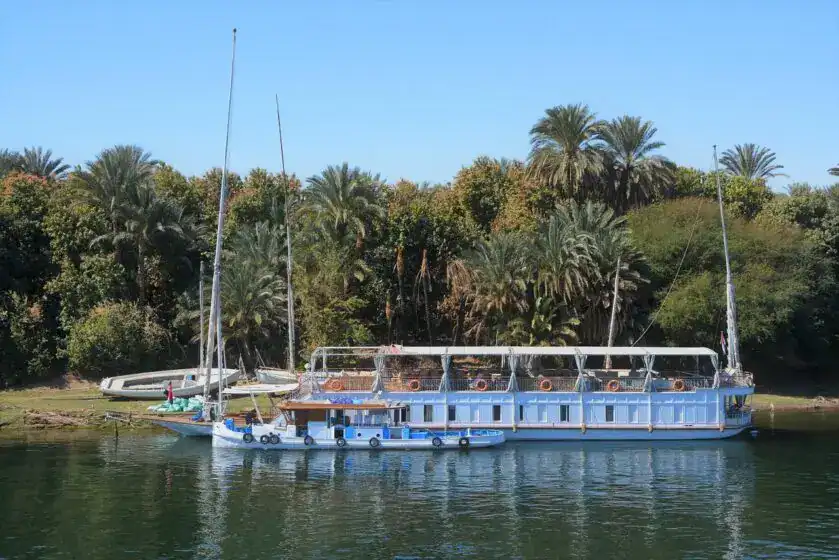
Photo: Nile river cruise ship at sunset with temples on the bank – a typical scene you’ll enjoy from deck as you travel between ancient sites.
Gliding along the Nile remains one of the most atmospheric ways to experience Egypt. From the slow river rhythm you watch millennia-old temples rise from the banks, visit pharaonic tombs, and move through landscapes that shaped civilizations. Whether you choose an intimate felucca or a full-service luxury vessel, a Nile cruise is an easy, compact way to see Egypt’s archaeological heart with comfort and continuity.
Why choose a Nile cruise?
Image: Travelers enjoying an evening on deck, sunset over the Nile.
A Nile cruise bundles sightseeing, transport and comfortable accommodation into a single moving hotel–perfect for travelers who want to see many sites without constantly packing and unpacking. You sleep where you dock, wake near the next ruin, and spend evenings on deck watching the banks slide by. Cruises make logistics simple for first-time visitors, multigenerational groups, and travelers with limited mobility while delivering rich cultural encounters ashore.
Routes and sample itineraries
Image: Map-style view showing the typical Luxor–Aswan corridor and common stops along the river.
Most Nile cruises operate between Luxor and Aswan and can be booked in either direction. Operators stitch the major archaeological sites together with optional excursions farther afield. Below are typical route frameworks – always check current details and schedules before you travel.
Classic 3–4 night: Luxor to Aswan (or reverse)
A short, popular option that hits the corridor’s essentials: guided visits to Luxor and Karnak, the Valley of the Kings, the Temple of Hatshepsut, and the pleasant riverside atmosphere of Aswan. It’s a great fit if you have limited time but want a concentrated dose of pharaonic history.
Extended 6–8 night: Upper Egypt and Abu Simbel
Longer itineraries let you linger at key sites and add excursions such as Abu Simbel–typically offered as a separate daytrip from Aswan–or visits to Nubian villages and quieter temples between Luxor and Aswan. These cruises suit travelers who prefer a deeper, more relaxed pace onboard and ashore.
Specialty cruises: felucca, cultural or themed trips
If you want a close-to-water, low-key experience, short felucca trips deliver intimacy and simplicity. Other themed voyages focus on archaeology, photography, or food–combining hands-on workshops with curated shore visits and expert-led talks.
Ship categories and onboard life
Image: A sun deck and shaded dining area, common features across many Nile vessels.
Nile vessels range from small, family-run boats to large, hotel-style ships. Your choice affects cabin size, dining options, onboard activities and the overall vibe–so pick the category that matches your travel priorities.
- Boutique and traditional dahabiya/felucca: Intimate, simpler comforts and fewer services; ideal for a slow, authentic sail.
- Mid-range motor cruise ships: Comfortable cabins, a pool or sundeck, buffet or plated dining, and standard guided excursions.
- Luxury vessels: Spacious suites, elevated dining and service, wellness facilities and curated shore programs.
Common onboard features include sun decks for lounging, open-sided dining areas with river views, evening entertainment such as traditional music and dance, and lecture-style talks about Egyptian history. Wi‑Fi availability varies – confirm connectivity if staying online is important to you.
What to expect ashore: highlights and daily rhythms
Cruise days often alternate between relaxed mornings and focused excursions. Guides lead groups to major archaeological sites; on quieter stops you may have time to browse local markets, meet village residents, or explore at your own pace.
Typical must-see sites
- Valley of the Kings and pharaonic tombs
- Karnak Temple complex and Luxor Temple
- Temple of Hatshepsut at Deir el-Bahari
- Philae Temple and views around Aswan
- Abu Simbel (usually as a separate excursion)
Many sites are open-air and exposed to strong sun, so tours commonly start early to avoid the midday heat. Build extra time into your schedule for photos and slow moments–some of the most memorable experiences happen during unplanned, quiet encounters along the riverbanks.
Best seasons and climate considerations
Egypt’s climate is seasonal: summers are hot and dry while winters are mild. Many American travelers favor the shoulder seasons–late fall, winter and spring–when temperatures are more comfortable. If you’re traveling for U.S. school breaks (spring break or winter holidays), book early. Sun exposure is intense in Upper Egypt; plan sun protection and check current local conditions before you travel.
Budgeting and booking tips
Prices for Nile cruises depend on ship class, itinerary length and what’s included. Compare packages carefully–look for which meals, guided tours, transfers and optional excursions are covered. Book through experienced, Egypt-based tour operators (IATA-accredited partners can help with international ticketing) who can align your cruise with flights and hotel stays.
- Confirm whether airport transfers and inter-city transfers are included.
- Ask about single-supplement policies if you’re traveling solo.
- Reserve popular optional excursions (for example Abu Simbel) in advance.
- Review cancellation and change policies and verify what happens if a site is closed.
Our Cairo headquarters, with offices in Luxor, Aswan, Hurghada, Marsa Alam and Sharm El Sheikh, coordinates land extensions, Red Sea stays and practical details before and during your cruise. We can also help plan international connections from U.S. gateways (JFK, IAD, SFO, ORD, LAX) and advise on overnight transit options via common hubs such as FRA, IST or DXB.
Safety, health and responsible travel
Travel along the Nile is generally safe for tourists when you use common-sense precautions. Keep valuables secure, follow your guide’s instructions at archaeological sites, and stay hydrated. Check CDC travel guidance and current health recommendations before you depart, carry any required medications, and consider travel insurance that covers medical evacuation if needed.
Packing checklist
- Lightweight, breathable clothing and a few warmer layers for cooler evenings
- Comfortable walking shoes and a wide-brimmed hat or strong sun protection
- Sunscreen, sunglasses and a refillable water bottle
- Modest clothes for temple visits (knees and shoulders covered)
- Basic first-aid items, motion-sickness remedies if needed, and photocopies of travel documents
Making the most of your Nile cruise
Decide in advance whether your trip is about archaeology, relaxation, photography or cultural connections. Leave time to wander markets, accept invitations to traditional hospitality where appropriate, and schedule quiet moments on deck at sunrise or sunset–those are the images that tend to stay with you long after the trip.
A Nile cruise is both a practical way to cover Upper Egypt’s highlights and a slow, sensory journey through landscapes that shaped history. With thoughtful planning and the right Egypt-based tour operator, sailing the Nile becomes a lasting travel memory–filled with monuments, river life, and unforgettable sunlit hours on deck.
Plan with us
Nile Cruises: Explore Egypt from the River’s Heart
Sail the Nile from Luxor to Aswan on short felucca trips or multi-night luxury cruises. Plan flights, extensions and the newly opened Grand Egyptian Museum with our Egypt travel specialists.