
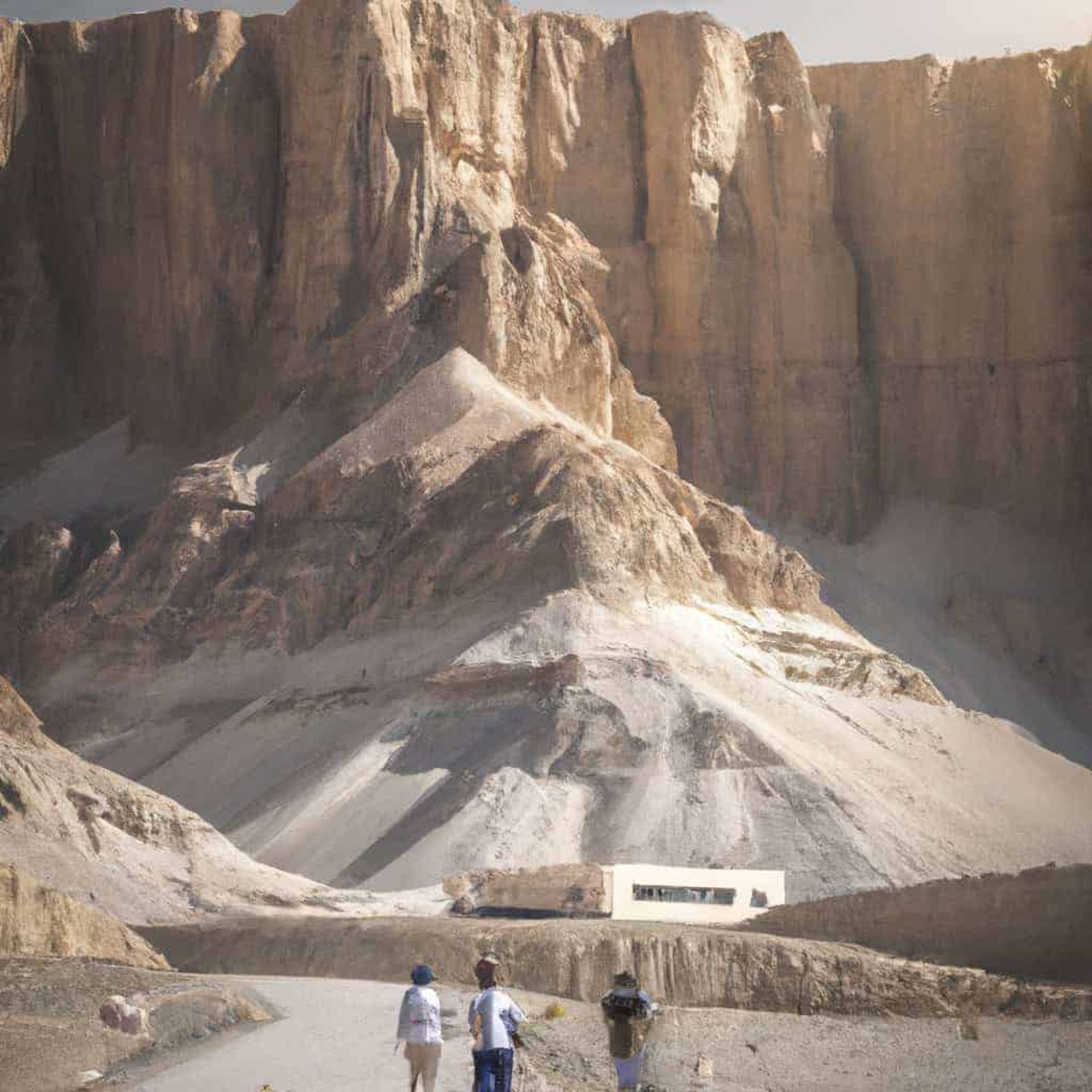
What is Ta-Set-Neferu?
Ta-Set-Neferu is the ancient Egyptian name for the Valley of the Kings in Luxor, and the site is one of Egypt’s most important royal cemeteries. Travelers visit for the carved tombs on the west bank of the Nile, where New Kingdom Pharaohs were buried far from the open desert plain.
The valley sits outside modern Luxor, across from the city’s East Bank temples. Its appeal is direct and personal: you walk into the hill, step down into a tomb, and see painted walls that still carry names, prayers, and scenes meant to guide a king into the afterlife.
Why did the ancient Egyptians bury kings here?
The Valley of the Kings became the royal burial place because the location was easier to guard and harder to spot than a pyramid. Ancient Egyptian builders cut tombs into limestone cliffs, then hid the entrances in the hills near Thebes, the ancient capital that is now part of Luxor.
That choice changed tomb design. Instead of large monuments above ground, the focus moved underground to corridors, chambers, painted ceilings, and religious texts. The walls often show figures from funerary books such as the Book of the Dead, which explain the king’s journey after death.
- Royal tombs were placed on the west bank of the Nile, where the sun set each day.
- The valley is linked to Thebes, the ancient capital near modern Luxor.
- More than 60 tombs have been found in the valley.
- Tutankhamun’s tomb was discovered in 1922 by Howard Carter.
Which tombs should you look for on a first visit?
Tutankhamun’s tomb, Ramses VI’s tomb, and Seti I’s tomb are the names most travelers ask about first. Each one gives a different view of royal burial art, from a smaller tomb with major historical weight to wide chambers filled with long painted texts and detailed decoration.
Tutankhamun’s tomb is famous for the discovery of his burial goods, including the gold funerary mask now seen in the Egyptian Museum context, even though the tomb itself is modest in size. Ramses VI’s tomb is known for deep corridors and ceiling scenes. Seti I’s tomb is often called one of the finest in the valley because of its detail and scale.
- Tutankhamun’s tomb is the best-known tomb in the valley.
- Ramses VI’s tomb has long corridors and strong celestial decoration.
- Seti I’s tomb is valued for detailed carving and painted chambers.
- Not every tomb is open every day, so travelers often choose from the ticketed set available at the gate.
What does a tour of the Valley of the Kings feel like?
A tour of the Valley of the Kings is hot, dry, and compact, with most of the experience happening on foot between tomb entrances and shaded paths. The site is best handled early in the day, when the light is softer and the temperature is easier than later in the afternoon.
A practical visit usually includes a ticket for general entry, then extra payment for special tombs if you choose them. Standard admission typically includes access to three tombs, while premium tombs such as Tutankhamun’s cost extra. Guides help you understand what you are looking at before you descend into each chamber.
- Wear lightweight clothing and comfortable walking shoes.
- Bring water, sunscreen, a hat, and sunglasses.
- Photography rules can change, so check before entering tombs.
- Plan extra time if you want to add premium tombs to your visit.
What else should you see near the valley?
Luxor has more than the Valley of the Kings, and the best day plans usually combine several sites on both banks of the river. Karnak Temple, the Temple of Hatshepsut, and Luxor Temple are the best-known companions to a west bank tomb visit.
Karnak gives you scale and temple architecture, Hatshepsut gives you a dramatic terraced design, and Luxor Temple is especially good later in the day or after dark. A local guide helps connect these places to the same royal world that built the tombs at Ta-Set-Neferu.
- Karnak Temple is one of Luxor’s largest temple complexes.
- The Temple of Hatshepsut sits on the west bank near the valley area.
- Luxor Temple is in the city and is easy to add to an evening plan.
How should you plan your visit?
A good Valley of the Kings visit starts with timing, not just transportation. Luxor is the base for most travelers, and tours or taxis take you across the Nile to the west bank. Early morning is the easiest time to manage heat and crowds, especially if you want to enter several tombs.
Discovery Tours Egypt uses local Egyptologist guides, which matters here because the tomb art is easy to walk past without context. A guide can explain the texts, point out what is original, and help you decide which tombs are worth your time if you do not want to rush from one chamber to the next.
- Start early if you want cooler temperatures.
- Choose a guide if you want the tomb scenes explained clearly.
- Use the visit as part of a wider Luxor day, not as a stand-alone stop.
- Respect tomb walls and follow photography rules on site.
Plan with us
Ta-Set-Neferu: Exploring the Valley of the Kings
Plan a visit to Ta-Set-Neferu, the Valley of the Kings in Luxor, with key tombs, visiting basics, and what to expect underground.