
Why the River Nile Was Essential to Ancient Egypt
You can’t tell the story of ancient Egypt without the River Nile. For millennia the river shaped daily life, faith, commerce, and political power. Asking why the River Nile was important gets you straight to the foundation that made Egyptian civilization possible.
The River Nile supplied fertile soil, predictable seasonal cycles, and a natural north–south highway that connected Upper and Lower Egypt. Without it, the temples, pyramids, and complex society we visit today simply wouldn’t exist.
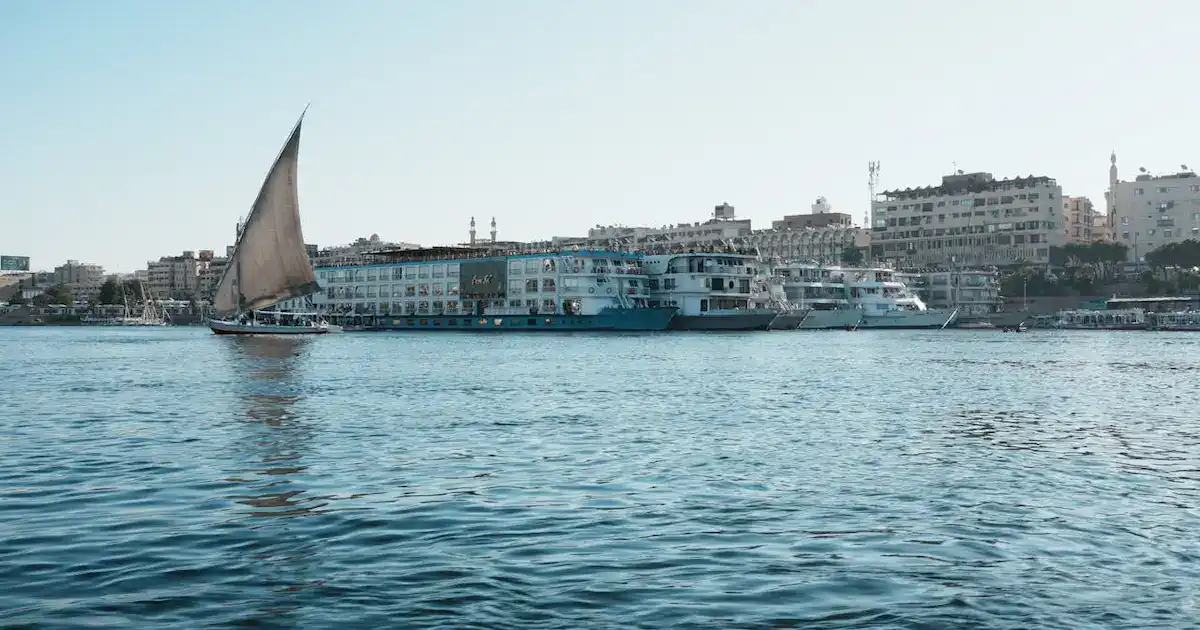
Even now, travelers who choose Nile River cruises–from classic overnight boats to luxury options–follow routes used for thousands of years by pharaohs, priests, and merchants, underscoring the river’s lasting importance.
How the Nile Shaped Ancient Egypt
The Nile and Agriculture – Feeding a Civilization
Agriculture is one of the clearest reasons the River Nile mattered so much. Every year between July and October the Nile’s floodplain received rich black silt – kemet – that replenished the fields and made reliable harvests possible.
Ancient Egyptians cultivated:
- Wheat and barley for bread and beer
- Flax for linen clothing
- Vegetables, fruits, and legumes
That surplus of food supported growing towns and freed many people to work as artisans, architects, priests, and scribes – roles essential to a complex society.
Without the floods and the river’s fertile banks, Egypt would have been mostly desert. With them, it became one of the ancient world’s great breadbaskets.
The Nile as a Source of Fresh Water
Fresh water from the River Nile was vital for survival. It supplied water for:
- Drinking and cooking
- Bathing and hygiene
- Livestock
- Irrigation canals
Villages clustered along the banks, and homes, temples, and entire cities oriented themselves around the river. Even today, the majority of Egypt’s population lives along the Nile, a pattern that reaches back thousands of years.
Transportation and Trade Along the Nile
The Nile was ancient Egypt’s primary transport corridor. Crossing the desert by land was slow and risky; by contrast, the river was an efficient, safe artery for people and goods.
Thanks to predictable winds:
- Boats sailed south using the wind
- Boats drifted north using the current
That made trade efficient. Commodities like gold, stone, grain, papyrus, and luxury goods moved smoothly between regions. The Nile linked communities within Egypt and connected the country to Nubia, the Levant, and farther afield.
Modern travelers still trace the same corridors when they join Nile River cruises, following routes that have been in use for millennia.
The Nile’s Role in Religion and Mythology
Nature and religion were closely linked in ancient Egypt, and the Nile was often seen as a divine gift that sustained life and order.
Key religious beliefs included:
- Hapi, the god of the Nile floods
- The belief that the Nile’s cycles mirrored life, death, and rebirth
- The idea that the afterlife reflected the fertile lands along the river
Temples were often sited to face the Nile and rituals timed with the river’s cycles. The Nile symbolized Ma’at – order – standing against the chaos beyond the cultivated banks.
Political Power and National Unity
The River Nile helped unify Egypt. Because it ran through both Upper and Lower Egypt, control of the river was directly linked to national cohesion.
Control of the Nile meant:
- Control of food supplies
- Economic stability
- Political legitimacy
Pharaohs were viewed as the guarantors of harmony between the gods, the Nile, and the people. Good floods reinforced a ruler’s favor with the gods; poor floods could undermine political stability.
Daily Life Along the Nile River
Where the Nile met history – the river shaped rhythms of work, worship, and celebration along its banks.
Life in ancient Egypt followed the river’s calendar. The year was divided into three main seasons:
- Akhet (Flooding season)
- Peret (Planting and growing)
- Shemu (Harvest)
Each season dictated labor, festivals, and religious observances. Fishing, boatbuilding, farming, and trade all depended on the river’s predictable cycles.
Visitors on curated Egypt tour packages today still encounter villages, farms, and customs rooted in that ancient relationship with the Nile.
The Nile and Architecture – Building a Legacy
The river made large-scale construction possible. Massive stone blocks for pyramids and temples were floated and hauled along the Nile, enabling monumental architecture across Egypt.
Major sites along the Nile include:
- Luxor and Karnak Temples
- Valley of the Kings
- Philae Temple
- Edfu and Kom Ombo
Many travellers find these sites most rewarding when seen at a measured pace, for example on a dahabiya or a slower Nile River cruise that echoes traditional sailing.
Expert Insights & Practical Tips for Modern Travelers
To really grasp why the River Nile mattered, see it in person. A cruise or guided land tour delivers context that books alone can’t provide.
Travel Tips:
- Choose a cruise that includes historical lectures
- Visit temples at sunrise or sunset for atmosphere and better light
- Combine river travel with land tours for fuller context
Best Experiences:
- Nile River cruises for classic sightseeing
- Deluxe Nile cruises for comfort and expert guides
- Luxury Nile cruises for immersive, high-end experiences
Exploring the Nile is more than sightseeing – it’s stepping into living history.
External Historical Perspective
According to Wikipedia, the Nile was the backbone of ancient Egyptian civilization, enabling agriculture, trade, and centralized government for over 3,000 years. That broad scholarly agreement helps explain why the river remains a focus of historical study.
Conclusion – Why the River Nile Still Matters
So, why was the River Nile important to ancient Egypt? Because it made sustained, complex society possible – feeding people, linking regions, inspiring belief, and empowering rulers.
Today the Nile remains Egypt’s lifeline. Whether you read about it or sail its waters on an unforgettable Nile River cruise, the story of Egypt always runs through the river.
Explore curated Egypt tour packages or contact our Egypt-based travel specialists to plan a journey along this legendary river.
Plan with us
Why the River Nile Was Central to Ancient Egypt
Discover why the River Nile shaped ancient Egypt–feeding fields, inspiring religion, and driving trade. Plan your visit with Discovery Tours Egypt and ask about the Grand Egyptian Museum (opening 2026).