
“Egypt is the Gift of the Nile” isn’t just an old turn of phrase – it explains why a single river made large-scale settlement, agriculture, and monumental building possible in a mostly desert land. The Nile’s water created fertile corridors, connected towns by boat, and framed religious and political life for millennia. Today the river still shapes Egyptian identity and draws travelers who want to see the landscape that produced pharaohs and temples.
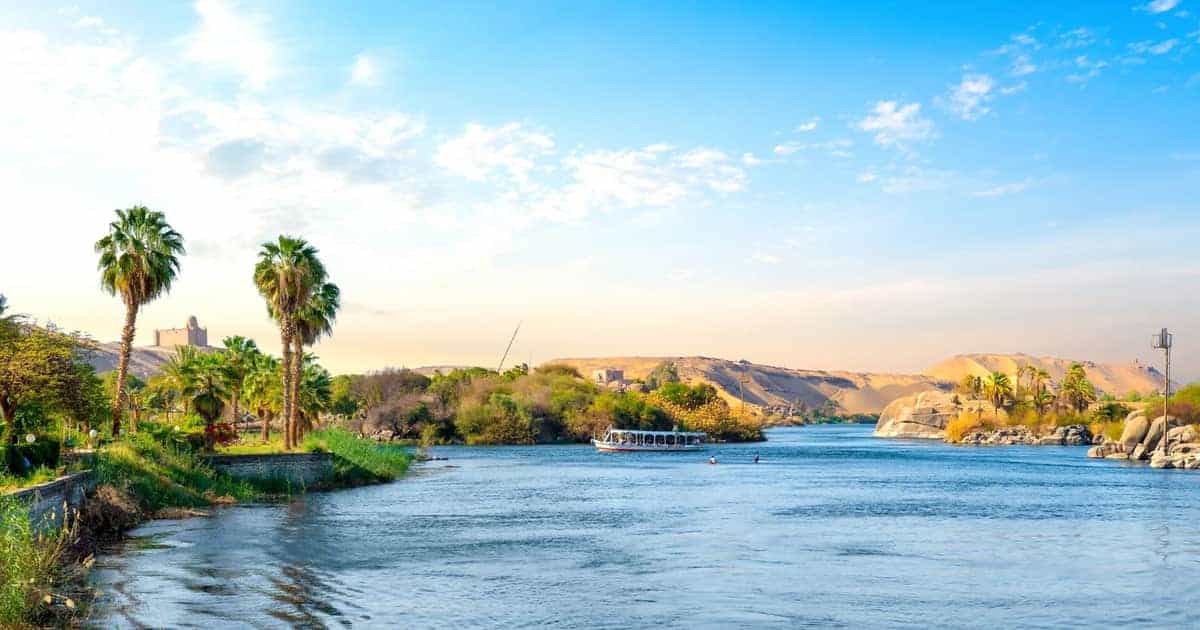
The Nile with palm trees and a classic felucca at sunrise.
Context: Herodotus’s Observation and the Geography Behind the Phrase
Illustration: Herodotus’s observation and the geography behind the phrase.
Herodotus and other ancient writers noted the striking contrast between a narrow, fertile ribbon along the Nile and the vast deserts beyond. More than 95 percent of modern Egypt is desert, so the Nile’s perennial flow concentrated fertile soils, drinking water, and daily life in the valley and delta. Where the river ran, towns and farms prospered; away from it, survival was far more difficult.
The Nile and Agriculture: Feeding an Ancient World
The core of the “Gift of the Nile” is agricultural productivity. Each year the river deposited nutrient-rich silt along its banks, a natural fertilizer that made reliable harvests possible. That steady food supply created surpluses, supported population growth, and allowed for labor specialization – craftspeople, scribes, priests, and builders – which in turn helped produce a complex, long-lived civilization.
Ancient Practices and Seasonal Rhythms
The agricultural year revolved around three Nile-linked seasons: the inundation, the growing season, and the harvest. Those rhythms set work cycles, festivals, and tax schedules. Farmers diverted river water into canals and basins, raised cereals and flax, and produced the extra grain that financed public works and monumental architecture.
Modern Irrigation and Continuity
Engineering projects and dams have changed the Nile’s natural flood cycle, but the river remains central to farming and urban life in the valley and delta. Today’s irrigation networks and reservoirs support cities and crops, linking present communities to a long agricultural past. Travelers should check current local details before visiting, since seasonal conditions can affect river access and site visits.
The Nile as a Highway: Transport, Trade, and Political Unity
The Nile was Egypt’s principal transportation corridor for millennia. Boats could drift downstream with the current and sail home with prevailing winds, making river travel faster and safer than crossing shifting desert sands. Grain, stone, timber, metals, and finished goods moved along the river, enabling both internal trade and exchanges with neighboring regions.
Managing river traffic and irrigation channels was a major source of political power. Leaders who controlled water distribution and protected trade routes could sustain cities, collect taxes, and organize large building campaigns – a practical reason the Nile was indispensable to state formation.
Religion, Myth, and the Sacred River
The Nile’s life-giving qualities were woven into Egyptian religion and cosmology. The river was linked to fertility, renewal, and divine favor; deities associated with the Nile and its bounty were honored in rituals and offerings. Many temples and shrines were oriented toward the river, which served as both a transport route and a spiritual axis.
Art, funerary customs, and royal imagery frequently used river motifs: boats conveying the deceased to the afterlife, festivals timed to agricultural cycles, and rites that asked for favorable inundations. Those beliefs reinforced the idea that Egypt’s prosperity was inseparable from the Nile’s patterns.
Key Nile Sites to Visit
A Nile itinerary brings you close to temples, tombs, and towns that show the river’s importance: the Luxor–Karnak axis, the royal tombs in the Valley of the Kings, the temples at Edfu and Kom Ombo, and the island sanctuary at Philae. Aswan’s quays and granite quarries reveal how ancient builders worked, while small river towns and felucca sails offer a window on everyday river life. In Cairo, the newly opened Grand Egyptian Museum (2026) provides world-class context for many Nile-era artifacts.
Many visitors see these sites on a Nile cruise – from larger overnight vessels to intimate dahabiya-style sails. Each option delivers a different pace: pick the style that fits your travel rhythm, and double-check current itineraries and local conditions before you go.
Practical Travel Tips and Seasonal Notes
To see the Nile’s influence most clearly, combine river time with land visits: sail between Luxor and Aswan, walk temple avenues, and explore riverside towns. Below are practical considerations to help American travelers get the most from the experience:
- Timing: Weather and river conditions change by season. Many visitors prefer the cooler months (fall through early spring) – prime windows include Thanksgiving, winter break, and spring-break periods. Check current conditions and CDC travel guidance before you book.
- Pace: Choose a faster cruise if you want to check off major sites, or a slower dahabiya-style trip for quiet mornings, longer stops, and a relaxed schedule.
- Guides: Look for licensed Egyptologists and local historians who can explain sites in environmental and social context; avoid tours that rely on simplifications or rote scripts.
- Health & comfort: Pack sun protection, a reusable water bottle, and sturdy walking shoes. Follow CDC recommendations for vaccinations and travel health; factor in jet lag when flying from EST and allow a day to adjust.
- Local logistics: Work with Egypt-based travel specialists and an IATA-accredited operator to coordinate inland transfers, domestic flights, and on-the-ground support. Our offices in Cairo, Luxor, Aswan, Hurghada, Marsa Alam, and Sharm El Sheikh arrange connections from major U.S. gateways (JFK, IAD, SFO, ORD, LAX), which often include overnight transit via hubs such as FRA, IST, or DXB.
How to Experience the Gift of the Nile Today
Visiting the Nile is layered: you can admire temples from a river deck, watch farmers tend narrow riverside fields, or hear elders recount stories of river life. Balance headline sites with quieter moments – a felucca at sunset, a market beside the quay, or a walk along a village embankment. Local specialists based in Egypt can combine river time with desert excursions, Red Sea beach stays, or cultural days in Cairo.
Conclusion: A Living Gift
The Nile is more than geography; it’s the thread linking Egypt’s past to its present. From feeding crops to hauling stone for temples, from inspiring myths to shaping politics, the river was – and remains – foundational. When you travel along its banks you’re not just seeing monuments: you’re witnessing the environmental and human forces that made civilization possible. Plan carefully, travel in the right season for your interests, and let the river itself tell why Egypt truly is the Gift of the Nile.
Plan with us
Why Egypt Is Called the Gift of the Nile
Explore how the Nile shaped Egypt’s agriculture, monuments, and beliefs. Practical tips for American travelers and top river sites – plan with our Egypt-based travel team.