
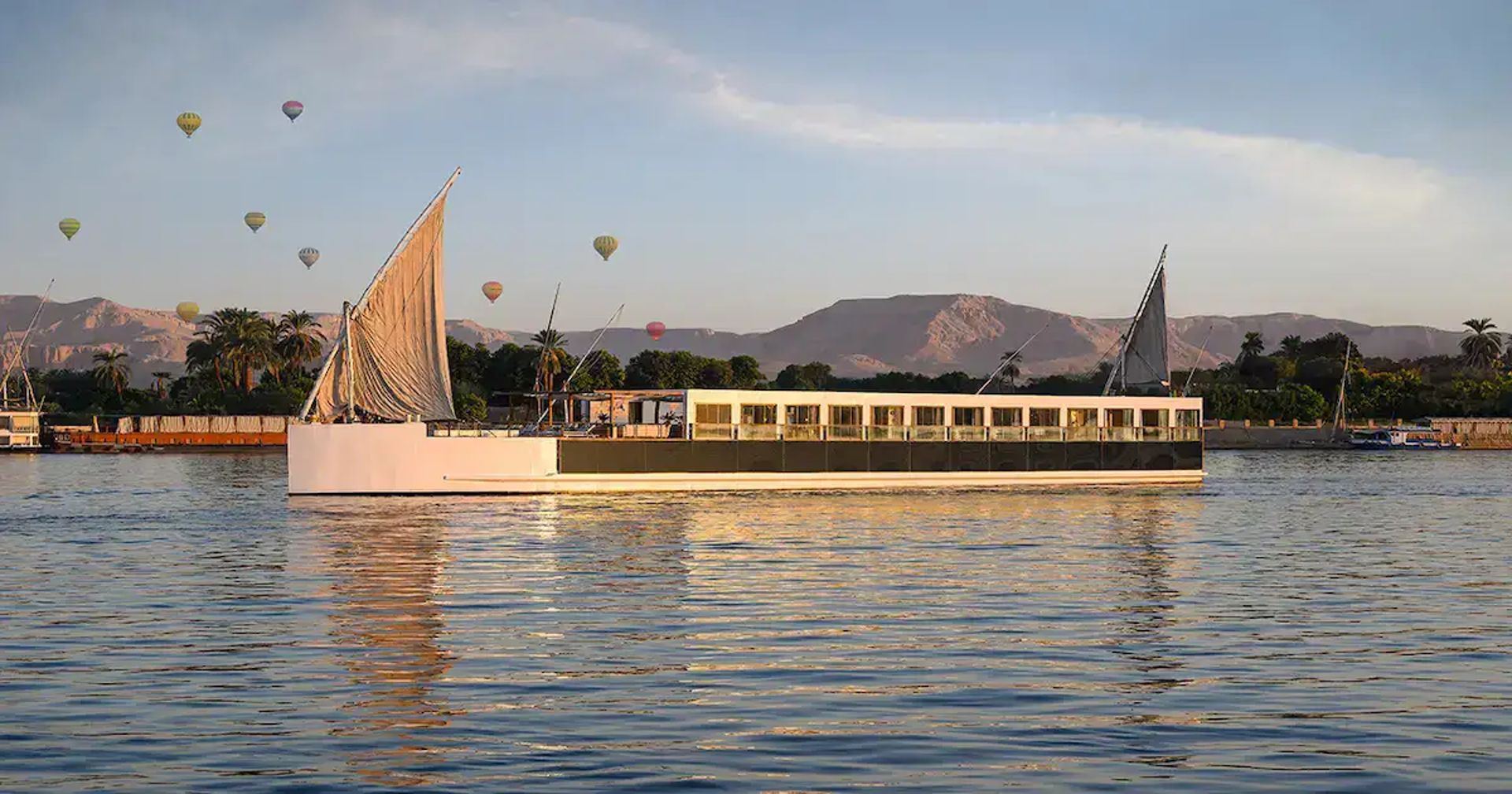
What is a dahabiya?
A dahabiya is a traditional Nile sailing boat used for slower, smaller cruises between Luxor and Aswan. The word comes from Arabic and is tied to older elite travel on the river. On board, you get a quieter trip, fewer guests, and a more personal pace than on a large cruise ship.
The source describes the boat as a symbol of elegant travel in Egypt, with two sails and a history linked to nobles, explorers, artists, and writers. That background still shapes how travelers see a dahabiya today: as a calm way to move along the Nile while stopping for temples and villages.
What does dahabiya mean?
Dahabiya meaning comes from the Arabic word dhahab, which means gold. The name points to the boat’s historic status and the golden color often associated with its wooden hulls. In travel writing, the term also signals a refined Nile journey rather than a mass-market cruise.
Travelers sometimes spell the word as dahabeya, dahabiyah, dahabeeyah, or dahabiyahs. All of those forms point to the same idea: a small, traditional sailing vessel on the Nile.
What is a dahabiya Nile cruise?
A dahabiya Nile cruise is a small-boat journey that usually sails between Luxor and Aswan. The trip focuses on quiet river travel, private shore stops, and a pace that leaves room to enjoy the route. Many travelers choose it for comfort, privacy, and a less crowded feel.
The source says many dahabiyas carry about 6 to 12 guests, which keeps the atmosphere personal. That smaller size also lets crews adjust the day more easily, so the trip can feel less fixed than a standard large-ship itinerary.
What does a dahabiya boat feel like onboard?
A dahabiya boat feels more like a private floating retreat than a big cruise liner. The source describes wooden interiors, spacious cabins, panoramic windows, shaded sundecks, private bathrooms, air conditioning, Wi-Fi, and freshly prepared meals. Those details matter because they shape the trip hour by hour.
Meals are a central part of the experience. The source says chefs often prepare Egyptian dishes onboard, and guests may eat on deck or have candlelit dinners. That slower rhythm is a big part of why travelers pick a dahabiya in the first place.
What routes do dahabiya cruises usually follow?
Most dahabiya cruises run between Luxor and Aswan, with trips that usually last 4 to 7 nights. Along the way, travelers can visit Karnak Temple, Luxor Temple, Edfu Temple, Kom Ombo Temple, and Philae Temple in Aswan. The source also notes stops at smaller villages and islands.
Dahabiyas can anchor near quieter places, which allows for more flexible shore time than many large ships. That flexibility is one reason the boat type appeals to travelers who want a slower, more relaxed way to see Upper Egypt.
Who should choose a dahabiya?
A dahabiya is a strong choice for travelers who want privacy, calm, and a more personal cruise. The source positions it as a good fit for couples, families, and small groups who prefer a quiet river journey over a large ship with many passengers.
Discovery Tours Egypt also presents dahabiya travel as a good match for travelers who want guided cultural visits with local Egyptologist support. That matters if you want the temples explained clearly and do not want to move through sites on your own.
When is the best time to take a dahabiya cruise?
The best time for a dahabiya cruise is October to April, when daytime weather is more comfortable for sightseeing and evenings feel cooler. The source advises avoiding the summer months, especially June to August, if you prefer milder heat on deck and at temple sites.
Because the trip is outdoors for much of the day, timing affects comfort more than it does on a city stay. Cooler months make walking at temple sites easier and make time on the sundeck more pleasant.
What should you pack for a dahabiya cruise?
Pack light cotton clothing, a light jacket, comfortable walking shoes, sunscreen, a hat, sunglasses, and a camera. Those items match the practical needs of a Nile cruise, where you move between deck time, temple visits, and changing temperatures in the evening.
- Light clothing for daytime heat
- A light jacket for cooler evenings
- Walking shoes for temple visits
- Sun protection for deck time
- A camera or phone for Nile views
How is a dahabiya different from a regular Nile cruise ship?
A dahabiya is smaller, quieter, and more flexible than a regular Nile cruise ship. Large ships usually carry many more passengers and keep to a more fixed schedule. A dahabiya gives you fewer people on board, more room for calm, and a slower trip that feels closer to the river.
That difference matters if you care more about time on the Nile than about having a long list of onboard facilities. Travelers who want privacy and a quieter pace usually prefer the dahabiya. Travelers who want a larger ship experience may prefer a standard Nile cruise.
Why book with Discovery Tours Egypt?
Discovery Tours Egypt is an Egypt-based travel company with local Egyptologist guides, and the source says its dahabiya cruises are curated for comfort, culture, and flexible shore visits. That makes it a practical choice for travelers who want a guided trip with local knowledge built in.
The company also says its cruises include boutique comfort, gourmet dining, attentive crews, and custom itineraries. For travelers planning a Nile trip from the U.S., that kind of local support can make the booking process easier and the on-the-ground experience smoother.
Plan with us
What Is a Dahabiya? Nile Cruise Guide
Learn what a dahabiya is, how it differs from larger Nile cruises, and what to expect on a quiet sailing trip between Luxor and Aswan.