
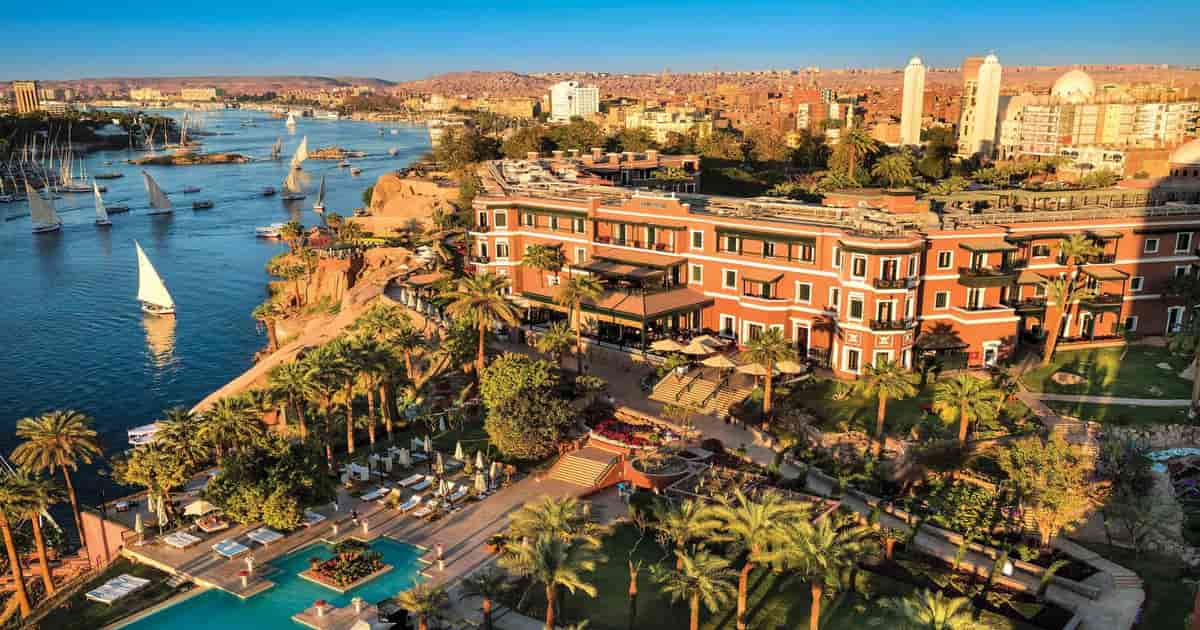
Photo: Rocky Nile cataract near Aswan with granite outcrops – a dramatic stretch where the river runs shallow and fast.
If you’ve only heard “cataract” in a medical context, the Nile’s meaning is different: it’s a section of shallow, rocky river where water rushes around granite outcrops. These rapids shaped ancient borders, trade routes and religious ideas, and they remain striking landscapes today.
What is a Nile cataract?
Image: Close-up view of a Nile cataract, showing the jagged granite that forces the river into turbulent channels.
Definition and key features
Cataracts are not waterfalls; they’re stretches where the river becomes shallow and turbulent as it flows over exposed bedrock. On the Nile these occur where ancient granite rises near the surface and create distinct conditions that include:
- Exposed granite boulders and ledges
- Strong currents and rapids
- Narrow or braided river channels
- Difficult navigation that often required unloading cargo
Rather than a single drop, a cataract is a broken, rocky reach where stone disperses the river’s energy. On ancient maps and in historical accounts, cataracts marked real obstacles to river traffic – places crews negotiated carefully or avoided altogether.
Photo: The dramatic rocky formations of a Nile cataract, showing how the river threads between granite islands and ledges.
The six cataracts: geography and a quick map overview
Illustration: Map overview of the traditional six cataracts along the Nile between Aswan and the Sudanese corridor.
Classical sources and Nile scholars name six major cataracts stretching from the Aswan area in southern Egypt down toward the Nile’s corridor through modern-day Sudan. They’re numbered north to south and served as key reference points for travelers, armies and merchants.
- First Cataract – the Aswan region
- Second Cataract – historically upstream of the First and now largely affected by modern reservoirs
- Third Cataract
- Fourth Cataract
- Fifth Cataract
- Sixth Cataract – in the Sudanese Nile corridor
A map is helpful because the cataracts are unevenly spaced and the Nile’s channel winds between rock bands. Modern dams and reservoirs have altered access to some sites, so if you plan on visiting, confirm current conditions before you travel.
Why cataracts mattered in ancient Egypt
Photo: A broad view showing how cataracts influenced settlement patterns and movement along the Nile corridor.
Cataracts shaped politics, economy and religion. They weren’t only physical barriers; they organized how Egyptians and Nubian neighbors interacted along the river, creating chokepoints for goods, troops and sacred practices.
Trade and economic choke points
Because boats couldn’t always pass cataracts safely, cargo was often offloaded and portaged around the rapids. Those transfer points became markets and settlements where merchants, porters and officials traded goods moving north from Nubia – including gold, ivory and exotic woods.
Photo: Granite islands and ledges at a cataract, illustrating the physical challenges to river navigation.
Military and political frontiers
Cataracts acted as natural defensive lines. Forts and garrisons were often placed near these reaches to control river traffic, collect tolls and deter raids. The First Cataract especially marked Egypt’s southern frontier in many periods and was a staging point for campaigns into Nubia.
Religion and symbolic geography
The Nile was central to Egyptian cosmology, and places where its character shifted – including cataracts – took on spiritual meaning. Temples and local cults near the First Cataract linked deities to the river’s life-giving force, making cataracts both geographic markers and sacred thresholds.
How cataracts shaped the modern landscape and navigation
During the 20th century, major engineering projects – notably dams and reservoirs – transformed parts of the Nile and altered the visibility and access of some cataracts. Large stretches upstream of Aswan now sit under Lake Nasser, changing how and where visitors can see older features.
Where rock outcrops remain exposed, modern navigation has adapted: motorized launches, specially rigged excursion boats and regulated cruise routes let tourists approach granite islands and rapids safely. Local conditions and permissions change, so always check current details before you travel.
Visiting cataracts today – where to go and how
For most visitors the First Cataract around Aswan is the easiest introduction: it pairs accessible granite scenery with major archaeological sites, islands and short boat excursions. Other cataract reaches lie further south into Sudan and are best seen on specialized Lake Nasser cruises or overland expeditions.
Best places to experience a cataract
- Aswan and the First Cataract – granite islands, quarries and accessible excursions
- Elephantine Island and nearby temple sites
- The Philae temple area – approaching by boat highlights the river’s geology
- Lake Nasser cruises for stretches of the Second Cataract and submerged archaeological landscapes (confirm current itineraries)
Best time to visit and suggested itinerary
- October–April offers the most comfortable temperatures for Upper Egypt travel.
- Early morning and late afternoon provide the best light on granite surfaces for photography.
- Common routing: Cairo → Aswan (First Cataract) → Nile cruise or flight to Luxor; specialized Lake Nasser cruises extend visits further south – check current details before travel.
If you want a tailored route, contact Egypt travel specialists who can coordinate logistics from our Cairo office and local teams in Luxor, Aswan, Hurghada, Marsa Alam and Sharm El Sheikh. They’ll advise on boat operators, permissions and seasonal conditions – always confirm details before you go.
Practical travel tips for visiting cataracts
- Wear sturdy shoes and sun protection; granite surfaces can be hot and uneven.
- Carry water and a light sun layer even on cooler days – Upper Egypt is often sunny and dry.
- Hire a knowledgeable guide or choose an Egypt-based tour operator to interpret sites and handle river safety.
- If you plan to visit submerged or remote cataract areas, verify access and permits – check current details before travel.
- Respect fragile archaeological sites and avoid climbing on monuments or exposed ruins.
Conclusion and quick FAQ
A Nile cataract is more than a geological feature: it’s a spot where environment shaped economy, defense and belief. Stand on a granite outcrop at Aswan and watch the Nile eddy past islands, and you’ll sense the same limits and opportunities that guided ancient captains, priests and traders.
Plan with us
Nile Cataracts in Egypt: Rapids, History and Visits
Nile cataracts are rocky, rapid-filled stretches that shaped ancient Egypt’s borders, trade and religion. Learn where to see them–from Aswan to Lake Nasser–and plan a US-friendly visit.