
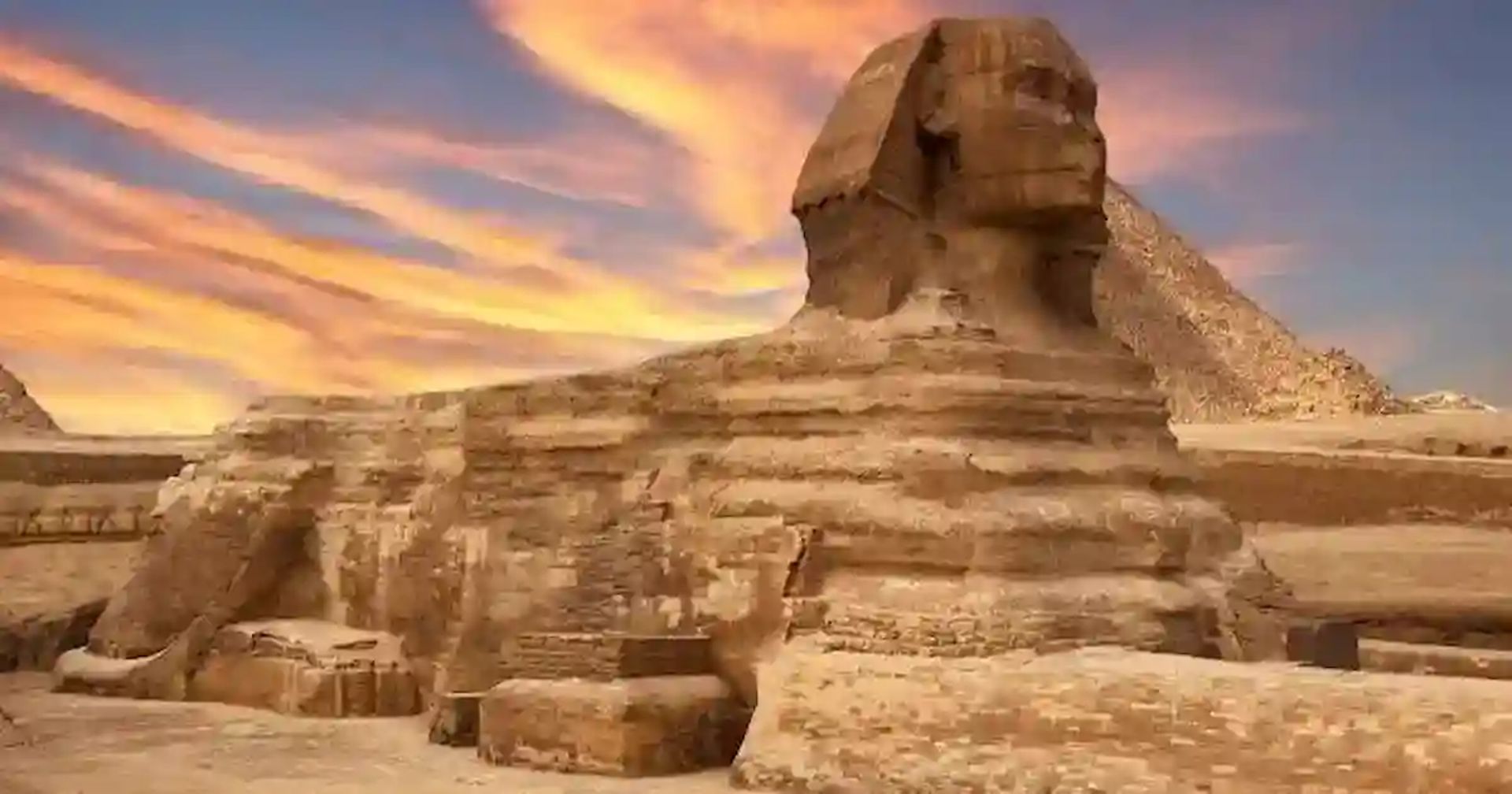
What does the Great Sphinx of Giza represent?
The symbolism of the Great Sphinx of Giza centers on kingship, protection, and solar power. The monument combines a lion’s body with a human head, and that pairing sends a clear message: the Pharaoh had strength, intelligence, and divine authority. Most Egyptologists connect the Sphinx to Pharaoh Khafre of the Fourth Dynasty.
Travelers usually notice the east-facing pose first. That direction matters because the rising sun shaped much of ancient Egyptian religion, and the Sphinx may point to rebirth, renewal, and the king’s bond with the sun god Ra.
Why was the Great Sphinx built?
The Great Sphinx was built as part of the Giza pyramid complex, and its purpose was likely both symbolic and political. Ancient builders used it to protect the site, reinforce royal authority, and tie the king to the divine order. The monument speaks in the language of stone rather than text.
The source article points to several ideas at once: guardian of the pyramids, symbol of divine kingship, and a statement of Khafre’s power. Those ideas do not cancel each other out. In ancient Egypt, one monument often carried more than one meaning.
- Guarding the pyramid complex on the Giza Plateau
- Linking the Pharaoh with the sun god Ra
- Showing royal power through the lion body and human head
- Presenting the king as a ruler chosen by the gods
When was the Great Sphinx built?
Most Egyptologists place the Great Sphinx around 2500 BCE, during the reign of Pharaoh Khafre. That date makes it one of the oldest monumental sculptures in the world. The monument stands directly east of Khafre’s pyramid, which is one reason many scholars connect the two.
The exact construction date is still discussed, but the mainstream view remains the Fourth Dynasty link. Travelers do not need the debate to appreciate the site, though the date helps explain why the Sphinx matters in the broader history of Giza.
What does the Sphinx represent in Egypt?
In Egypt, the Sphinx represents protected kingship and the idea that the ruler stands between the human and divine worlds. The lion body signals force and control. The human face, believed in the source article to represent Khafre, points to the Pharaoh’s role as wise leader and sacred ruler.
Ancient Egyptian monuments often used animal forms to express power. The Sphinx does that in a direct way. It does not read as decoration. It reads as a claim about who rules, who protects, and how the king fits into the cosmos.
What do the missing nose and face tell travelers?
The missing nose is one of the best-known details on the Great Sphinx, but it is not evidence of Napoleon’s troops. Historical sketches from the 15th century already show the nose missing. That means the damage happened earlier, likely through intentional destruction or later religious hostility.
The remaining face still shows the royal headdress, and that detail matters. Even with erosion and damage, the Sphinx keeps its formal, kingly look. Travelers often spend a few extra minutes here because the face changes in the light through the day.
Can you go inside the Great Sphinx?
Visitors cannot explore the Great Sphinx from the inside. The source article notes small tunnels and cavities, but the monument is not open for internal visits. Public access stays limited to the outside viewing area on the Giza Plateau.
That matters for planning. If you want the best experience, focus on the outside approach, the face, and the full profile with the pyramids behind it. Those angles tell the story better than trying to find access that is not available.
What should you look for when visiting the Sphinx?
A good visit to the Great Sphinx is about timing, not just standing in front of it. Early morning gives softer light, while late afternoon brings longer shadows across the limestone surface. Winter months, from November through March, are more comfortable for walking the plateau.
The site works best when you slow down and compare the Sphinx with the pyramid complex around it. The monument is not isolated. Its meaning comes from its placement, its direction, and its relationship to Khafre’s pyramid and the eastern horizon.
- Arrive early for lighter crowds and gentler light
- Look at the east-facing angle and the rising sun connection
- Include Khafre’s pyramid in your photos
- Spend time on the face, headdress, and body shape rather than rushing past
What is the Great Sphinx meaning today?
The Great Sphinx still represents the same core ideas it carried in ancient Egypt: power, protection, and sacred kingship. Travelers read it now as a symbol of Egypt itself, but the original meaning stayed tied to the Pharaoh and the sun. That is why the monument feels both human and mythic at once.
The Sphinx also survives as a reminder that ancient Egyptian rulers used architecture to shape belief. The monument is not just a famous statue. It is a statement about order, authority, and how a king could be linked to the gods.
Plan with us
Symbolism of the Great Sphinx of Giza: What It Represents
Learn what the Great Sphinx of Giza represents, from royal power and protection to solar meaning, plus key facts for visiting Giza.