
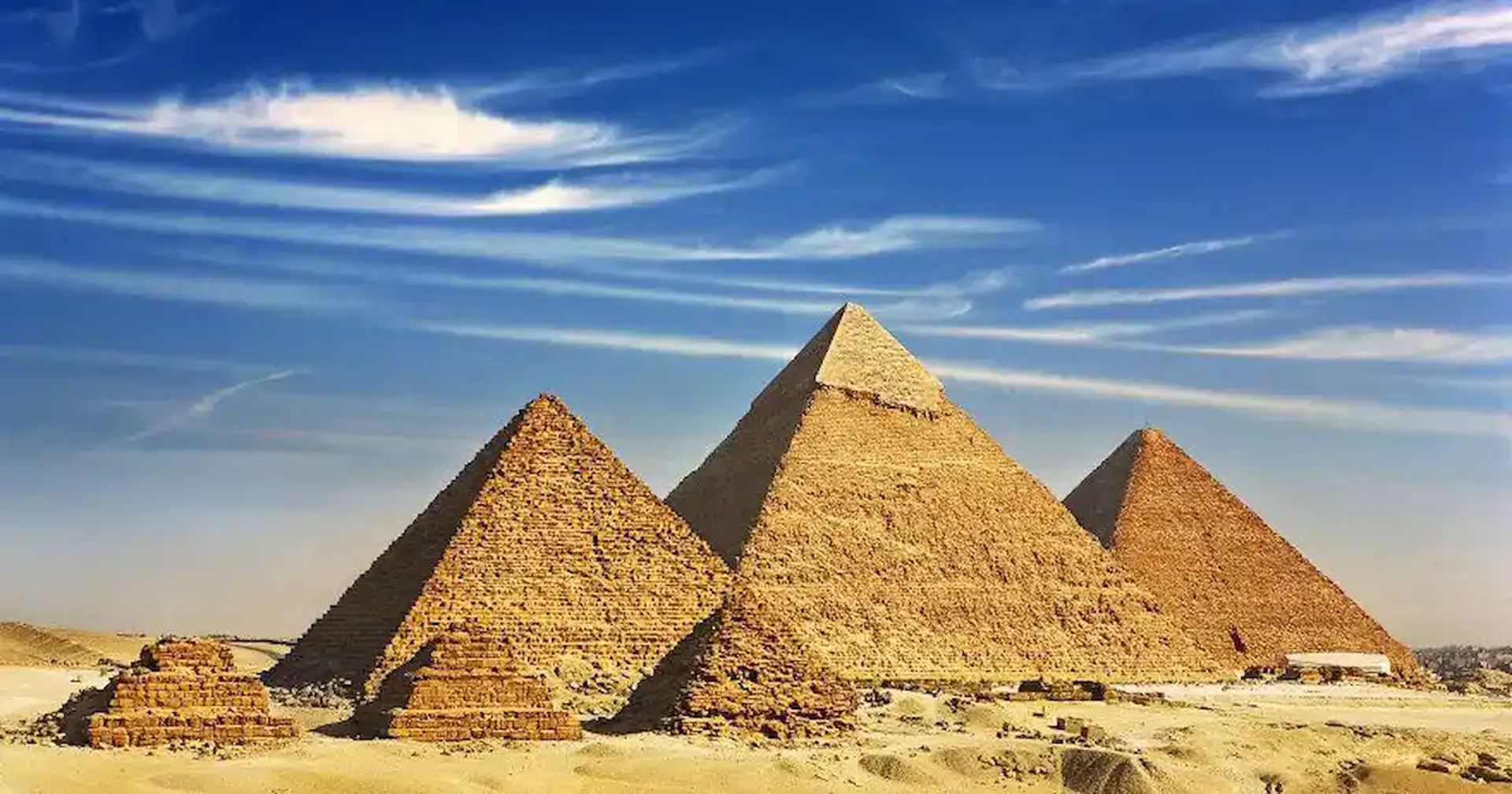
Who built the pyramids of Egypt?
The pyramids of Egypt were built by skilled workers, not enslaved laborers. Archaeology at Giza points to organized crews, planned housing, medical care, and a state-run project under royal authority. The pyramid was a tomb for a king, but the work itself depended on builders, quarrymen, transport teams, and supervisors.
The source article is right to stress teamwork. A monument that large needed planning from the start, with stone cut at quarries, moved by river, and set in place on the plateau. The Great Pyramid is the clearest example, but the same basic system applied across the Old Kingdom.
How did they build a pyramid?
A pyramid was built in stages, starting with site selection, then quarrying, transport, and careful placement of blocks. Ancient builders chose stable ground, used the Nile for moving material, and kept the sides aligned with surprising accuracy. The work was slow, organized, and repeatable.
Builders first cut stone from local limestone quarries for the core. Fine Tura limestone covered the outside, while harder granite from Aswan went into interior spaces in some pyramids. Workers used copper tools, stone hammers, and wooden wedges, then hauled blocks on sledges and lifted them with ramp systems.
- Choose a stable site and mark the layout.
- Quarry limestone, and bring harder stone where needed.
- Move blocks by river and over land on sledges.
- Raise the stones with ramps and place them course by course.
- Build internal chambers and protect the burial space.
How long did it take to build the pyramids?
The Great Pyramid likely took about 20 years to build. That figure fits the scale of the project and the long, controlled supply chain behind it. The pyramid did not rise in one push. Workers had to quarry, transport, and set millions of blocks with a system that ran for years.
This is one reason the pyramids still matter to travelers today. The size is impressive, but the timeline tells the real story. Ancient Egyptian builders had no cranes or steel frames, yet they created a monument that still dominates the Giza skyline.
How many people built the pyramids?
Thousands of people helped build the pyramids, and the work likely changed by season and task. The source article describes rotating shifts, worker villages, and food and medical care, which matches what archaeologists have found near Giza. The project needed far more than stone cutters alone.
A single pyramid required quarry crews, haulers, rope teams, masons, cooks, scribes, and supervisors. That division of labor is part of why the pyramids are so important. They show how much the Old Kingdom could organize when the state focused on one royal project.
What makes the Great Pyramid so precise?
The Great Pyramid is known for its careful alignment and stable geometry. Builders oriented it close to true north and shaped the base with high precision. Those results came from surveying, astronomy, and long practice, not guesswork.
The interior was just as deliberate. Corridors, chambers, and relieving spaces were placed to protect the burial and reduce pressure from the stone above. That practical design is one reason the pyramid has survived for millennia, even after earthquakes and erosion.
What should travelers know before visiting Giza?
A visit to the Giza Plateau is easier when you plan for heat, walking, and extra-ticket decisions. Standard entry usually covers the site, but interior access and some premium tombs cost extra. Gratuities are not included on guided tours, so travelers should plan for that separately.
Mornings are the best time to go in cooler months, especially from October to April. The plateau gets busy later in the day, and the light is harsher for photos. Comfortable shoes, water, and sun protection make the visit much better.
- Go early for cooler weather and fewer crowds.
- Decide in advance if you want to enter a pyramid interior.
- Bring water, a hat, and shoes made for uneven ground.
- Use a licensed Egyptologist guide for the history and site context.
- Expect security checks at the entrance.
What myths about pyramid building should you ignore?
Claims about aliens or impossible technology are not supported by the evidence. The better explanation is also the more impressive one: ancient Egyptians used human labor, local materials, river transport, and smart organization. The work was difficult, but it was human work.
Papyri, worker remains, settlements, and quarry marks all support that picture. The source article mentions the diary of Merer, which is one of the strongest textual clues for how limestone moved to Khufu’s pyramid. That is the kind of evidence travelers can trust.
Plan with us
How the pyramid builders of ancient Egypt did it
Learn who built Egypt’s pyramids, how the work was organized, and what travelers should know before visiting Giza.