
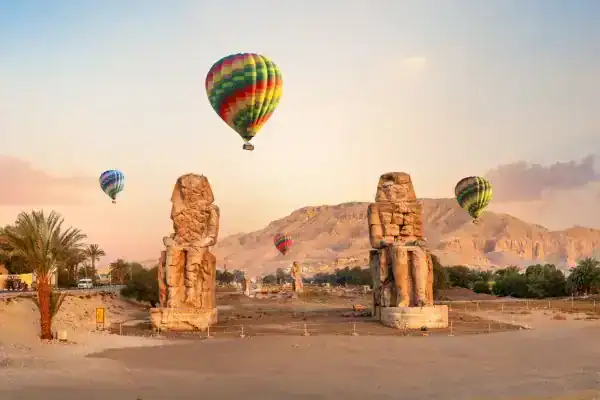
Golden-hour view of ancient Egyptian monuments and desert landscape.
Egypt is a land of striking contrasts–sun-drenched desert and lush Nile banks, world-class coral reefs and vibrant modern cities. Because climates and experiences vary so much by region, there isn’t a single perfect month to visit; pick the season that suits the activities you care about most. This guide breaks the year down by region and season, highlights key festivals, and gives practical packing and timing advice so you can plan a memorable trip. Check current details before travel.
How seasons shape travel across Egypt
Graphic showing how seasons shape travel across Egypt, including coastal cooling, Nile Valley heat, and cooler desert nights.
Climate and crowds shift dramatically by region. Coastal destinations benefit from sea breezes in summer, the Nile Valley gets very hot in mid-summer but is delightful in shoulder seasons, and desert nights can be chilly in winter. Plan region-first: decide whether you want temple sightseeing, a Nile cruise, Red Sea diving, or a desert trek, then match your timing to those priorities.
Cairo, Giza and the Nile Delta – best months and what to expect
Cairo and the Delta are open year-round, but timing affects comfort and local life. Spring and fall are the most comfortable seasons for exploring the Pyramids, open-air museum sites, and the historic souks. Winters are mild and can offer clearer air, while summer is very hot and often best paired with a Red Sea stay to cool off.
Itinerary timing: Plan at least two full days for Cairo highlights–the Giza plateau, the Egyptian Museum (or other major museums), and a stroll in historic neighborhoods. Add a half to a full day for day trips to Saqqara or Memphis. Check current details before travel for museum hours and temporary closures.
- Lightweight daytime clothing and a sun hat; a light jacket for cooler winter evenings.
- Comfortable, sturdy walking shoes for uneven archaeological sites.
- A scarf or shawl for visiting religious sites and for sun and dust protection.
Luxor, Aswan and Nile cruises – timing for temples, balloons and river life
Scenic view highlighting Luxor, Aswan and Nile river life, popular for temple visits and hot-air balloons.
Upper Egypt follows a different rhythm. Spring and fall are ideal for temple-hopping and outdoor activities, with mornings and late afternoons especially pleasant. If you’re sensitive to heat, avoid peak summer for long stays along the Nile–towns can become very warm. Winter is dry and cooler, making desert walks and longer excursions comfortable.
Itinerary timing: Typical Nile cruises run three to seven nights. Schedule shore visits to major sites–Valley of the Kings, Karnak, Philae–for early morning or late afternoon to dodge the midday sun and get softer light for photos. Hot-air balloon rides over Luxor launch at sunrise; reserve early during peak seasons. Check current details before travel for availability.
- Loose, breathable clothing and strong sun protection for daytime temple visits.
- A light fleece or jacket for cool winter mornings and evenings, especially on the Nile.
- A reusable water bottle and electrolyte options–stay hydrated in dry conditions.
Red Sea coast & Sinai (Hurghada, Sharm El Sheikh, Marsa Alam) – when to dive, snorkel and relax
Bright seaside view of the Red Sea coast and Sinai, ideal for diving, snorkeling and beach relaxation.
The Red Sea and Sinai are favorable in summer thanks to cooling sea breezes and consistently warm water–diving and snorkeling are possible year-round. Peak beach season falls in summer when many European travelers arrive. Spring and fall offer excellent underwater visibility and milder air temperatures; winter nights can be cooler, so bring a light layer for evenings.
Itinerary timing: If diving or snorkeling is your priority, allow four to seven days on the coast to reach diverse reefs or consider a liveaboard. Land-based day trips–like Ras Mohamed from Sharm El Sheikh–work well when combined with several shore days. Check current details before travel for marine-park access and dive-operator schedules.
- Rash guard or light wetsuit for long dives and sun protection while snorkeling.
- Reef-safe sunscreen and eco-friendly toiletries.
- A light jacket for breezy evenings and boat trips.
Deserts & oases (Western Desert, Siwa, White Desert) – best seasons and safety notes
Stark landscape of deserts and oases, showing dunes and rocky formations in soft light.
Desert travel is most comfortable in winter and spring when daytime temperatures are mild. Nights–especially in winter–can be cold, so warm layers are essential. Summer desert treks are strenuous and best avoided unless you’re experienced and well supported. Oases such as Siwa are most pleasant in cooler months for jeep or camel exploration.
Itinerary timing: Multi-day jeep excursions or desert camping need flexible timing and strong local knowledge. Plan daylight exploration with early starts to avoid the high sun. Always travel with local operators who understand current conditions, and check current details before travel about permits and safety advisories.
- Warm insulating layers for cold nights, plus sun protection for daytime.
- Sturdy boots, a wide-brim hat, and sunglasses to handle sand and wind.
- Basic first-aid supplies and any personal medications; carry copies of important travel documents.
Festivals, religious observances and calendar highlights
Egypt’s calendar mixes national holidays, Coptic Christian observances, and Islamic festivals. Important moments that affect travel include the month of Ramadan and the Eid holidays, Sham El Nessim (spring festivities), and Coptic celebrations such as Coptic Christmas. Many events follow lunar or religious calendars and shift each year–check current dates before travel.
- Sites and museums may have different hours or temporary closures during public holidays.
- Ramadan affects restaurant hours and daily rhythms; many cultural events increase after sundown.
- Local festivals are great opportunities to see authentic cultural life–be respectful and ask before photographing people.
Practical planning: how long to stay and how to sequence regions
Cluster nearby regions to minimize internal travel. A common approach: combine Cairo and the Delta for museums and culture, add a short domestic flight to Luxor/Aswan for a Nile cruise, then finish with a few days on the Red Sea for diving and downtime. Allow extra days for domestic delays or to explore lesser-known sites. Check current details before booking domestic flights and excursions.
- Short break (4–6 days): Focus on one region–e.g., Cairo and Giza, or a Red Sea resort.
- Classic trip (8–12 days): Cairo + Nile (Luxor/Aswan) + 3–4 days on the Red Sea.
- In-depth trip (14+ days): Add desert oases, the western desert, and more time for archaeological sites and local experiences.
Working with Egypt travel specialists – local support matters
Partnering with Egypt travel specialists or an Egypt-based tour operator simplifies timing, handles seasonal changes, and provides trusted local guides. Look for operators with a Cairo headquarters and regional offices in Luxor, Aswan, Hurghada, Marsa Alam and Sharm El Sheikh–that local footprint keeps logistics smooth and lets you get timely updates while you travel. Ask about flexible itineraries if you want to avoid crowds or chase the best weather windows.
Final tips: balance comfort, activity and culture
Pick your travel season around the activities you value most: spring and fall for temple photography and Nile cruising, summer for Red Sea diving and beaches, and winter for desert camping and comfortable southern exploration. Pack for sun, respect local customs at religious and historic sites, and leave room for spontaneous discoveries. With regional planning and reliable local support, an unforgettable Egyptian adventure is possible any time of year.
Plan with us
Best Time to Visit Egypt: Season-by-Season Guide
Plan your Egypt trip by region and season–spring and fall for temples and Nile cruises, summer for Red Sea diving, winter for desert treks. Check dates and book early.