
Few cultures were as engaged with life, death, and eternity as ancient Egypt. At the center of their worldview was the idea of rebirth, a concept woven into religion, art, architecture, and everyday practice. For Egyptians, death signaled transformation rather than finality.
To understand Egypt’s spiritual life you need to look at their symbols of rebirth. From temple reliefs to tomb amulets, icons like the ankh, scarab, and lotus stood for resurrection, regeneration, and the promise of eternal life.
Today, travelers encounter these motifs everywhere–carved in stone, painted on sarcophagi, and set into royal jewelry–whether on a classic Egypt itinerary or a luxury, Egyptologist-led journey. This guide unpacks their meanings, history, and enduring power.
Context & Background: Why Rebirth Was Central to Ancient Egyptian Belief
Life, Death, and the Promise of Eternity
To appreciate any symbol of rebirth in ancient Egypt, start with the Egyptian worldview: many believers saw existence as cyclical. Like the sun that disappears each night only to rise again, the human soul was expected to renew itself after death.
This outlook grew from observable rhythms and mythic stories, including:
- The daily cycle of the sun god Ra
- The annual flooding of the Nile River
- Agricultural renewal
- The myth of Osiris, god of the afterlife
For ancient Egyptians rebirth wasn’t an abstract idea – it was reflected in nature and ritual. Seasonal and celestial cycles convinced them that endings often led to new beginnings.
Osiris: The God of Resurrection
The Osiris myth is central to Egyptian rebirth imagery. In the story, Osiris is killed by his brother Seth, dismembered, and later reassembled and resurrected by Isis. After revival, Osiris rules the underworld.
That narrative created a theological template: death followed by renewal. Pharaohs, in particular, were ritually linked to Osiris and believed they would be reborn in the next life.
For a compact summary of the myth and its significance, reference scholarly overviews or public resources such as Wikipedia’s entry on Osiris for further reading.
Why Symbols Mattered
Egyptians communicated complex religious ideas visually. A single icon could stand for life, protection, transformation, and cosmic order all at once–making images central to belief and ritual.
So the symbol of rebirth in ancient Egypt was more than ornament: it offered spiritual protection, taught theology, and served as a kind of magical assurance.
The Main Symbol of Rebirth in Ancient Egypt
Several sacred icons stood for renewal and resurrection. Below we explore the most important of these symbols and what they meant to ancient Egyptians.
The Ankh – The Key of Life
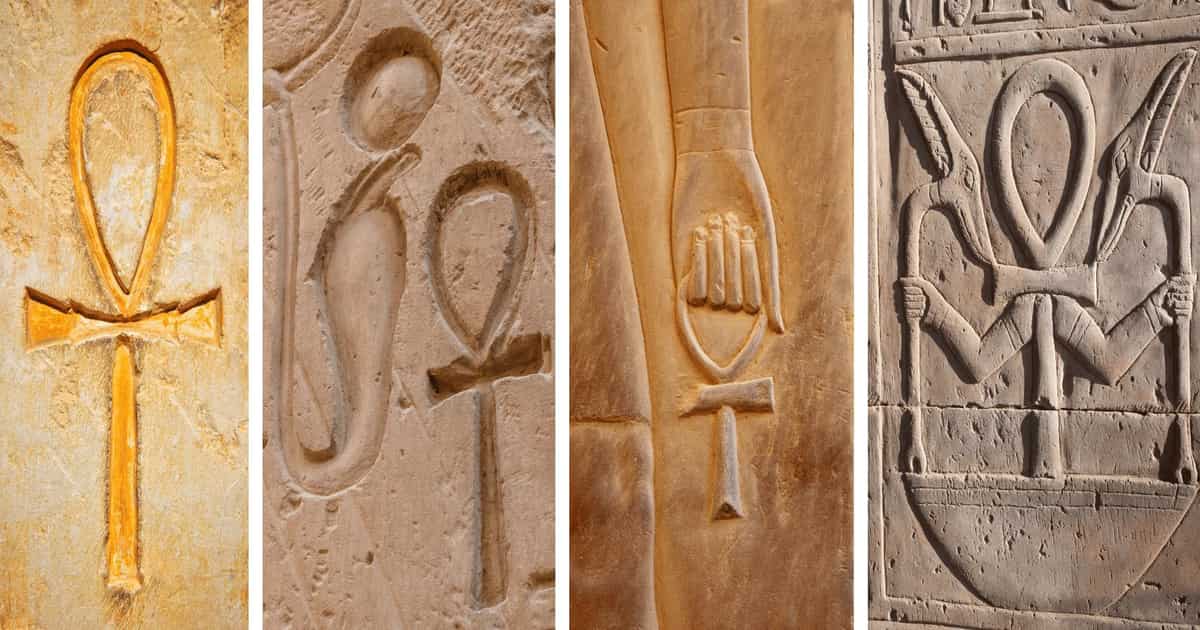
The ankh is likely the most familiar symbol associated with rebirth. Shaped like a looped cross, it signified eternal life and the divine force that sustains existence.
Meaning of the Ankh:
- Physical life
- Spiritual immortality
- Union of masculine and feminine energies
- The breath of life
In temple reliefs gods are frequently shown offering the ankh to a pharaoh’s lips–a gesture that symbolically grants life and protection.
Ancient Egyptians also placed ankhs in tombs to secure rebirth; some scholars suggest the form evokes the rising sun on the horizon – a daily renewal.
The Scarab Beetle – Transformation and Resurrection
The scarab beetle is another dominant rebirth symbol, closely tied to the god Khepri and ideas of creation and daily renewal.
Khepri represented the morning sun, imagined as rolling the sun across the sky much as a scarab rolls a ball. That image came to represent ongoing creation and regeneration.
Scarabs played many roles in Egyptian ritual and burial practice, including:
- Carved into amulets
- Placed over the heart of mummies
- Inscribed with spells from the Book of the Dead
Heart scarabs in particular were meant to protect the deceased during judgment and to help secure successful rebirth in the afterlife.
The Lotus Flower – Renewal from the Waters
The blue lotus was sacred because it closes at night and opens at dawn–an evocative emblem of renewal and the rebirth of the sun each morning.
In Egyptian creation myths:
- The world emerged from primordial waters
- A lotus flower rose from those waters
- The sun god was born from the lotus
Those images linked rebirth to the larger story of cosmic creation and the regular renewal of the world.
The Djed Pillar – Stability and Resurrection
The Djed pillar symbolized stability and was closely associated with Osiris. It was often read as his backbone, a sign of enduring order and strength.
Priests performed a “Raising of the Djed” ritual during festivals to reenact resurrection and to restore cosmic balance.
The Phoenix (Bennu Bird)
The Bennu bird, an Egyptian counterpart to the Greek phoenix, symbolized rebirth through solar cycles and self-creation. It was associated with Ra and Osiris and the theme of renewal.
Rebirth in Royal Burial Practices
Mummification represents the most visible expression of Egyptian beliefs about rebirth.
The embalming and burial process typically involved:
- Preservation of the body
- Placement of amulets
- Recitation of resurrection spells
- Burial with symbolic objects
Pharaohs were wrapped in linen and adorned with sacred symbols to help guarantee safe passage into eternal life.
Visitors to the Valley of the Kings on classic Egypt tours will see these symbols painted and carved into tomb walls, where resurrection scenes remain vividly preserved.
Expert Insights & Travel Tips
Where to See Symbols of Rebirth Today
If you want to see the key symbols of rebirth in person, head to:
- The Egyptian Museum in Cairo
- The Grand Egyptian Museum
- Valley of the Kings (Luxor)
- Karnak Temple Complex
- Temple of Philae
These highlights appear on many curated itineraries and are increasingly featured in luxury programs with expert Egyptologist guides.
Best Itinerary for Symbol Seekers
For a focused cultural trip, consider an itinerary like this:
- Cairo → Museum exploration → Giza Plateau
- Luxor → Valley of the Kings → Karnak Temple
- Nile cruise with Egyptologist guide
Many U.S. travelers pair comfort and scholarship on tailored luxury tours that include museum access and Egyptologist-led explanations to deepen understanding.
Tips for Understanding Ancient Symbols
- Look for repeated icons on temple walls
- Notice how gods hold symbols toward pharaohs
- Ask guides about color meaning
- Observe how symbols appear in burial chambers
Seeing symbols in context–on lintels, statues, and tomb walls–turns abstract ideas into living history you can read and interpret with an expert.
Conclusion – Why the Symbol of Rebirth in Ancient Egypt Still Inspires
The lasting power of Egypt’s rebirth symbols comes from their universality: across millennia they expressed hope that life continues beyond death.
Whether it’s the ankh, scarab, lotus, or Djed pillar, ancient Egyptians developed a visual language that turned fear of death into a promise of renewal. Those images survive on temple walls and in museum collections around the world.
If you want to see these sacred signs firsthand, consider a curated Egypt Classic tour or a bespoke luxury itinerary with an Egyptologist. The story of rebirth is still etched in stone, lit by desert sun, and waiting for travelers to discover.
Plan with us
Symbols of Rebirth in Ancient Egypt: Meaning & Where to See Them
Explore the ankh, scarab, lotus and other ancient Egyptian symbols of rebirth. From Cairo museums to Luxor tombs – including the Grand Egyptian Museum (opening 2026) – book a guided tour.