
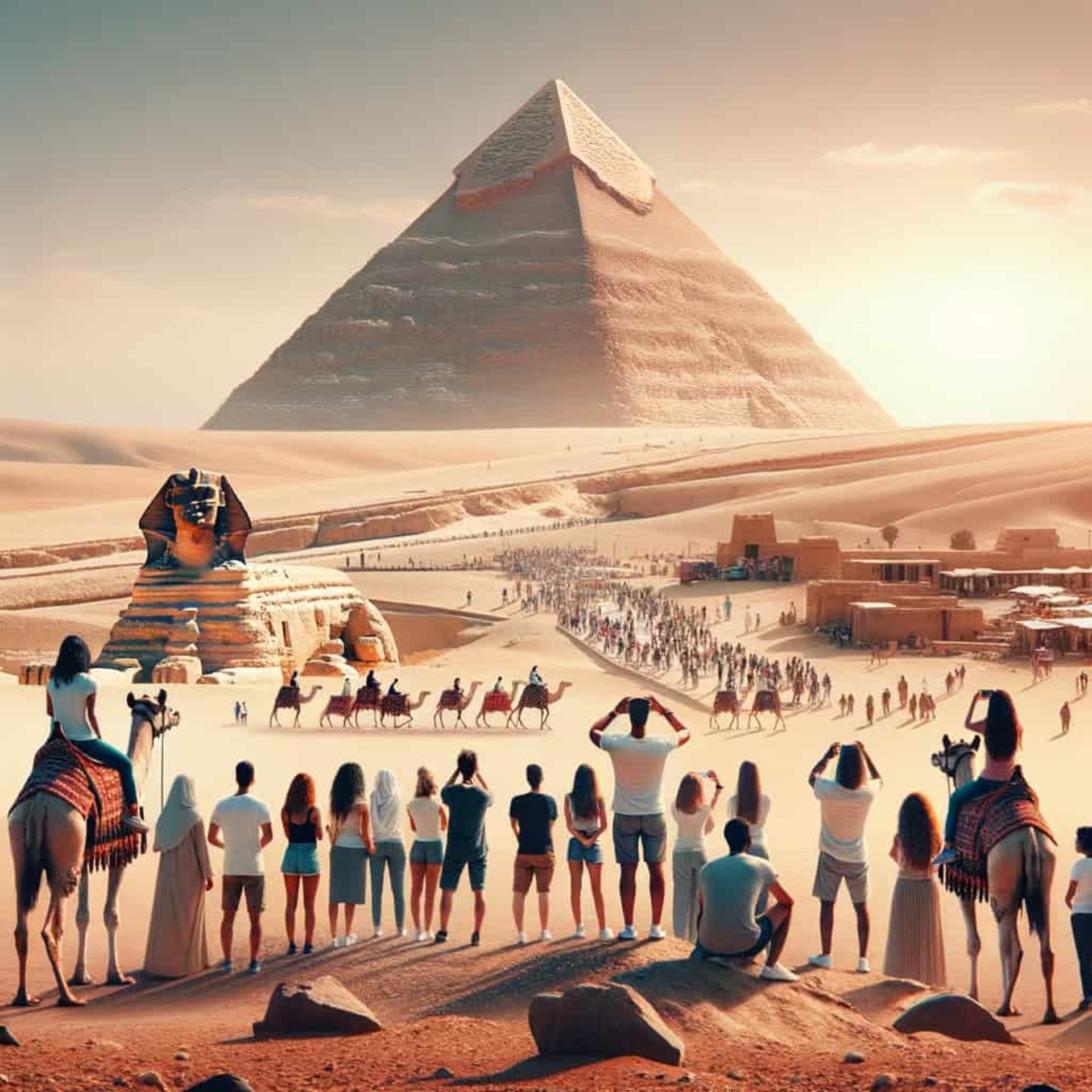
What should you know before you explore Egypt’s temples and pyramids?
Explore Egypt with time, not haste. Egypt’s temples and pyramids are easiest to enjoy when you slow down, start early, and visit with a guide who can explain the names, symbols, and building phases you would otherwise miss. The sites are large, exposed, and often hotter than travelers expect.
Pyramids were built as tombs for Pharaohs. Temples honored specific deities and also worked as centers of ceremony, administration, and power. That difference matters on the ground, because a pyramid site and a temple complex feel very different once you are standing inside them.
Which pyramids are worth seeing beyond Giza?
Giza is the first stop for most travelers, but Egypt has more than 100 pyramids and several are worth the detour. The Bent Pyramid, the Red Pyramid, and the Pyramid of Meidum help you understand how pyramid design changed over time. Each site feels quieter than Giza and gives you more space to look closely.
The Great Pyramid of Giza is the best known pyramid in Egypt and the last surviving wonder of the ancient world. Beyond Giza, the Bent Pyramid stands out for its angled sides, the Red Pyramid is known as Egypt’s first true smooth-sided pyramid, and Meidum shows early construction ideas in a more unfinished form.
- Bent Pyramid, useful for seeing an unusual design transition
- Red Pyramid, a good choice for a quieter interior experience
- Pyramid of Meidum, helpful for understanding early pyramid construction
Which temples give the clearest picture of ancient Egypt?
Karnak, Philae, Luxor Temple, and Abu Simbel are the most useful temple visits for a first trip. Each one shows a different side of ancient Egyptian religion, ceremony, and stone carving. Travelers who want context should choose at least one temple in Luxor and one in Aswan if the schedule allows.
Karnak Temple Complex in Luxor is one of the largest religious sites ever built. The Great Hypostyle Hall is its best known space, and the 134 columns make the scale feel physical rather than theoretical. Philae Temple on Agilkia Island is dedicated to Isis and feels calm and carefully composed. Luxor Temple is tied to the Opet Festival, while Abu Simbel is famous for its rock-cut statues and the modern relocation project that saved it.
- Karnak Temple Complex, best for scale and column architecture
- Philae Temple, best for a quieter island setting and carved detail
- Luxor Temple, best for royal ceremony and ritual context
- Abu Simbel, best for rock-cut design and the relocation story
What do the carvings and layouts actually tell you?
Egyptian temple walls and pyramid interiors are not just decoration. Carvings, reliefs, and spatial layout show religious stories, royal names, offerings, and the way ancient Egyptians linked rulers with the gods. A guide helps you read those details instead of walking past them as stone patterns.
At temple sites, look for hieroglyphics, painted reliefs, courtyards, pylons, and column halls. At pyramids, pay attention to the exterior shape, internal passageways, and the way the site sits in relation to the desert. These details explain both engineering and belief.
When is the best time to visit these sites?
Early morning and late afternoon are the best times to visit Egypt’s temples and pyramids. Those windows bring cooler temperatures, softer light for photos, and a better chance of avoiding the largest groups. Midday heat can make open sites tiring fast, especially in Upper Egypt.
A smart schedule puts Giza early, then reserves long temple visits for mornings or later in the day when possible. Abu Simbel also rewards an early start because the site involves a longer drive for most travelers and can feel intense in full sun.
How should you prepare for a smooth visit?
A smooth visit starts with the right clothing, good shoes, and a guide who knows the site. Lightweight, breathable clothing works best, and sturdy walking shoes matter more than travelers expect because surfaces can be uneven, dusty, or hot. Sun protection also matters throughout the day.
Discovery Tours Egypt uses local Egyptologist guides, which helps when a site has multiple building phases, religious references, or restored sections. Good guiding changes the experience from simple sightseeing to real understanding, especially at large complexes like Karnak and Giza.
- Wear lightweight clothing and sturdy walking shoes
- Bring a hat and sunscreen
- Start as early as your schedule allows
- Choose a guide who can explain the site, not just move through it
How can you visit responsibly?
Responsible travel in Egypt means respecting site rules, not touching ancient surfaces, and avoiding climbing where it is not allowed. Egypt’s monuments survive because travelers follow the rules and keep their distance from fragile stone, paint, and carved details.
Reusable water bottles, careful waste habits, and support for local businesses all help too. Travelers who slow down and spend money with local operators, shops, and drivers keep more value in the places they visit.
Plan with us
Explore Egypt’s Ancient Temples and Pyramids
Explore Egypt’s temples and pyramids with practical travel advice, key sites, and what to expect on a guided visit.