
What do Egyptian queen names mean?
Egyptian queen names mean more than personal identity, because ancient Egyptians treated names as part of a person’s power and memory. A queen’s name could signal divine favor, royal rank, family lineage, or political legitimacy. That is why the search for Egyptian queen names leads straight into religion, court life, and the way rulers wanted to be remembered.
Ancient Egyptians believed a name had real force. The source article explains the idea of Ren, the name, as one of the five essential parts of the soul. Removing a name was a way to erase existence, so naming carried spiritual weight as well as public meaning.
Why were queen names so important in ancient Egypt?
Queen names mattered because they protected identity and announced authority. Royal women did not simply receive a private label, they were represented through names and titles that connected them to the gods, the dynasty, and the state. For travelers studying ancient Egyptian queen names, that system explains why inscriptions matter so much.
The source article says queens were not only wives of kings. They also held titles such as Great Royal Wife, King’s Mother, God’s Wife of Amun, and Lady of the Two Lands. Those titles changed how a queen appeared in inscriptions and on monuments, and they often told you more than the birth name alone.
- Great Royal Wife, the main royal spouse title.
- King’s Mother, used when a queen was the mother of the reigning king.
- God’s Wife of Amun, a major religious title.
- Lady of the Two Lands, a title tied to rule and status.
How were Egyptian queen names written and protected?
Egyptian queen names were often written inside a cartouche, an oval frame that marked protection and eternity. That shape made the name stand out on stone and signaled royal standing. The source article says this was not casual decoration, because the cartouche showed divine endorsement and status.
Travelers usually notice cartouches on temple walls, statues, and tomb inscriptions once a guide points them out. In places like Luxor Temple and Karnak Temple, names and titles are carved in stone and can still be read with the right context. Discovery Tours Egypt uses Egyptologist guides for that kind of reading, which helps turn a wall of symbols into a clear royal story.
Which ancient Egyptian queen names are the best known?
The best known Egyptian queen names include Hatshepsut, Nefertiti, Nefertari, Ankhesenamun, and Cleopatra VII. Each name reflects a different kind of royal identity, from religious symbolism to political authority. These names stay famous because they appear in monuments, royal records, and museum collections.
Hatshepsut took on full pharaonic titles and used masculine regalia while keeping her queenly identity. Nefertiti means “The Beautiful One Has Come,” which the source article links to her role in the Amarna period. Nefertari means “Beautiful Companion,” and Ankhesenamun means “She Lives Through Amun.” Cleopatra VII has a Greek name meaning “Glory of the Father,” even though she ruled in an Egyptian royal setting.
- Hatshepsut, a queen who ruled with pharaonic authority.
- Nefertiti, linked with beauty and the Amarna religious revolution.
- Nefertari, known for a name that means Beautiful Companion.
- Ankhesenamun, whose name connects her to Amun.
- Cleopatra VII, a Greek-named ruler who embraced Egyptian royal imagery.
Did Egyptian queens use titles as well as birth names?
Egyptian queens often used several names and titles at once. The source article says a queen could have a birth name, a throne name, and ceremonial titles. That layered system helped show status in different settings, from family life to formal inscriptions and temple scenes.
This is useful for travelers because one monument may not use the same name you saw in a book. A queen might appear under one name in a cartouche and under a title elsewhere. That is normal in ancient Egyptian royal records, and it is part of what makes reading them so interesting on site.
Where can you see Egyptian queen names in Egypt?
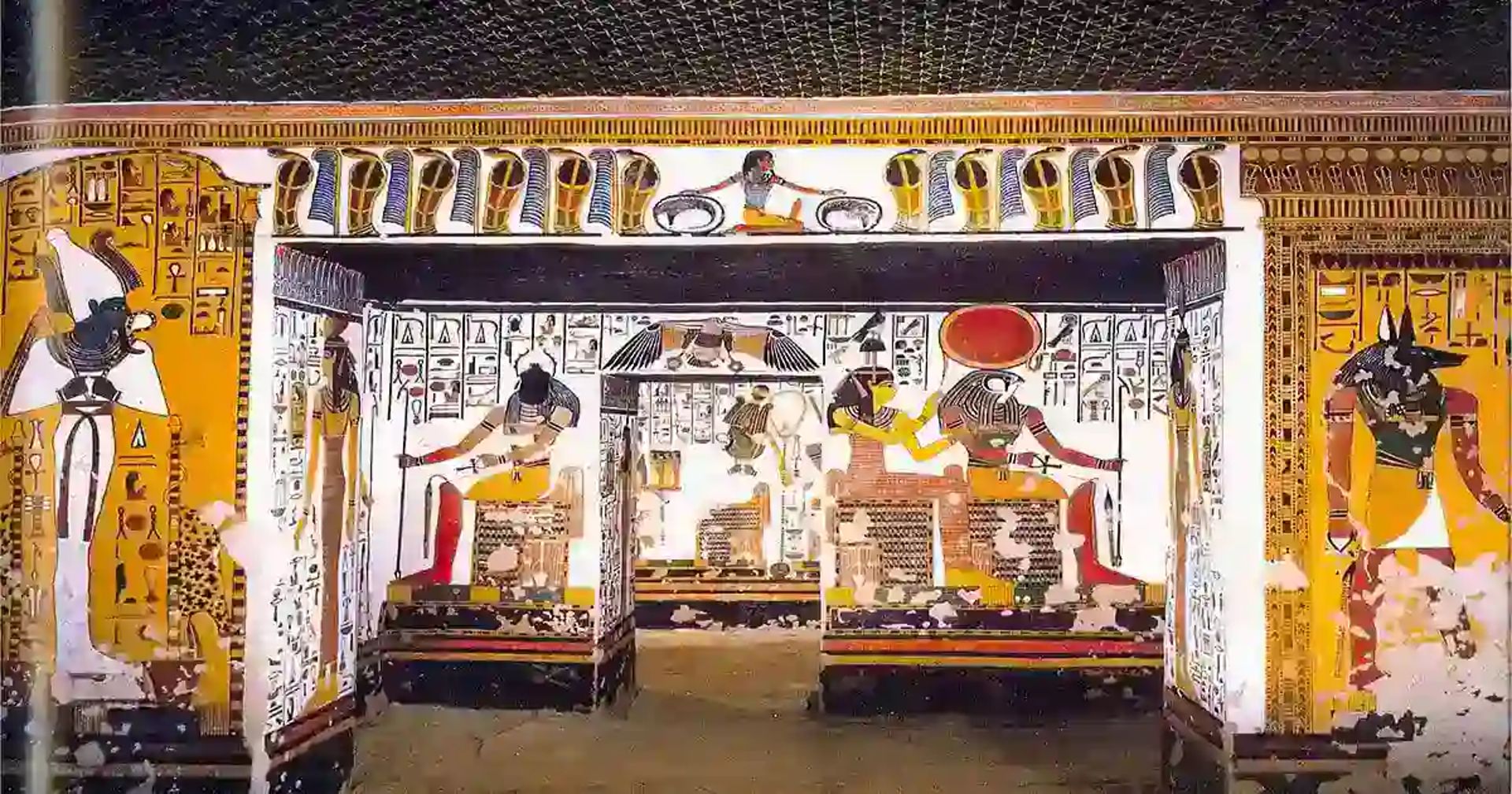
You can see Egyptian queen names carved in temples and tombs at Luxor Temple, Karnak Temple, the Valley of the Queens, and Abu Simbel. The source article also points to these places as strong stops for anyone who wants to see royal names in context. Those sites are where the names stop being abstract and become part of the stone record.
Abu Simbel is especially important because Ramses II honored Queen Nefertari with a temple nearly equal in size to his own, according to the source article. That kind of monument shows how royal naming, memory, and public display worked together. In Luxor and Karnak, your guide can point out cartouches and titles that are easy to miss on your own.
- Luxor Temple for carved royal names and titles.
- Karnak Temple for inscriptions across many reigns.
- Valley of the Queens for tomb context.
- Abu Simbel for the memorial to Queen Nefertari.
Why do Egyptian queen names still matter to travelers?
Egyptian queen names still matter because they help you read ancient sites with more care. A name can tell you which ruler was honored, which deity was invoked, and which political moment you are standing in front of. That makes the visit feel less like sightseeing and more like decoding history in place.
Names such as Nefertiti and Cleopatra still carry weight because they connect beauty, power, diplomacy, and memory. The source article makes that point clearly, and it is why royal women remain among the most searched figures in ancient Egypt. Travelers who want more context can pair temple visits with broader Egypt tours or a Nile cruise, since many royal sites sit along classic routes.
How should you plan a trip around royal sites?
A focused royal-history trip works best when you combine Cairo, Luxor, and Aswan area sites with a guide who can read inscriptions. The source article recommends visiting between October and April and hiring an expert Egyptologist guide. That advice fits the pace of most travelers who want time to look closely at tombs and temple walls.
If you want to build a larger itinerary, start with sites that include clear royal inscriptions, then add temples and tombs with strong queen associations. Many travelers also connect these stops with Nile Cruises or a multi-day Egypt tour so they do not have to arrange each transfer on their own.
Plan with us
Egyptian queen names and the ancient royal naming custom
Learn how Egyptian queen names reflected power, religion, and royal identity, plus where to see them carved at major Egyptian sites.