
What is the pyramid of Giza?
The pyramid of Giza is the Great Pyramid of Khufu at the Giza Plateau, just outside Cairo. The site is the best known pyramid complex in Egypt, and it draws travelers because the scale is hard to grasp until you stand there and look up from the sand.
The main complex includes the Great Pyramid, the pyramids of Khafre and Menkaure, mortuary temples, smaller pyramids, and the Sphinx. Visitors usually spend their time moving between viewpoints, taking photos, and walking short distances across uneven ground.
Why is the pyramid of Giza one of the Wonders of the Ancient World?
The pyramid of Giza is one of the Seven Wonders of the Ancient World because it is the oldest and only one still standing. Ancient builders completed it more than 4,500 years ago, and it remained the tallest man made structure on Earth for nearly 4,000 years.
That record matters because it shows how advanced the site was for its time. The Great Pyramid once reached 146.6 meters, and even today the monument feels larger than the photos suggest.
What can you see at the Giza Plateau?
The Giza Plateau gives you three main pyramids, the Great Sphinx, and several smaller monuments in one visit. The layout makes sense once you arrive, but the distances and sight lines change quickly as you walk, so expect to reframe your photos often.
- Great Pyramid of Khufu, the best known and largest pyramid on the plateau.
- Pyramid of Khafre, which appears taller from some angles because it sits on higher ground.
- Pyramid of Menkaure, the smallest of the three main pyramids.
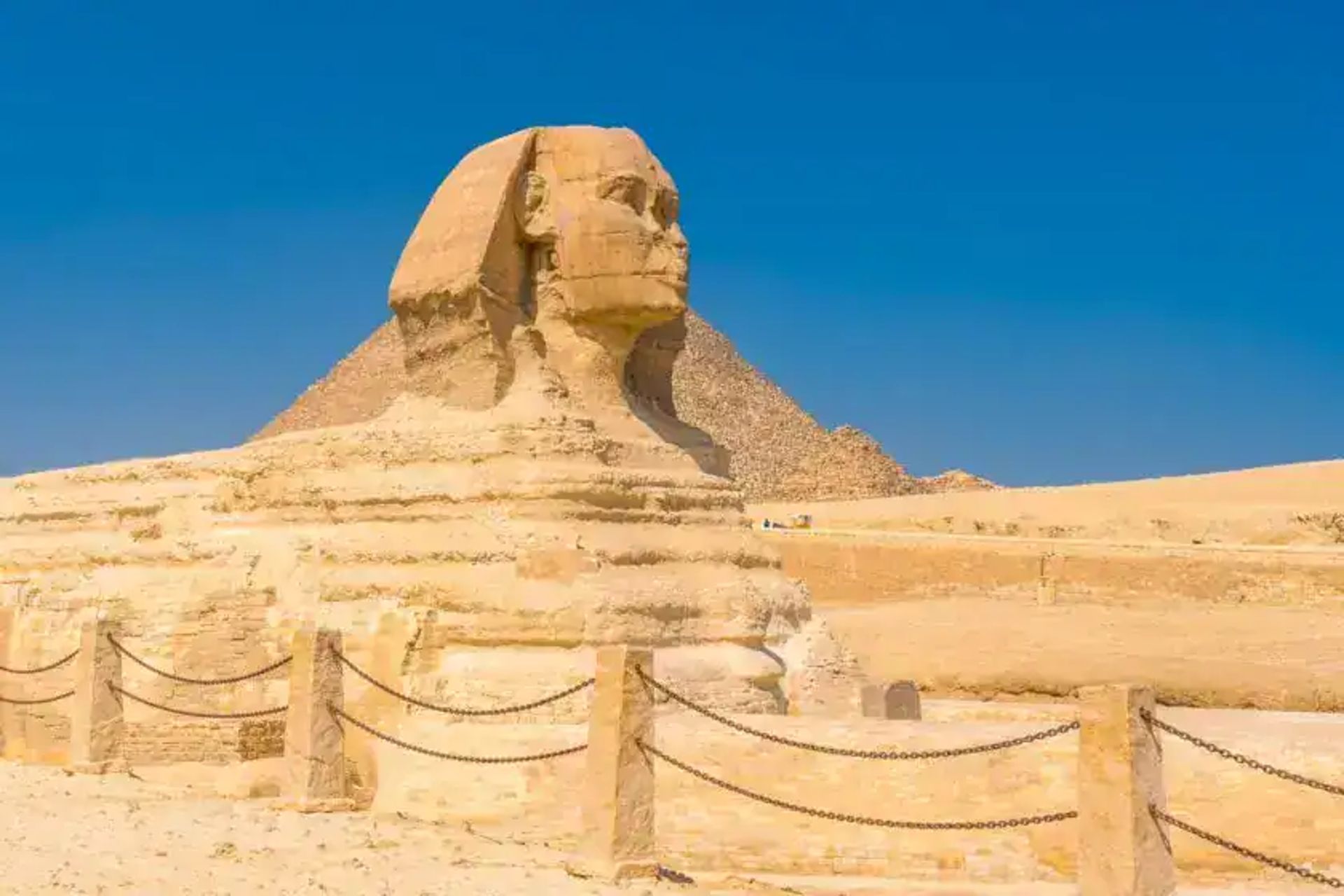
- The Great Sphinx, the limestone statue with a lion body and a Pharaoh's head.
- Mortuary temples, smaller pyramids, and other remains tied to the royal complex.
When should you visit the pyramid of Giza?
The best time to visit the pyramid of Giza is early morning or late afternoon. Those windows are cooler, and the light is softer for photos. Sunrise is the calmest option if you want fewer people in the frame.
Midday heat can be intense because shade is limited across much of the plateau. Wear light clothing, bring water, and plan for sand and uneven paths rather than polished walkways.
What should you do at the pyramids?
A visit to the pyramid of Giza works best when you keep the plan simple. The site is more about the views and the setting than rushing from one indoor stop to another, and many travelers enjoy the plateau most when they leave time for unhurried photos.
- Walk between the main viewing points for different angles of the three pyramids.
- Ride a camel for a classic desert photo, if that matches your travel style.
- See the Solar Boat Museum if your visit includes that stop and you want more context on Khufu.
- Stay for the Sound and Light Show if you want an evening visit with narration and music.
- Combine the plateau with Cairo sites such as the Egyptian Museum, Saqqara, or Memphis.
How close are Saqqara and Memphis to the pyramid of Giza?
Saqqara and Memphis are the strongest add-ons after the pyramid of Giza because each adds a different chapter of ancient Egypt. Saqqara gives you the Step Pyramid of Djoser, and Memphis gives you the remains of Egypt’s ancient capital in an open-air setting.
Travelers who want a fuller pyramid day often pair Giza with one of those sites rather than trying to do everything in Cairo at once. That keeps the pace manageable and gives you more time at each stop.
How do you visit the Sphinx and get the best photos?
The Sphinx sits east of the pyramids and is one of the most photographed parts of the Giza Plateau. The body is a lion and the head is generally linked to Khafre, although its exact origins are still debated.
For the best photo composition, approach from the east so you can frame the Sphinx with the pyramids behind it. The low light near sunrise or late afternoon usually works better than the harsh midday sun.
Is the pyramid of Giza a good trip for kids?
The pyramid of Giza is a strong choice for kids who like big sights, open spaces, and simple stories about kings, builders, and ancient Egypt. The site works best when adults keep the day short, bring water, and plan for heat and walking on sand.
Kids usually respond well to the size of the pyramids and the Sphinx, especially if you explain that these monuments have stood for thousands of years. Short visits work better than long ones, because the plateau can feel hot and tiring after a while.
What else should you know before you go?
The pyramid of Giza is a simple place to visit if you plan ahead, but the terrain is not smooth and the sun is strong. Lightweight clothes, sturdy shoes, and water make the day easier, and a guided visit helps you understand what you are seeing instead of just walking past it.
Standard site entrance fees are normally included on guided tours, but pyramid interiors and premium tombs cost extra. Gratuities are excluded, so keep your budget separate from your ticket plan if you book a guided day.
Plan with us
Pyramid of Giza guide: what to know before you go
Plan a visit to the Pyramid of Giza with practical tips on timing, tickets, the Sphinx, and nearby Cairo sites.