
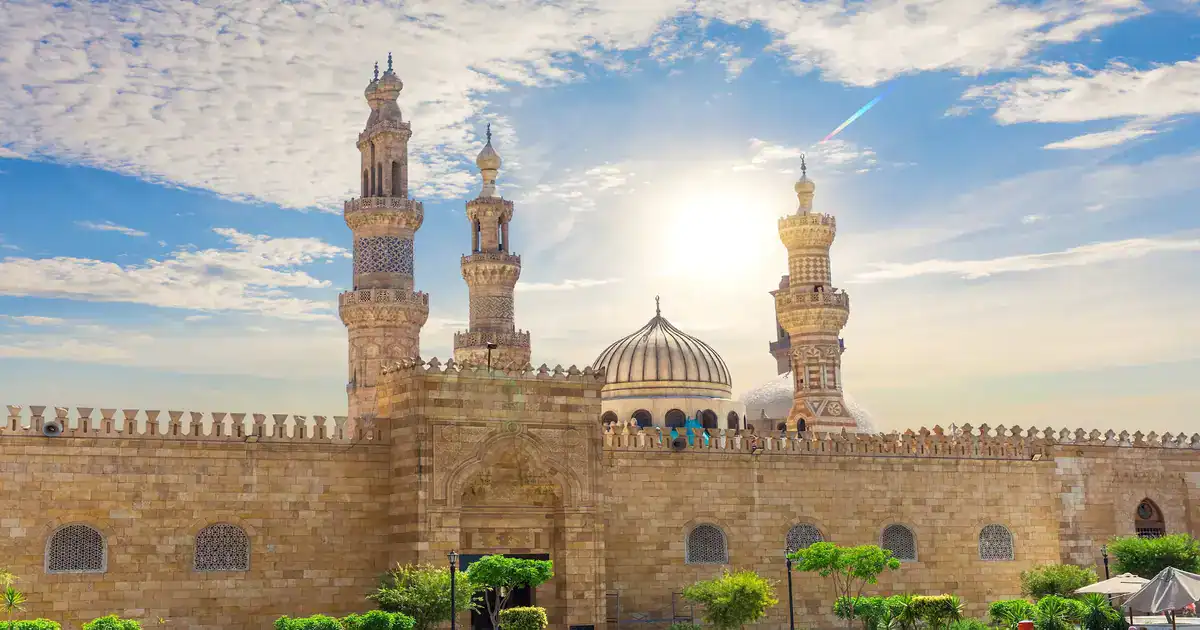
Photo: Exterior view of Al Azhar Mosque and the Cairo skyline – a dramatic silhouette that helps define Historic Cairo.
Cairo’s oldest neighborhoods expose the city’s layered character: everyday life, centuries of scholarship and architecture that reward slow walking. At the center of that experience is Al Azhar Mosque – both an active place of worship and an intellectual institution whose reach has influenced the Muslim world for more than a thousand years.
Photo: Interior perspective of Al Azhar’s prayer hall, where columns and arches frame the devotional space.
Why Al Azhar Matters
Al Azhar is more than an impressive building; it’s the anchor of a scholarly tradition that began with Cairo’s Fatimid foundation in the 10th century. From its early days the mosque welcomed students and teachers; the adjacent institution grew into Al‑Azhar University, a continuing center for religious study, legal debate and intellectual exchange. For travelers, visiting means seeing a functioning spiritual center and a live chapter of global intellectual history.
Origins and Historical Role
Construction began soon after the Fatimids made Cairo their capital in 970–972 AD. Some accounts link the name to Fatima al‑Zahra. Al Azhar started as a congregational mosque and quickly attracted students of law, theology and language. As Ayyubid, Mamluk and Ottoman rulers cared for the site, the mosque’s form and scholarly role evolved, adopting new architectural styles and curricular traditions while maintaining an unbroken reputation for learning.
A Journey Through Time
What you see today reflects centuries of change. The original Fatimid footprint was modest; later rulers expanded and embellished the complex. The Mamluks added much of the ornate stonework and several minarets you’ll notice on the skyline, and Ottoman-era restorations introduced decorative details and repairs. Walking the site is like reading a timeline of Cairo – each layer marks a different political and artistic chapter.
Architecture: What to Look For
Al Azhar’s architectural story is visible in a few clear elements: the marble courtyard framed by arcades, the broad prayer hall with repeating columns and arches, and a set of minarets that punctuate Islamic Cairo’s skyline. The mosque offers a compact lesson in Islamic decorative arts – carved stonework, intricate wooden screens and Arabic calligraphy on mihrabs and walls. Each minaret has its own profile and ornament, reflecting when it was built or restored.
The Courtyard, Prayer Hall and Minarets
Approach Al Azhar through the narrow lanes of Islamic Cairo and you’ll find a cool marble courtyard – a calm pause from the city’s bustle. Beyond that, the prayer hall is a rhythmic field of columns and arches where sunlight and shadow animate centuries‑old calligraphy and painted stucco. The mosque’s distinctive minarets speak different architectural languages yet form a unified silhouette over the neighborhood.
Photo: Courtyard and minarets of Al Azhar at sunset, showing the mosque’s layered textures and skyline presence.
Visiting Practicalities
Al Azhar is an active religious site, so planning and respect matter. The mosque is generally open to visitors outside formal prayer times, and public access to many areas is typically free, but policies can change – confirm details before you travel. Guided cultural tours and Cairo day itineraries often include Al Azhar alongside surrounding sites; working with an Egypt-based tour operator or Egypt travel specialists (Cairo HQ + Luxor + Aswan + Hurghada + Marsa Alam + Sharm El Sheikh) helps structure your time and avoid peak prayer periods.
Dress Code, Behavior and Photography
Because the mosque is used for worship, modest dress is required: cover shoulders and knees; many women choose to wear a scarf over their hair. Shoes must be removed before entering inner prayer areas – bring socks or a small bag for footwear. Speak quietly, avoid disrupting worshippers and follow staff directions. Photography is usually allowed in exterior and non‑prayer spaces, but photographing people during prayer is intrusive. Always ask permission before photographing individuals and verify current photography rules before your visit.
Best Time to Visit and What to Expect
Early morning and late afternoon are the most atmospheric times: the softer light highlights carved details and the courtyard is quieter outside peak prayer periods. Midday is busiest, especially with school groups. If you’re traveling from the U.S., plan for jet lag (particularly from Eastern Time) and consider visiting during U.S. spring break or fall travel windows to avoid peak domestic holiday crowds. If you wish to observe prayer, do so respectfully from the periphery – it’s a lived practice, not a stage.
What to See Nearby
Al Azhar sits in the living heart of Historic Cairo, where medieval street patterns remain in narrow lanes, madrassas and small monuments. Nearby are Al‑Muizz Street’s restored façades, numerous medieval schools and the bustling Khan el‑Khalili bazaar – a sensory mix of spices, brassware and cafés. Many visitors combine Al Azhar with a walking route through these sites; a relaxed stroll lets you balance quiet observation with the market’s lively atmosphere.
Photo: Interior view of Al Azhar, illustrating the mosque’s atmosphere where history and daily faith meet.
Practical Walking Loop and Local Tips
- Start at Al Azhar to enjoy the courtyard and prayer hall during a quieter hour.
- Walk toward Al‑Muizz Street to see restored historic façades and small mosques.
- Head to Khan el‑Khalili for a market experience, stopping for a traditional coffee or a quick snack.
- If time allows, explore nearby madrassas and small museums that tell the story of Islamic Cairo.
Planning Your Visit and Tours
Some travelers prefer a standalone visit to Al Azhar; others get more from a curated Cairo day tour that links architecture, history and local life. Egypt travel specialists with a Cairo HQ and regional offices in Luxor, Aswan, Hurghada, Marsa Alam and Sharm El Sheikh can tailor itineraries to avoid busy times, provide transport and explain the mosque’s layered history on site. If you’re planning a longer Egypt trip, consider adding the newly opened Grand Egyptian Museum (opened 2026) as a major cultural highlight and confirm practical details ahead of time.
Final Thoughts and FAQ
Al Azhar remains one of Cairo’s most evocative sites: a place where daily worship, centuries of learning and architectural craftsmanship coexist. Travelers who come with curiosity and cultural sensitivity will find it a memorable highlight of Historic Cairo.
Plan with us
Al Azhar Mosque – History, Architecture & Visitor Guide
Explore Al Azhar Mosque in Historic Cairo–Fatimid origins, layered architecture and practical visitor tips. Check CDC guidance, confirm access and photography rules with Egypt travel specialists before you go.