
What makes Egypt markets worth visiting?
Egypt markets are worth visiting because they show daily life, local trade, and old craft traditions in one place. You can shop for spices, textiles, metalwork, papyrus art, and small souvenirs while hearing the rhythm of a working market instead of a staged attraction.
The source article focuses on historic bazaars in Cairo, Alexandria, and Aswan, and that mix gives you a good picture of how different Egyptian markets can feel. Cairo is busy and famous, Alexandria is more hidden and local, and Aswan has a distinct Nubian character.
Why is Khan el-Khalili the best-known market in Cairo?
Khan el-Khalili is Cairo’s best-known market and the place most travelers picture when they think about old Egyptian bazaars. The market dates to the 14th century, and its lanes still have brass workers, spice sellers, coffee spots, and small shops packed close together.
A visit here feels busy from the first few steps. Narrow passages, old archways, and constant shop calls make the market easy to remember, even after a short walk. Travelers usually come for lamps, spices, tea sets, papyrus, and the atmosphere more than for one single purchase.
- Look for brass lamps and metalwork made by local craftsmen.
- Check spice stalls for saffron, cumin, and cardamom.
- Pause in a cafe for tea or coffee before buying anything.
- Walk slowly, because many lanes branch off in small side passages.
What do Alexandria’s souks feel like?
Alexandria’s souks feel quieter and less exposed than Cairo’s best-known market areas. The source article describes them as hidden places where wooden lattice windows, stone walls, and narrow lanes help create a slower pace and a more local shopping experience.
Travelers who want a less crowded market walk often prefer Alexandria because the setting feels closer to neighborhood trade than to a major tourist stop. The best approach is simple: keep your eye open for textiles, spices, metalwork, and papyrus art, then compare a few stalls before buying.
What should you buy in Egypt markets?
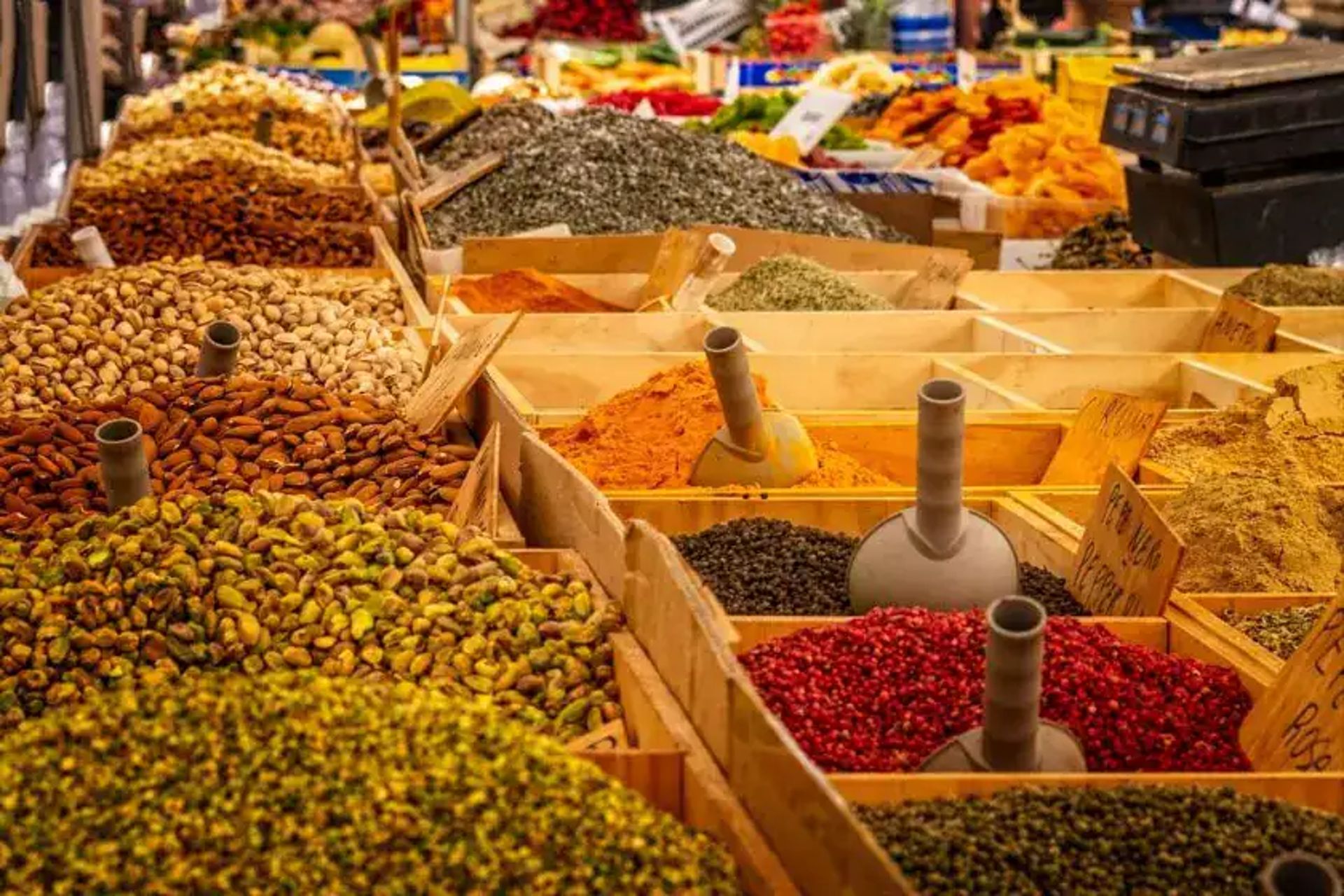
Egypt markets are a good place to buy handwoven textiles, carpets, spices, herbs, metal pots, shisha pipes, papyrus art, and calligraphy pieces. Those are the items named in the source, and they reflect the mix of practical goods and souvenir shopping that keeps these markets active.
Spices are usually the easiest purchase for first-time visitors because they are compact, easy to pack, and tied to the market scent that travelers remember. Textiles and metalwork take more time to compare, so give yourself room to browse instead of buying on the first stop.
Why does Aswan Souk feel different?
Aswan Souk feels different because the market has a clear Nubian influence and a warmer, slower rhythm than the northern bazaars. The source describes hibiscus flowers, aromatic woods, whitewashed walls, and women in colorful galabeyyas selling herbs and ground spices.
That mix makes Aswan one of the strongest market stops for travelers who want a place that still feels rooted in everyday life. You are less likely to feel rushed here, and more likely to notice the colors, scents, and small conversations between vendors and regular shoppers.
How should you bargain in Egypt markets?
Bargaining is part of shopping in Egypt markets, and the source suggests starting at about 40 percent of the first asking price. The same source also says a smile, calm conversation, and accepting tea often help more than hard bargaining.
A useful way to shop is to ask the price, compare it with a few other stalls, and keep the exchange friendly. Vendors expect discussion, but most visitors get better results when they stay polite and patient instead of trying to force a quick deal.
- Start low, then move up gradually.
- Compare a few stalls before agreeing to buy.
- Keep the tone friendly and relaxed.
- Accept tea if the seller offers it and you have time.
What is the best time to explore old markets in Egypt?
The best time to explore old markets in Egypt is late in the day, when the atmosphere gets livelier and the stalls feel more active. The source says markets change after sunset, with lanterns, grilled food, and more locals joining the scene after work.
Morning can work well if you want fewer people and cooler walking conditions. Evening works better if you want the full market mood, more food smells, and a busier street life. Either way, plan enough time to wander instead of rushing through one lane.
Should you visit with a guide?
A guide is helpful if you want the story behind each market and less time getting lost in side alleys. Discovery Tours Egypt is an Egypt-based travel company with local Egyptologist guides, so a guided visit can help you understand what you are seeing while you shop.
A guide also helps if you want a cleaner route through busy areas and practical help with bargaining. Market visits can feel chaotic at first, and a local guide can keep the experience moving without turning it into a shopping script.
How do Egypt markets connect to ancient trade?
Markets in ancient Egypt were tied to trade, local production, and the movement of goods between towns and regions. The source article points to that older trading tradition through spices, crafts, and the long life of places like Khan el-Khalili.
Ancient Egyptian marketplaces were likely simpler than the bazaars travelers visit today, but the basic idea was similar: people came to exchange goods, meet others, and buy what they could not make at home. Modern market streets keep that same purpose alive in a more crowded form.
Plan with us
Egypt markets that travelers still seek out
Explore Egypt markets in Cairo, Alexandria, and Aswan, with practical tips on bargaining, timing, and what to buy.