
A Guide to Shopping for Souvenirs in Egypt
When you picture Egypt, you probably think of the Pyramids of Giza, the Nile, and ancient temples. Beyond those iconic sites, Egypt’s markets and artisan shops hold a different kind of treasure–handmade goods that connect you to local craftsmen and centuries of tradition.
This guide highlights the best souvenirs to bring home and where to find them, plus practical tips so your shopping is as satisfying as your sightseeing.
The Allure of Egyptian Souvenirs
Souvenirs are more than mementos–they’re touchpoints to a place. In Egypt, everyday objects are often crafted with techniques passed down through generations: textiles woven with care, spices blended by hand, and decorative pieces that echo pharaonic motifs.
What to Buy: 5 Must-Have Souvenirs from Egypt
Not sure what to bring back? Here are five classic picks that capture Egypt’s history, craftsmanship, and flavors–easy to find in major markets and artisan quarters.
- Papyrus Scrolls – Take home an ancient medium. Genuine papyrus shows layered plant fibers and is often hand-painted with hieroglyphs or mythological scenes. Look for certified shops near the Pyramids of Giza or in Luxor.
- Alabaster Crafts – Commonly found in Luxor, alabaster lamps, vases, and carved figures showcase skilled stonework. Their translucent finish makes them striking keepsakes or home accents.
- Egyptian Cotton Products – Renowned for its softness and strength, Egyptian cotton is ideal for bedding, towels, scarves, and garments. Shop reputable textile stores and markets in Cairo and Alexandria.
- Handmade Jewelry – From silver scarabs to beaded necklaces featuring the Eye of Horus, local jewelry blends ancient symbols with modern design. For the widest selection, visit Cairo’s Khan El Khalili market.
- Spices and Herbs – Bring home Egypt’s flavors: cumin, hibiscus, dukkah, and other aromatic blends. Spices are lightweight, packable, and make thoughtful gifts for food lovers.
Where to Shop for Souvenirs in Egypt
Choosing the right market or shop makes a big difference. Below are reliable spots where you can find authentic goods and enjoy an immersive local experience.
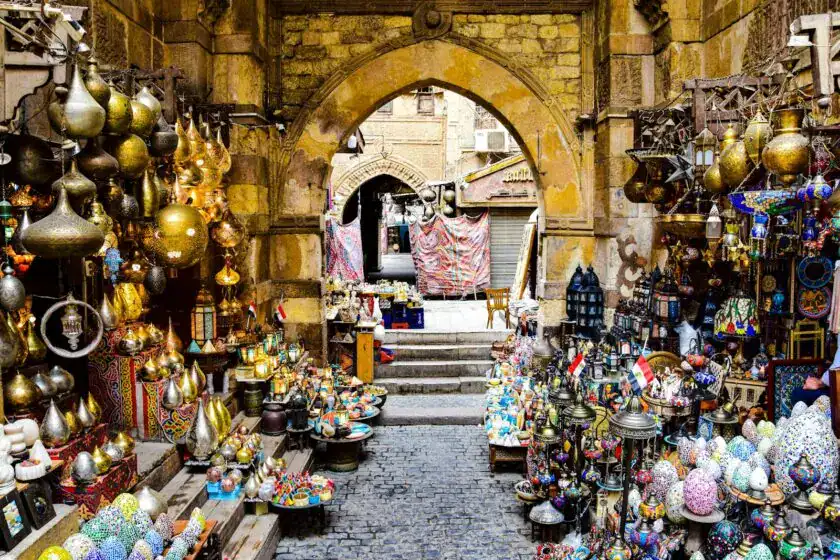
- Khan El Khalili Market (Cairo) – One of Egypt’s oldest and most famous bazaars, Khan El Khalili is a lively place to hunt for jewelry, spices, lamps, textiles, and souvenirs.
- Aswan Market – A great stop for Nubian textiles, pottery, and colorful baskets–perfect if you’re exploring southern Egypt around Aswan and Abu Simbel.
- Luxor Souk – Quieter and often more local than some tourist bazaars, the Luxor Souk is ideal for alabaster pieces and smaller handcrafted gifts.
- Online Marketplaces – If you forget something or want to support artisans after you return home, many Egyptian craftsmen sell their work online through reputable platforms.
Tips for Buying Authentic Egyptian Souvenirs
To make sure you’re getting genuine, locally made items, use a few simple checks and enjoy the market rituals–bargaining included.
- Ask Questions – Good sellers are proud of their work. Ask how and where an item was made and who made it.
- Look for Handmade Details – Small irregularities, visible tool marks, or slight asymmetry are signs of handcraft rather than mass production.
- Practice Bargaining – Haggling is expected in most bazaars. Start lower than the asking price, keep the tone friendly, and be prepared to meet halfway or walk away politely.
Know Before You Buy: Customs Considerations
Before you pack that alabaster lamp or antique piece, check export rules in Egypt and import regulations for the United States. Some antiques and animal-based products may require permits or be restricted–when in doubt, ask the seller for documentation and consult U.S. Customs and Border Protection.
Final Thoughts
Shopping in Egypt is an opportunity to support local artisans and bring home meaningful pieces that reflect the country’s history and craft traditions. Take your time, learn the stories behind items, and choose pieces that speak to you.
Whether you’re wandering the alleys of Khan El Khalili, browsing Luxor’s stalls, or visiting markets in Aswan, approach shopping as part of the cultural experience–curious, respectful, and ready to discover something special.
Ready to find the perfect keepsake? Let Discovery Tours, an Egypt-based tour operator, introduce you to the best markets and trusted artisans so your souvenir shopping is effortless and memorable.
Plan with us
A Guide to Shopping for Souvenirs in Egypt
Shop authentic Egyptian souvenirs–from papyrus and alabaster to Egyptian cotton and spices. Get market tips, bargaining advice, and customs guidance for U.S. travelers.