
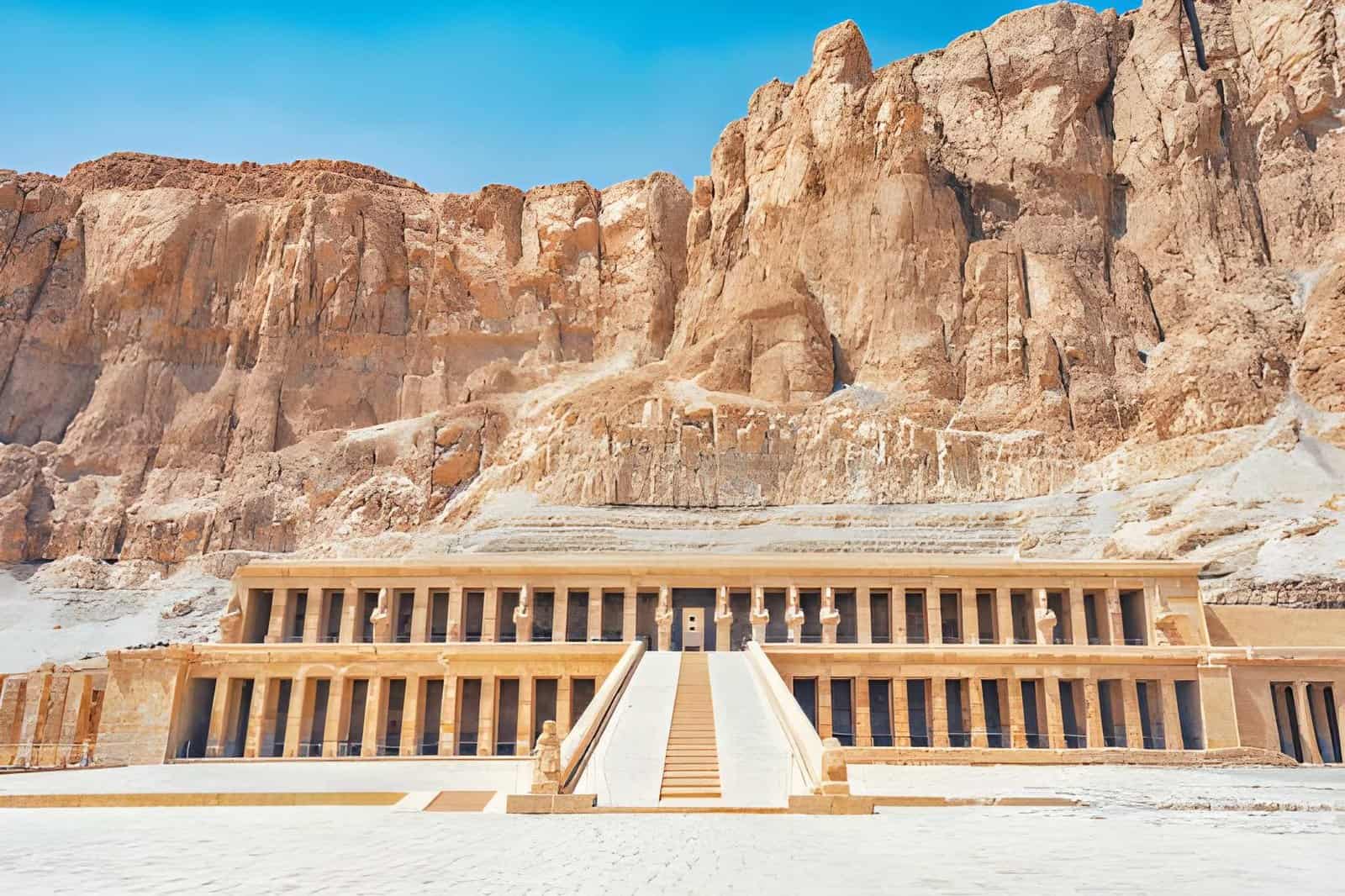
Standing gracefully against the golden cliffs of Deir el-Bahari, the mortuary temple of Queen Hatshepsut is one of the most breathtaking monuments in all of Egypt. More than just a temple, it is a bold architectural statement—an eternal declaration of power, legitimacy, and divine connection. The mortuary temple of Queen Hatshepsut reflects the ambition of a female pharaoh who defied tradition and ruled with authority.
When travelers explore the West Bank of Luxor, they often find themselves mesmerized by the clean symmetry and dramatic terraces of the temple of Hatshepsut. Unlike many other ancient Egyptian structures, this site feels modern in its lines and proportions. Yet it was built over 3,500 years ago.
In this comprehensive guide, we will explore the history, symbolism, and architectural brilliance of the mortuary temple of Queen Hatshepsut. Whether you are planning your journey through our curated Egypt Tour Packages or diving deep into history with Egypt Classic Tours, this article will answer every question you may have about this iconic monument.
The Historical Context Behind the Mortuary Temple of Queen Hatshepsut
To understand the significance of the mortuary temple of Queen Hatshepsut, we must first understand the woman behind it.
Who Was Queen Hatshepsut?
Hatshepsut was one of the most successful rulers of the 18th Dynasty of ancient Egypt. She was the daughter of Thutmose I and the wife of Thutmose II. After her husband’s death, she initially served as regent for the young Thutmose III. However, she later declared herself pharaoh—an extraordinary move in a traditionally male-dominated institution.
Rather than ruling in the shadows, Queen Hatshepsut adopted full pharaonic titles and iconography. Statues depict her wearing the false beard and royal kilt typically associated with male kings. Her reign, around 1479–1458 BCE, was marked by peace, trade, and monumental construction projects.
Why Build a Mortuary Temple?
In ancient Egypt, mortuary temples were sacred spaces where rituals were performed to honor a deceased pharaoh and ensure their eternal life. The mortuary temple of Queen Hatshepsut was not just a funerary site—it was a political statement. It reinforced her divine birth narrative and legitimized her reign.
The temple is located in Deir el-Bahari on Luxor’s West Bank, near the Valley of the Kings. This placement connected her monument symbolically with earlier rulers, especially Mentuhotep II, whose nearby temple inspired aspects of Hatshepsut temple design.
For deeper historical context, you can explore the detailed background of Hatshepsut on Wikipedia:
WikipediaHatshepsut – Wikipedia
rchitecture and Design of the Mortuary Temple of Queen Hatshepsut
The mortuary temple of Queen Hatshepsut is one of the finest examples of ancient Egyptian architecture. Designed by her trusted architect Senenmut, the structure blends harmoniously with the natural limestone cliffs behind it.
A Three-Terrace Masterpiece
The temple consists of three massive terraces connected by long ramps. Each terrace features colonnaded porticoes, creating a rhythm of shadow and light that shifts throughout the day.
- Lower Terrace: Originally adorned with lush gardens and exotic trees brought from the Land of Punt.
- Middle Terrace: Contains detailed reliefs illustrating trade expeditions and divine birth scenes.
- Upper Terrace: Houses the sanctuary dedicated to Amun-Ra.
The clean horizontal lines of the terraces contrast dramatically with the vertical cliffs of Deir el-Bahari, creating a striking visual harmony.
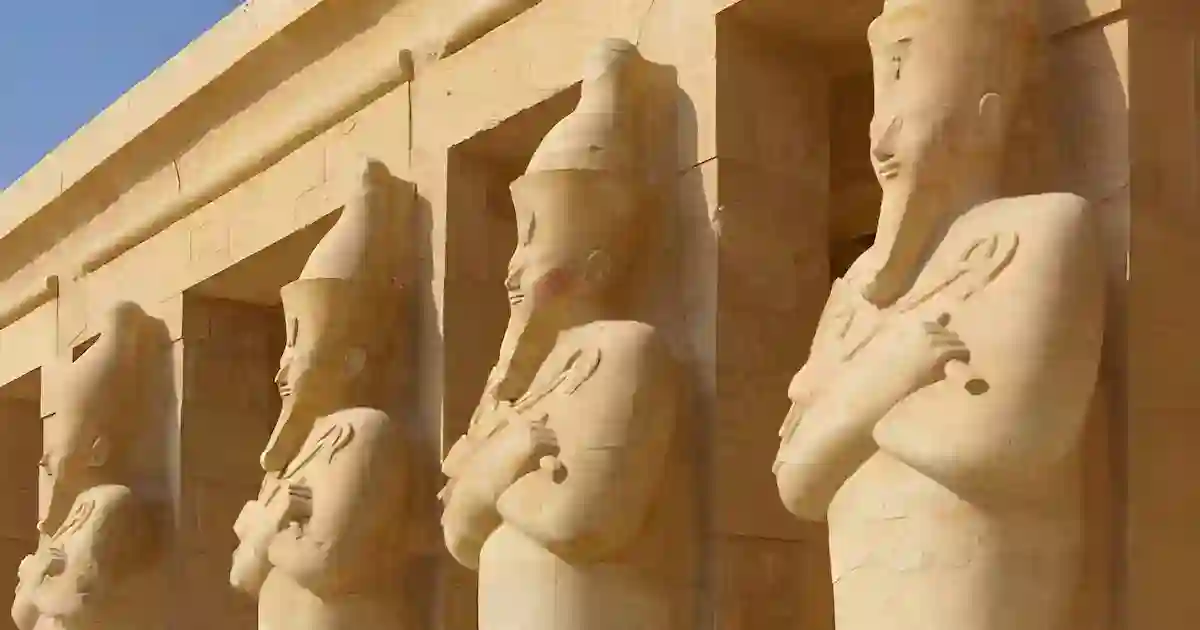
The Divine Birth Reliefs
One of the most fascinating features of the temple of Hatshepsut is the relief cycle depicting her divine birth. According to these carvings, the god Amun visited her mother in disguise and fathered Hatshepsut. This mythological narrative reinforced her legitimacy as a ruler chosen by the gods.
The Expedition to Punt
Another highlight is the famous relief of the trading expedition to Punt. These carvings show detailed scenes of ships, foreign landscapes, incense trees, and trade goods. The reliefs demonstrate the prosperity and diplomacy that characterized Queen Hatshepsut’s reign.
Chapel of Hathor and Anubis
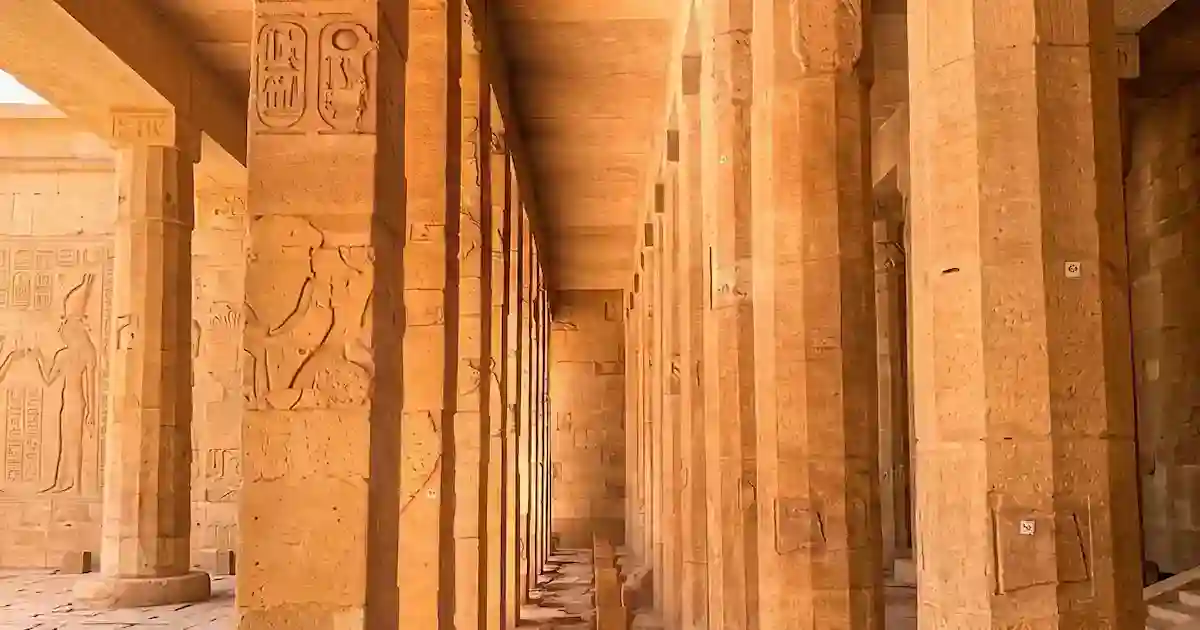
The middle terrace includes chapels dedicated to the goddess Hathor and the god Anubis. These sacred spaces feature intricate columns and reliefs that further emphasize the temple’s religious importance.
Symbolism and Power in Hatshepsut Temple
The mortuary temple of Queen Hatshepsut was more than a burial monument—it was a visual manifesto.
Architectural Symbolism
- Alignment with the Sun: The temple aligns with the winter solstice sunrise, reinforcing connections to solar worship.
- Integration with Nature: The temple appears carved from the mountain itself, symbolizing eternity and stability.
- Ascending Pathways: The ramps suggest spiritual ascent toward the divine realm.
Political Messaging
After her death, many of Hatshepsut’s images were defaced, likely during the reign of Thutmose III. Yet the temple endured. Its survival speaks to the enduring power of architecture as propaganda.
Expert Travel Tips for Visiting the Mortuary Temple of Queen Hatshepsut
Planning a visit to the mortuary temple of Queen Hatshepsut? Here are expert insights to enhance your experience.
Best Time to Visit
- Early Morning (6:00–9:00 AM): Cooler temperatures and fewer crowds.
- Winter Months (October–April): Ideal weather for exploring Luxor’s West Bank.
What to Bring
- Comfortable walking shoes
- Hat and sunscreen
- Water bottle
- Camera with wide-angle lens
How to Include It in Your Itinerary
The temple is typically visited alongside:
- Valley of the Kings
- Colossi of Memnon
- Medinet Habu
Many of our Egypt Classic Tours include a guided West Bank excursion featuring the mortuary temple of Queen Hatshepsut. For a more tailored experience, explore our premium Egypt Tour Packages designed for comfort and cultural depth.
Photography Tips
- Capture the temple from the lower courtyard for symmetrical shots.
- Late afternoon light creates dramatic shadows along the colonnades.
- Use the surrounding cliffs as a natural frame.
Restoration and Modern Recognition
The temple has undergone extensive restoration by Polish archaeological missions since the 1960s. Today, it stands as one of Luxor’s most visited landmarks.
As part of the broader Theban Necropolis, the site is associated with the UNESCO World Heritage designation of Ancient Thebes with its Necropolis. This recognition underscores the global cultural importance of Hatshepsut temple.
Conclusion – Why the Mortuary Temple of Queen Hatshepsut Still Inspires
The mortuary temple of Queen Hatshepsut is more than a historical site—it is a symbol of ambition, innovation, and resilience. Rising gracefully against the cliffs of Deir el-Bahari, it tells the story of a woman who reshaped ancient Egyptian history.
From its architectural brilliance to its powerful reliefs, the temple of Hatshepsut remains one of the most extraordinary monuments of ancient civilization. Whether you are passionate about archaeology, architecture, or royal history, visiting this site is an unforgettable experience.
Ready to witness the majesty of the mortuary temple of Queen Hatshepsut in person? Explore our curated Egypt Tour Packages or plan your historical journey with our immersive Egypt Classic Tours. Contact us today and begin your adventure into the timeless wonders of Luxor.
1. Where is the mortuary temple of Queen Hatshepsut located?
It is located at Deir el-Bahari on the West Bank of Luxor, near the Valley of the Kings. Most Egypt Classic Tours include it as part of a full-day West Bank itinerary.
2. Why is Hatshepsut’s temple unique?
Unlike traditional pyramid complexes, Hatshepsut temple features terraced levels built directly into limestone cliffs. Its symmetry and open design make it one of the most distinctive monuments in Egypt.
3. Was Queen Hatshepsut buried in the temple?
No, she was buried in a tomb in the Valley of the Kings (KV20). The mortuary temple of Queen Hatshepsut served as a place for rituals and offerings rather than her physical burial site.
4. How long does it take to explore the temple?
Most visitors spend 1 to 2 hours exploring the site. If you’re part of structured Egypt Tour Packages, the temple visit is usually combined with nearby attractions.
5. Is the temple suitable for children and older travelers?
Yes, although there is some walking involved. The ramps are gradual, and guided tours can adjust the pace accordingly.
If you’re planning your journey to Luxor, make sure the mortuary temple of Queen Hatshepsut is at the top of your list. Few places in the world capture the ambition and elegance of ancient Egypt quite like this timeless masterpiece.