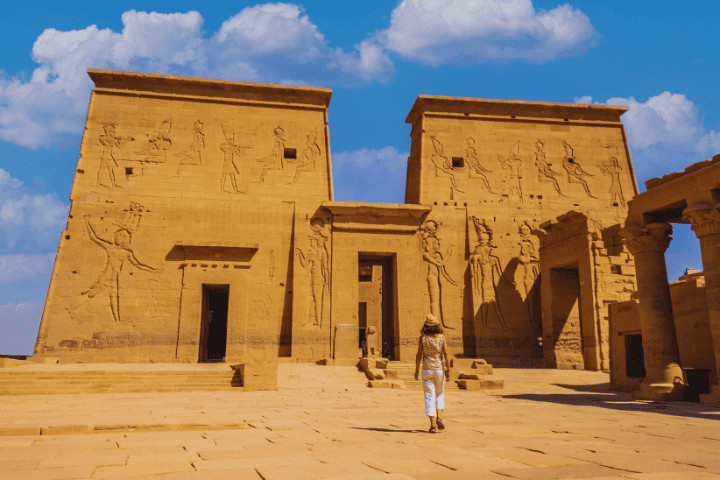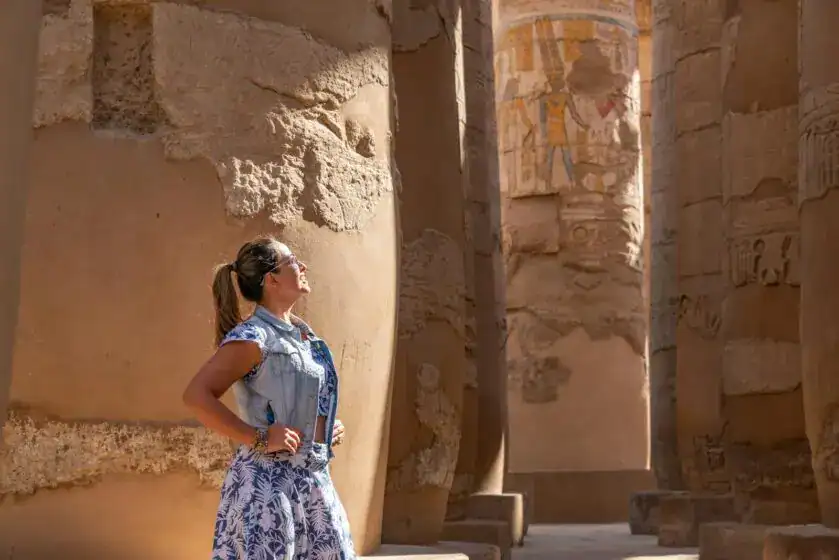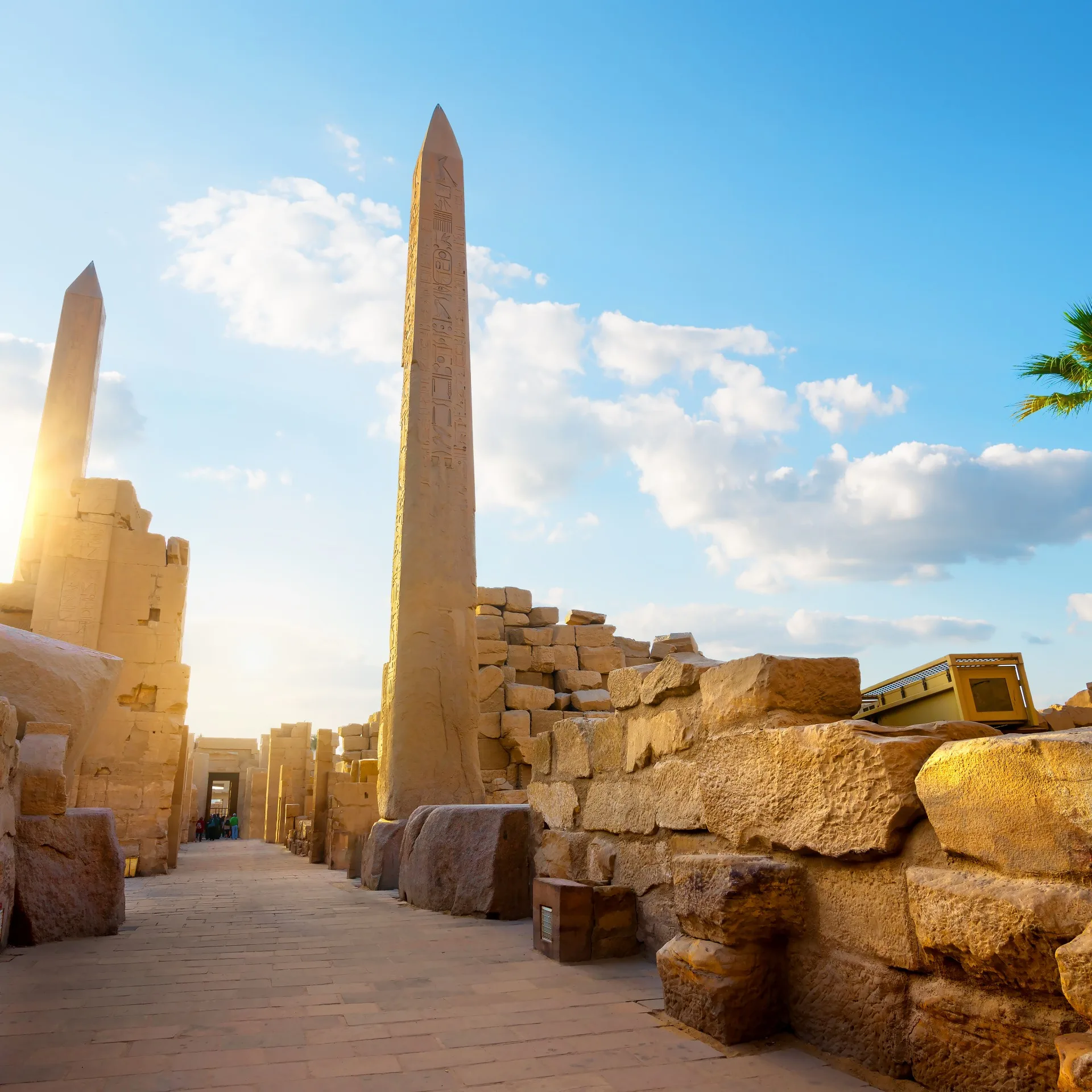

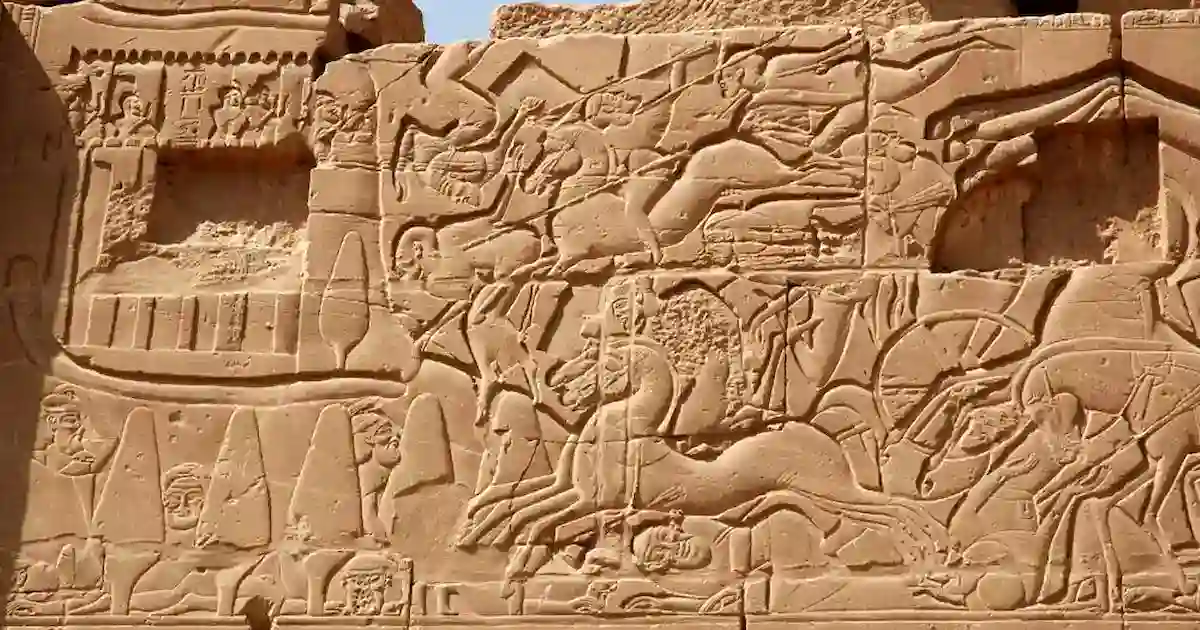
Few artistic traditions are as dramatic and powerful as carving Egyptian war scenes into temple walls. Across Egypt, from Luxor to Abu Simbel, monumental reliefs tell stories of conquest, strategy, and royal power. When you stand before an ancient bas-relief carving Egyptian war, you don’t just see soldiers—you witness political propaganda, divine symbolism, and the might of a civilization carved permanently into stone.
The art of carving Egyptian war was not merely decorative. It served as a visual declaration of strength, legitimacy, and divine protection. Pharaohs commissioned these battle scenes to demonstrate their supremacy over enemies and their role as protectors of Ma’at—cosmic order.
From the legendary Battle of Kadesh to detailed depictions of Egyptian weapons and chariots, these carvings remain among the most vivid records of ancient warfare. In this guide, we’ll explore their meaning, historical context, artistic techniques, and how you can experience them firsthand.
Carving Egyptian War – Context & Historical Background
The tradition of carving Egyptian war scenes developed during the Old Kingdom but reached its artistic and political peak in the New Kingdom (1550–1070 BCE). During this era, Egypt expanded its empire into Nubia and the Levant, leading to frequent military campaigns.
Why Were War Scenes Carved?
Ancient Egypt had no newspapers or digital records. Instead, temples served as storytelling platforms. War reliefs were carved to:
- Glorify the pharaoh
- Intimidate enemies
- Honor the gods
- Record military victories
These carvings reinforced the idea that the pharaoh was divinely chosen to maintain order.
You can explore some of the most famous battle reliefs at Karnak Temple, where massive stone walls still display dramatic scenes of military triumph.
The Art of Carving Egyptian War – Techniques & Symbolism
What Is an Ancient Bas-Relief Carving Egyptian War?
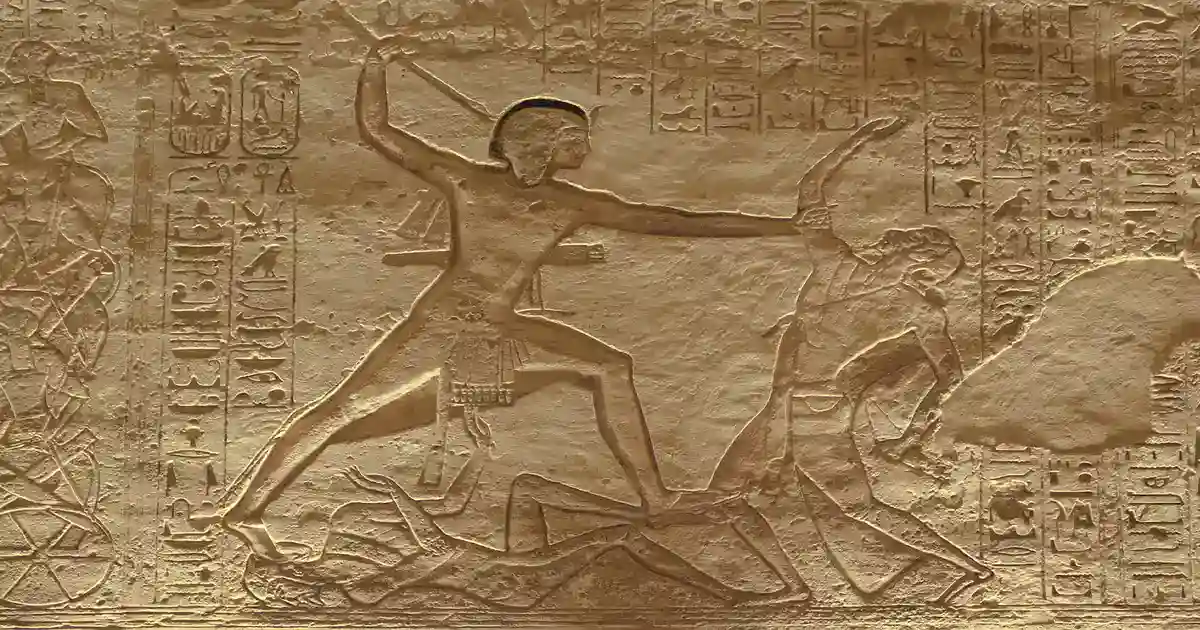
Most battle depictions were carved in bas-relief, meaning the figures slightly project from the background. This technique created depth and dramatic shadow under Egypt’s strong sunlight.
Artists used:
- Copper and bronze chisels
- Stone hammers
- Precise grid systems for proportions
The process was labor-intensive and required master artisans.
Pharaoh as Divine Warrior
In nearly every carving Egyptian war scene, the pharaoh appears larger than all other figures. This artistic choice symbolized superiority. Often, he is shown:
- Holding multiple enemies by the hair
- Raising a mace
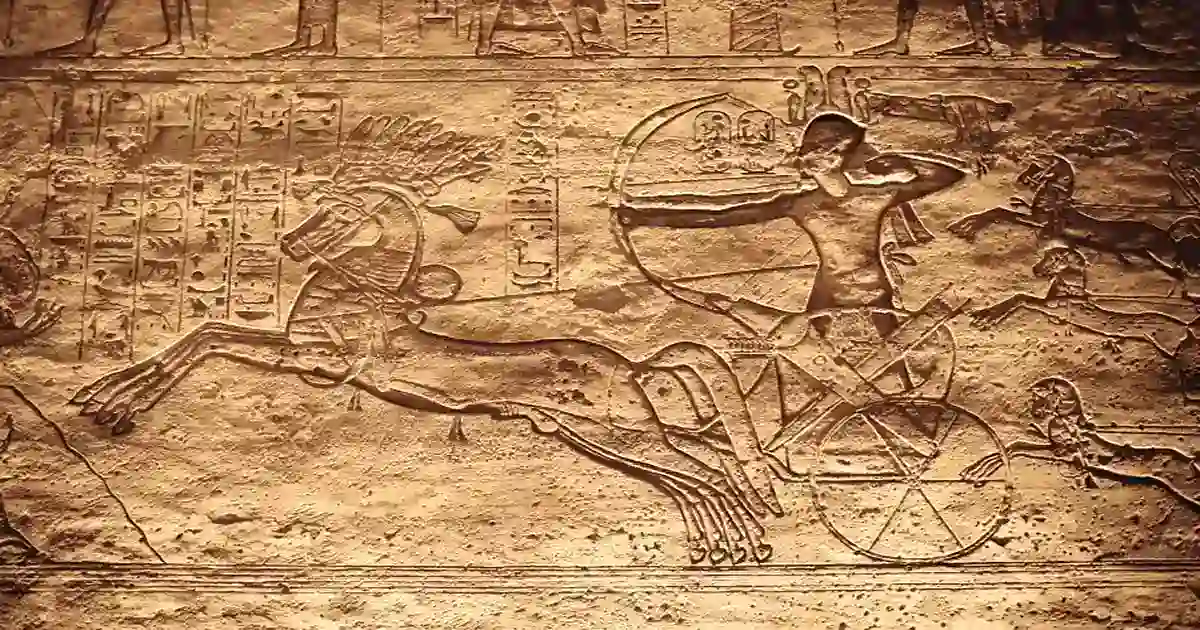
- Riding a chariot into battle
This imagery reinforced divine kingship.
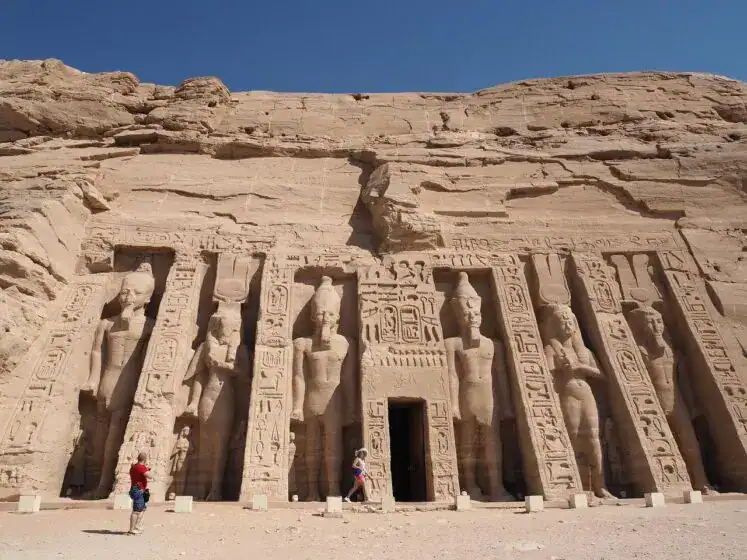
One of the most famous examples appears at Abu Simbel Temples, where Ramses II commemorated his military achievements.
The Battle of Kadesh Equipment
The Battle of Kadesh (1274 BCE) between Ramses II and the Hittites is one of the most extensively depicted conflicts in ancient art.
Reliefs show detailed Battle of Kadesh equipment, including:
- Two-wheeled chariots
- Composite bows
- Bronze swords
- Shields
- Spearmen formations
These carvings provide historians with valuable insight into Egyptian military technology.
You can learn more about this historic battle at Battle of Kadesh, one of the earliest recorded battles in history.
Egyptian Weapons in Relief Art
War carvings meticulously illustrate Egyptian weapons, such as:
- Khopesh (curved sword)
- Spears
- Daggers
- Axes
- Bows and arrows
These images help archaeologists understand ancient combat strategies and craftsmanship.
Carving Egyptian War as Political Propaganda
The purpose of carving Egyptian war scenes went beyond documentation. They were carefully curated narratives.
Exaggeration and Symbolism
Pharaohs were always victorious in reliefs—even when battles were inconclusive. For example, modern historians debate whether Ramses II truly won the Battle of Kadesh, yet temple carvings depict overwhelming Egyptian success.
Divine Approval
Gods such as Amun or Ra often appear blessing the pharaoh before battle. This visual symbolism suggested divine support.
Egyptian Pharaoh Reenactment in Modern Times
Today, visitors sometimes witness Egyptian pharaoh reenactment performances in sound-and-light shows at major sites. These modern interpretations bring ancient carvings to life, allowing travelers to visualize the scenes depicted in stone.
Where to See Carving Egyptian War Scenes Today
If you’re fascinated by carving Egyptian war, several sites offer extraordinary examples:
Karnak Temple (Luxor)
Massive reliefs of Seti I and Ramses II dominate temple walls.
Abu Simbel
Gigantic statues and battle scenes glorify Ramses II.
Ramesseum
Features detailed depictions of the Battle of Kadesh.
Medinet Habu
Built by Ramses III, it contains extensive war carvings against the Sea Peoples.
These locations are often included in curated Egypt Tour packages and immersive Egypt Classic Tours, ensuring guided explanations of each relief.
Expert Insights & Travel Tips
Experiencing carving Egyptian war scenes in person is unforgettable. Here’s how to maximize your visit:
Best Time to Visit
- October to April for cooler weather
- Early morning for soft light on carvings
- Late afternoon for dramatic shadows
How to Read a War Relief
When standing before a carving, observe:
- Size hierarchy (pharaoh vs. soldiers)
- Weapons and chariots
- Enemy depiction style
- Presence of gods
Photography Tips
- Capture angled light for texture
- Zoom in on weapon details
- Include hieroglyphic inscriptions
Why Choose Guided Tours?
On Egypt Classic Tours, expert Egyptologists decode complex battle narratives, explaining symbolism beyond surface visuals.
Meanwhile, Egypt Tour packages provide structured itineraries that connect multiple war-related monuments in one cohesive experience.
Conclusion – Carving Egyptian War as Eternal Memory
The tradition of carving Egyptian war scenes transformed stone into storytelling. These ancient bas-relief masterpieces immortalized military victories, reinforced divine kingship, and shaped political identity. Through dramatic depictions of chariots, Egyptian weapons, and heroic pharaohs, the walls of temples became history books carved in granite and sandstone.
Today, when you stand before an ancient bas-relief carving Egyptian war, you are witnessing more than art—you are encountering propaganda, theology, and royal ambition frozen in time.
If you want to explore these extraordinary monuments and uncover the stories behind them, discover our tailored Egypt Tour packages or join immersive Egypt Classic Tours. Walk among the temples, trace the carved lines with your eyes, and experience firsthand how Egypt turned war into art.
1. Why did Egyptians carve war scenes in temples?
They carved war scenes to glorify the pharaoh, intimidate enemies, and demonstrate divine approval. These carvings served as political propaganda and historical records.
2. What is an ancient bas-relief carving Egyptian war?
It is a sculptural technique where battle scenes are carved slightly raised from a flat background, creating depth and shadow.
3. What weapons are shown in Egyptian war carvings?
Common Egyptian weapons include bows, spears, khopesh swords, axes, and shields, often depicted alongside chariots.
4. Where can I see carving Egyptian war scenes today?
Major sites include Karnak Temple, Abu Simbel, Medinet Habu, and the Ramesseum—often included in guided Egypt tour packages.
5. Was the Battle of Kadesh really a victory?
Historians debate the outcome, but carvings depict Ramses II as victorious. The artistic narrative emphasizes royal power rather than balanced history.
Final Reflection
Across the sands of time, carving Egyptian war has preserved the drama of ancient battles for over three millennia. These stone reliefs remind us that history was not only written—it was carved, boldly and permanently, into the very walls of eternity.