
There are places on this earth that make you stop breathing for a moment — not from exhaustion, but from sheer, overwhelming wonder. Ancient Egyptian temples are exactly that kind of place. Standing before a wall of hieroglyphs carved three thousand years ago, beneath columns so tall they seem to prop up the sky itself, you feel something that no photograph can fully capture: the weight of time, and the brilliance of a civilization that refused to be forgotten.
Egypt’s sacred monuments are not simply old buildings. They are precise expressions of a worldview, of a relationship between humanity and the divine, between the pharaoh and the gods. The ancient Egyptian temples that survive today represent only a fraction of what once stood along the banks of the Nile — yet even this fraction is enough to leave the modern traveler completely speechless.
Whether you are drawn by the mythology, the architecture, the art, or simply the adventure of standing where gods were once worshipped, Egypt’s temple landscapes offer an experience that is genuinely unparalleled. This guide will take you through the most important egypt temples, what makes each one unique, how to visit them, and why every traveler with a curious soul should make this journey at least once. If you are planning your journey, explore our Luxury Egypt Tours and Egypt Classic Tours to find the perfect itinerary tailored to your interests.
The Sacred Architecture of the Ancient World — Background & Context
To truly appreciate ancient Egyptian temples, you need to understand what they were built for. Unlike modern churches or mosques that welcome congregations of worshippers, Egyptian temples were not public places of worship. They were the literal homes of the gods — private palaces where divine statues were cared for by priests through daily rituals of washing, dressing, and offering food.
The word “temple” comes from the Latin templum, but the Egyptians called these structures Hwt-Ntr — “House of the God.” Every element of an ancient Egyptian temple complex was intentional. The layout typically followed a standard plan: a massive entrance pylon (gateway), an open courtyard, a hypostyle hall filled with towering columns, and at the very back, the inner sanctuary — the most sacred chamber, accessible only to the highest priests and the pharaoh himself.
The construction of these monuments began as early as the Old Kingdom (around 2700 BCE) but reached its most spectacular phase during the New Kingdom period (1550–1070 BCE), when pharaohs like Ramesses II, Amenhotep III, and Thutmose III competed to build the most impressive temples in history. Later, Greek and Roman rulers continued the tradition, adding their own temples in the distinctly Egyptian style to legitimize their authority over the land.
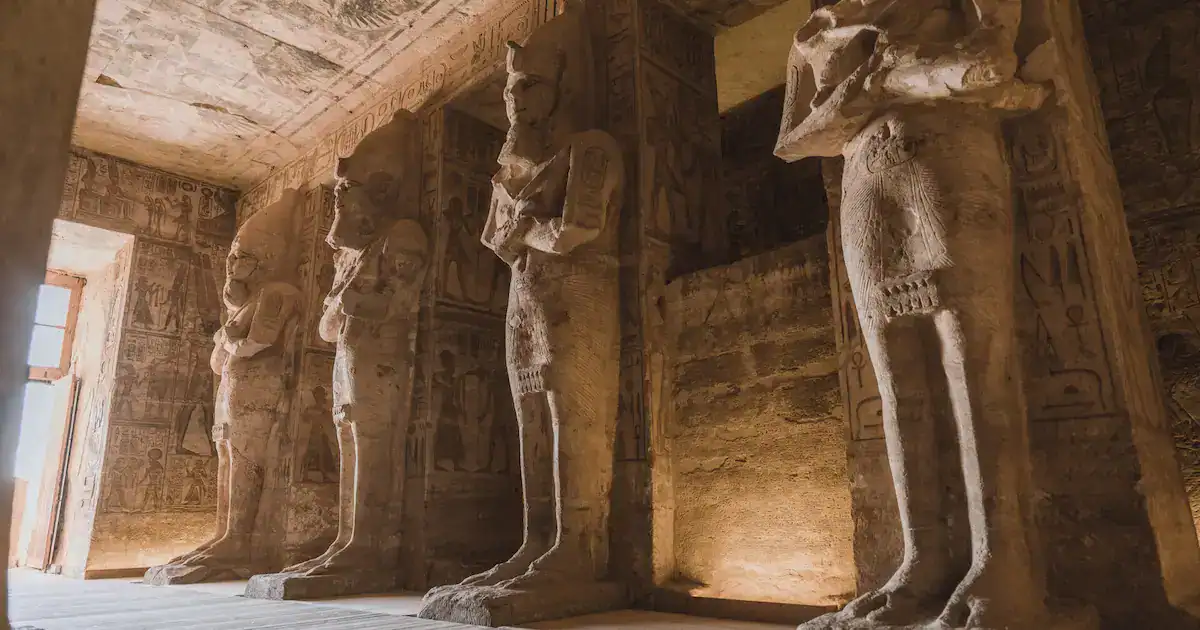
What makes egyptian ancient temples particularly remarkable is their relationship with the cosmos. Temples were oriented astronomically — aligned with the rising sun, with specific star patterns, or with the flooding of the Nile. The solar alignment at Abu Simbel, for example, is so precise that twice a year, on February 22nd and October 22nd, the rising sun penetrates 60 meters deep into the mountain to illuminate the inner sanctuary — illuminating the statues of the gods but deliberately leaving the god of darkness, Ptah, in shadow. This was not coincidence. This was engineering mastery in the service of theology.
For travelers who want to experience this world firsthand, our Egypt Classic Tours offer expert-guided journeys that bring these ancient stories to life through the voices of Egyptologist guides on the ground.
Egypt’s Greatest Ancient Temples — A Complete Guide
1. Karnak Temple Complex, Luxor — The Largest Temple Ever Built
When people say “ancient Egyptian temple,” many picture Karnak — and for good reason. The Karnak Temple Complex is the largest religious building ever constructed in human history. Built over a period of more than 2,000 years by successive pharaohs, it covers an area of approximately 200 acres. Walking through Karnak is not like visiting a single monument — it is like wandering through an entire sacred city.
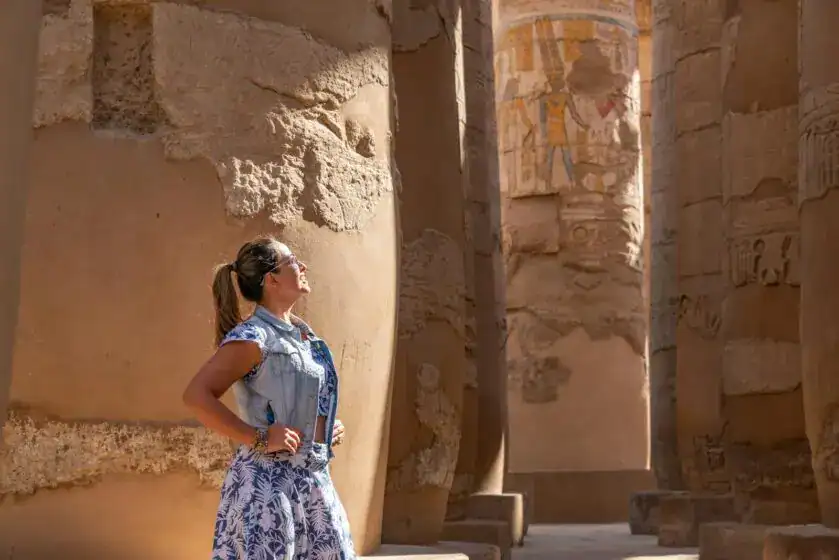
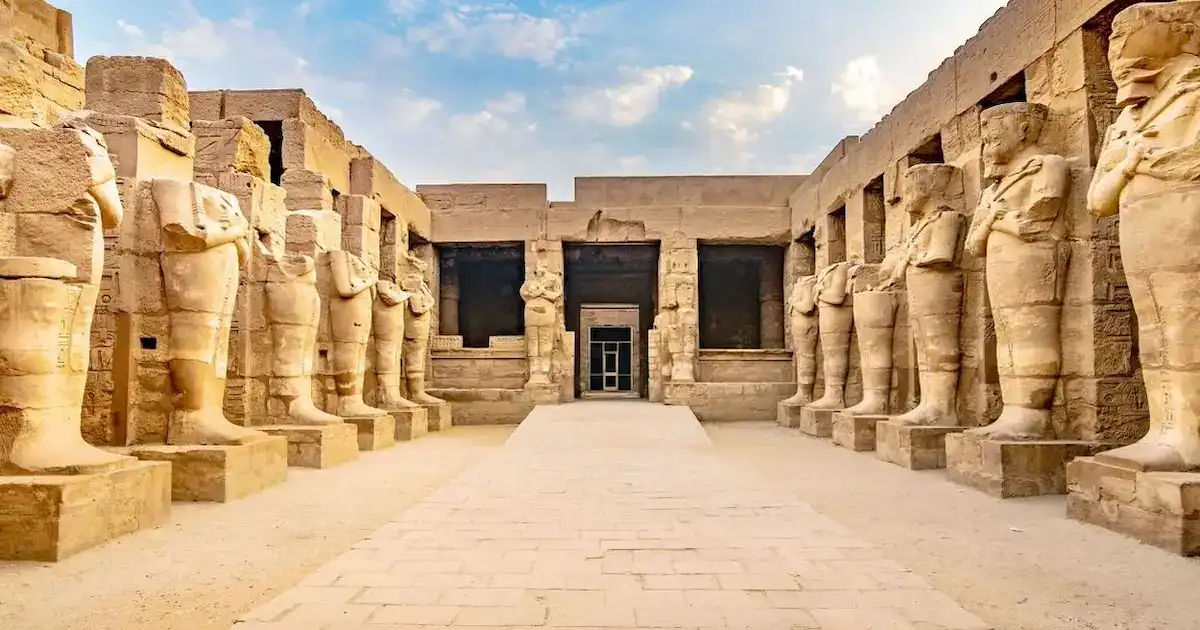
The most iconic feature is the Great Hypostyle Hall, a forest of 134 massive sandstone columns, each up to 23 meters high and so wide that 10 people holding hands could barely encircle one. The hall covers an area of approximately 54,000 square feet. Every inch of every column is carved with hieroglyphs and painted reliefs that once blazed with color. Today, traces of the original paint still cling to the stone.
Karnak is dedicated primarily to Amun-Ra, the king of the gods, though it also contains temples to his wife Mut and their son Khonsu. The Avenue of Sphinxes — a 3-kilometer processional road lined with ram-headed sphinxes — once connected Karnak to Luxor Temple and served as the stage for the grand Opet Festival. A recent ancient egyptian temple discovery involved the excavation of this full avenue, completed as recently as 2021, revealing hundreds of sphinx statues that had been buried for centuries beneath the streets of modern Luxor.
2. Luxor Temple — The Temple Buried Under a City
Unlike most ancient Egyptian temple complexes, Luxor Temple was not dedicated to a single god but to the rejuvenation of kingship itself. For centuries, it lay almost entirely buried under the sand and the buildings of the city that grew over it — including a mosque that still stands atop one corner of the temple today, its elegant minaret rising above ancient columns in a striking image of Egypt’s layered history.
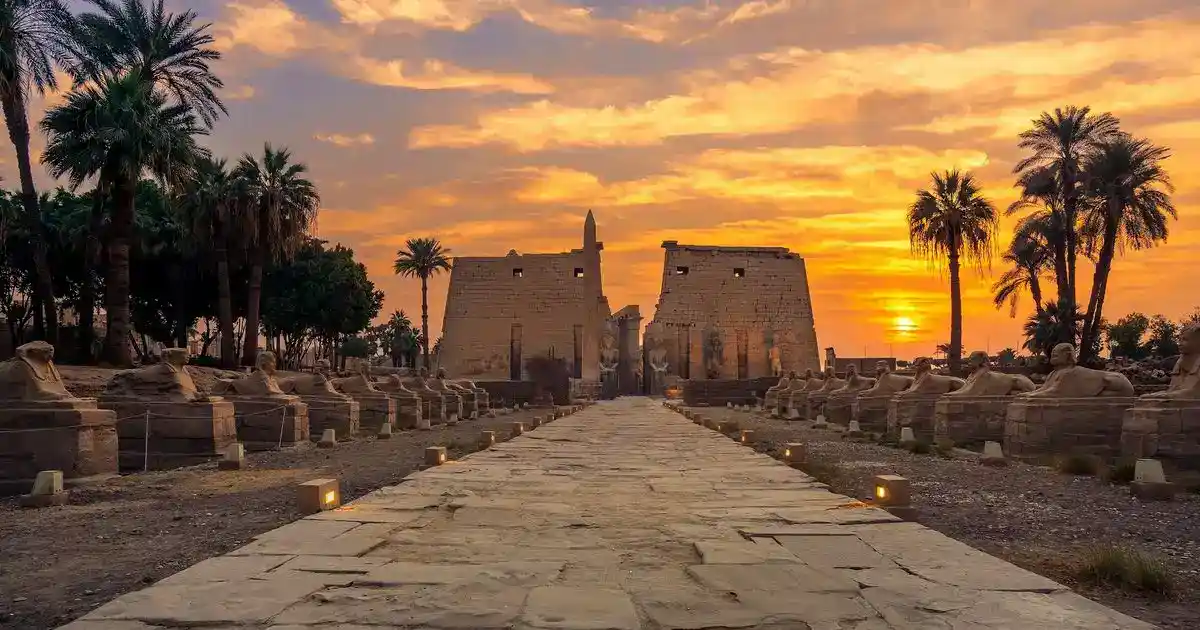
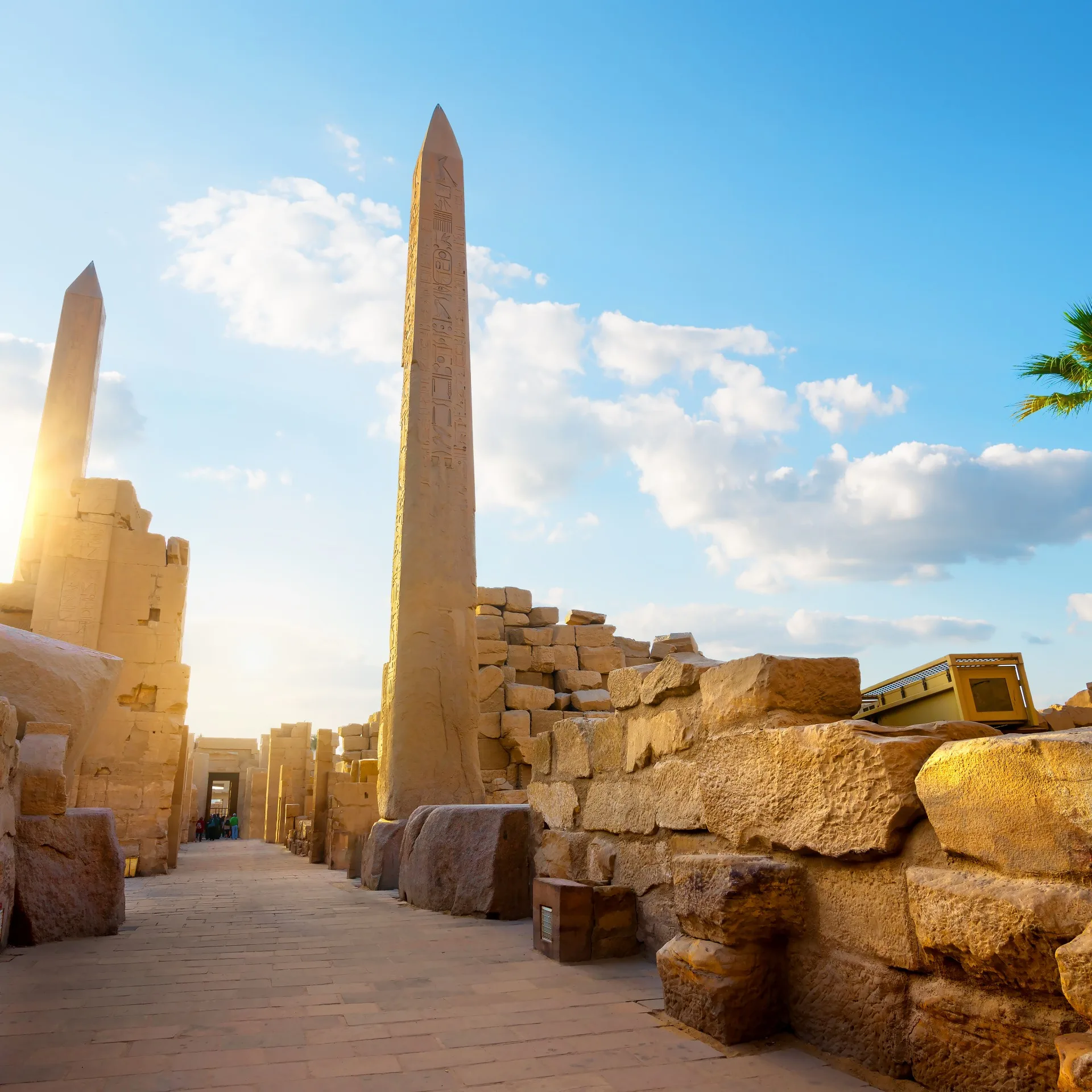
What was excavated is extraordinary. The first pylon (entrance gateway) is flanked by colossal seated statues of Ramesses II, and a single obelisk still stands — its twin was removed in 1836 and now stands in Paris at the Place de la Concorde. At night, Luxor Temple is illuminated dramatically, making it one of the most atmospheric places in all of Egypt. Walking its corridors after dark, among glowing colonnades reflected in the Nile breeze, is an experience that stays with you for life.
3. Abu Simbel — Egypt’s Most Dramatic Temple
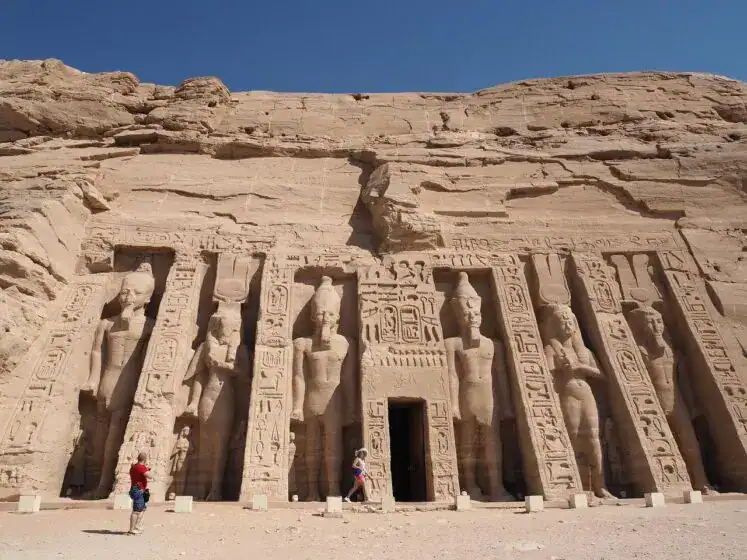
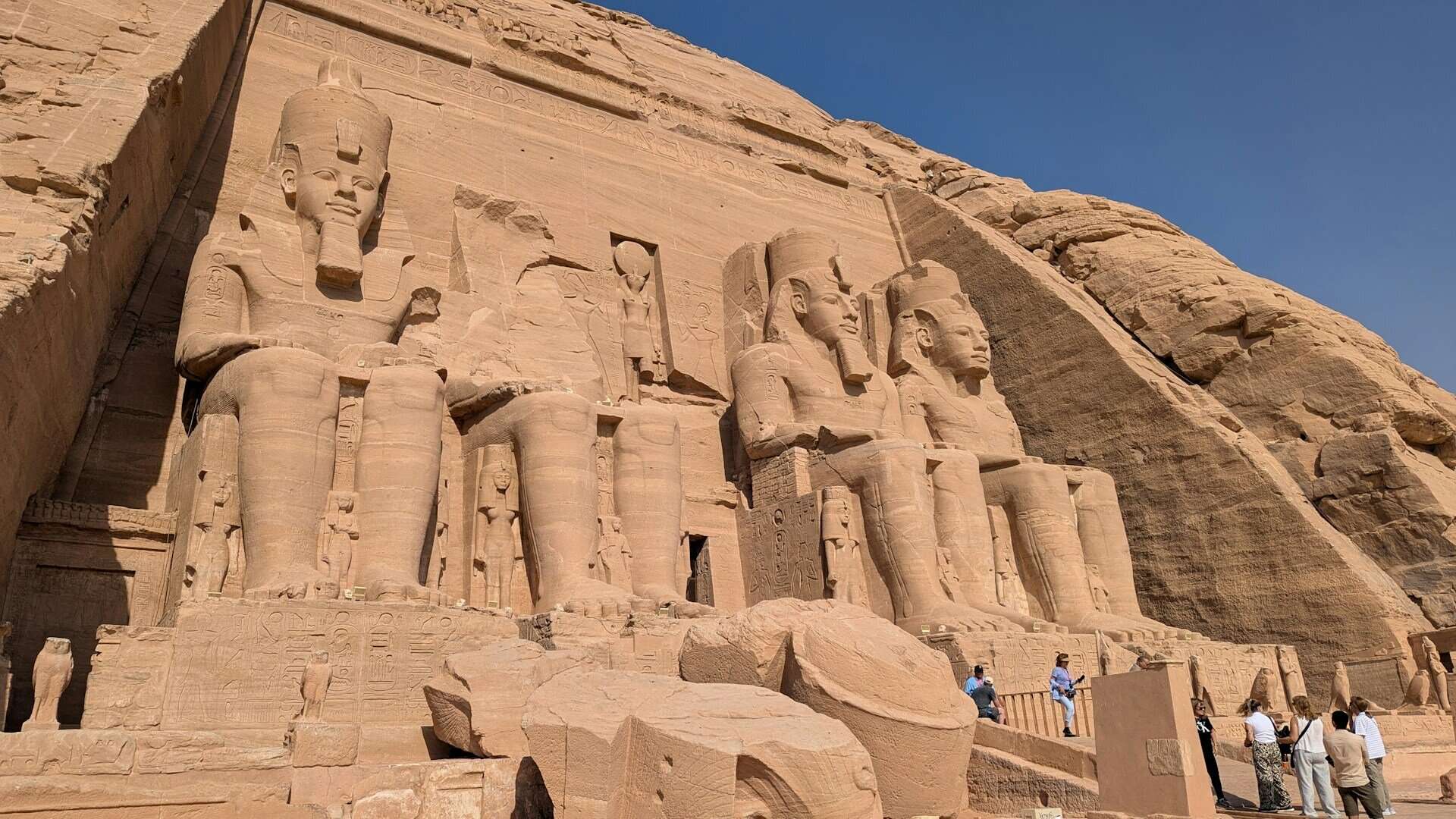
If there is one ancient egyptian temple that has the power to bring even seasoned travelers to tears, it is Abu Simbel. Carved directly into a sandstone cliff in southern Egypt near the Sudanese border, this temple was built by Ramesses II around 1264 BCE as a monument to his own divine glory and to the gods Ra-Horakhty, Ptah, and Amun.
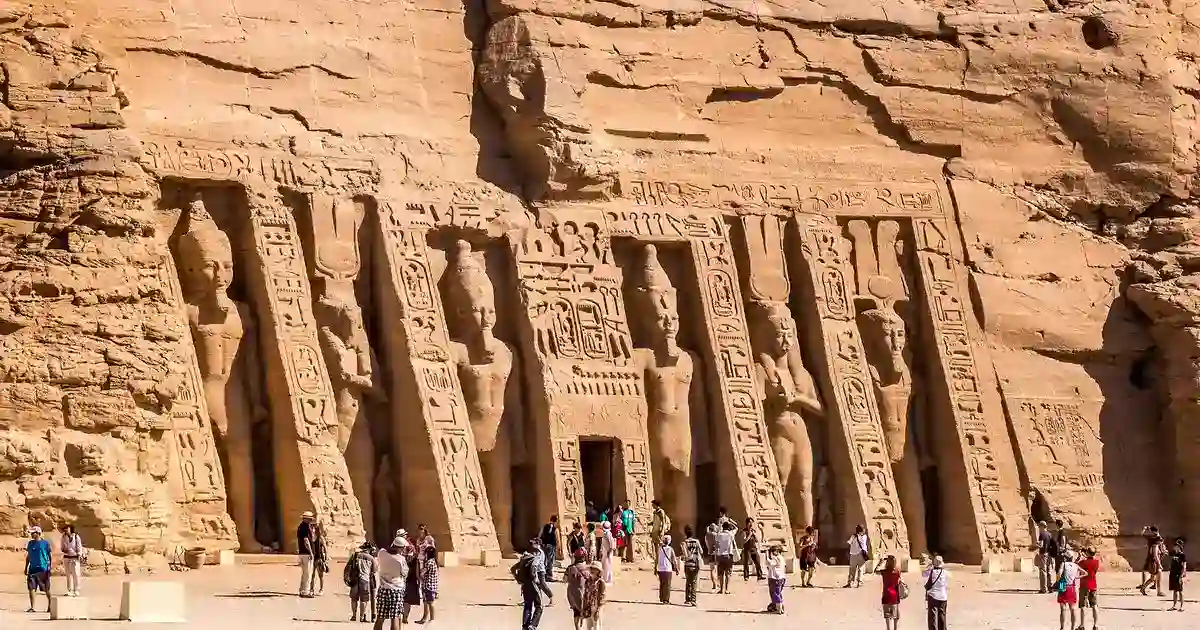
The facade features four seated colossal statues of Ramesses II, each approximately 20 meters (66 feet) tall. But what makes Abu Simbel truly miraculous is its modern history: in the 1960s, the entire temple was cut into over 1,000 blocks and relocated 65 meters higher to save it from the rising waters of Lake Nasser created by the Aswan High Dam. This monumental feat of engineering — coordinated by UNESCO — is considered one of the greatest cultural preservation achievements in human history. Abu Simbel is now a UNESCO World Heritage Site.
4. The Temple of Philae — The Last Cult of Ancient Egypt
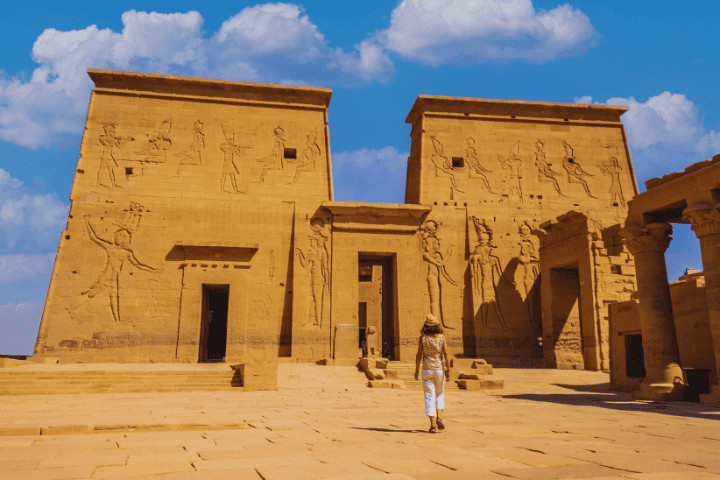
Dedicated to the goddess Isis, the Temple of Philae holds a very special distinction: it was the last place in the ancient world where the old Egyptian religion was actively practiced. The cult of Isis at Philae was not fully suppressed until 550 CE — centuries after the rest of the ancient world had moved on.
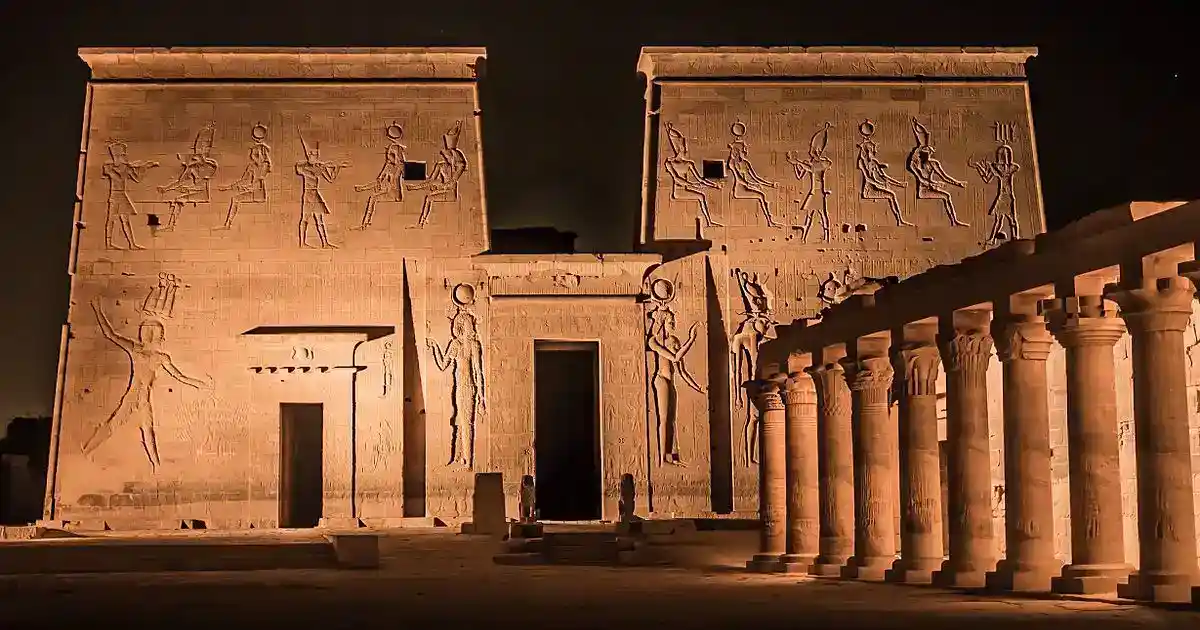
Like Abu Simbel, Philae was also rescued from the waters of Lake Nasser and relocated to the nearby island of Agilkia during the UNESCO salvage campaign. Today it sits serenely on its island, accessible by a short boat ride from Aswan, surrounded by water that perfectly reflects its graceful colonnades and carved pylons. The Temple of Philae is perhaps the most romantically beautiful of all Egypt’s ancient temples — especially when seen during the nightly Sound & Light Show.
5. Hatshepsut’s Temple at Deir el-Bahari — Built for a Queen Who Ruled as King
Among the tombs from ancient egypt and royal mortuary temples, none is quite as architecturally bold as the Mortuary Temple of Hatshepsut at Deir el-Bahari. Built into the dramatic natural amphitheater of cliffs on the west bank of Luxor, this three-tiered temple rises against the golden limestone cliffs in a series of elegant colonnaded terraces that feel remarkably modern to twenty-first-century eyes.
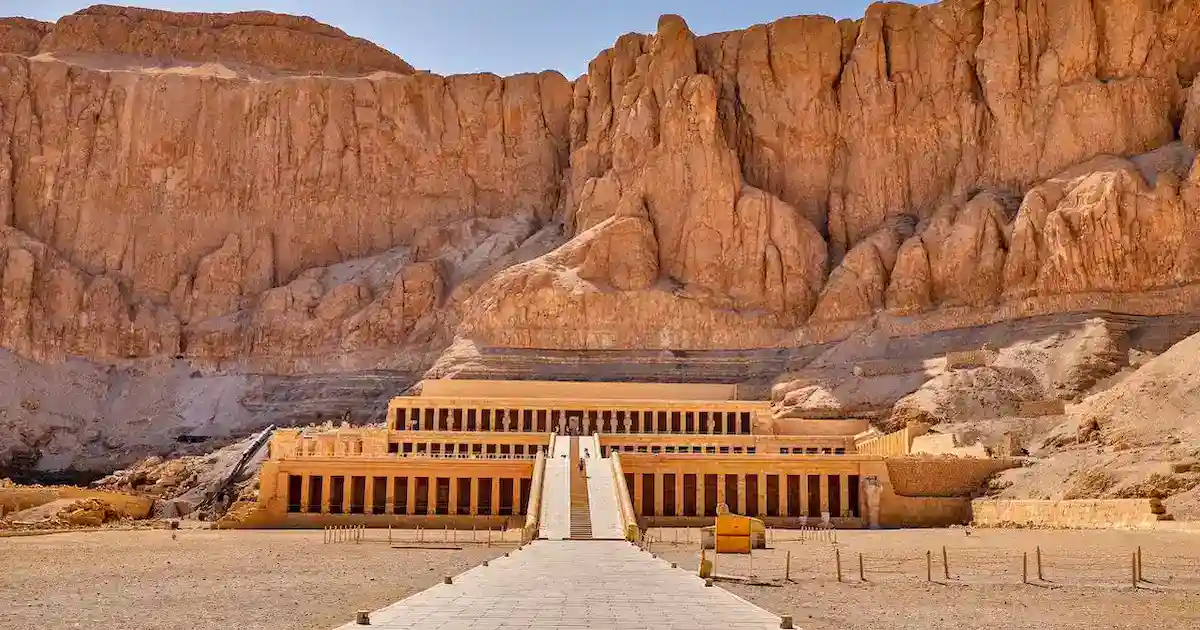
Hatshepsut, one of Egypt’s few female pharaohs, ruled for over 20 years during the 15th century BCE. Her temple was built by her chief architect Senenmut and decorated with scenes from her legendary trading expeditions to the Land of Punt. After her death, her successor Thutmose III systematically defaced her images throughout the temple — yet archaeologists have painstakingly reconstructed her story from the evidence that survived.
6. Edfu and Kom Ombo — The Best-Preserved Temples in Egypt
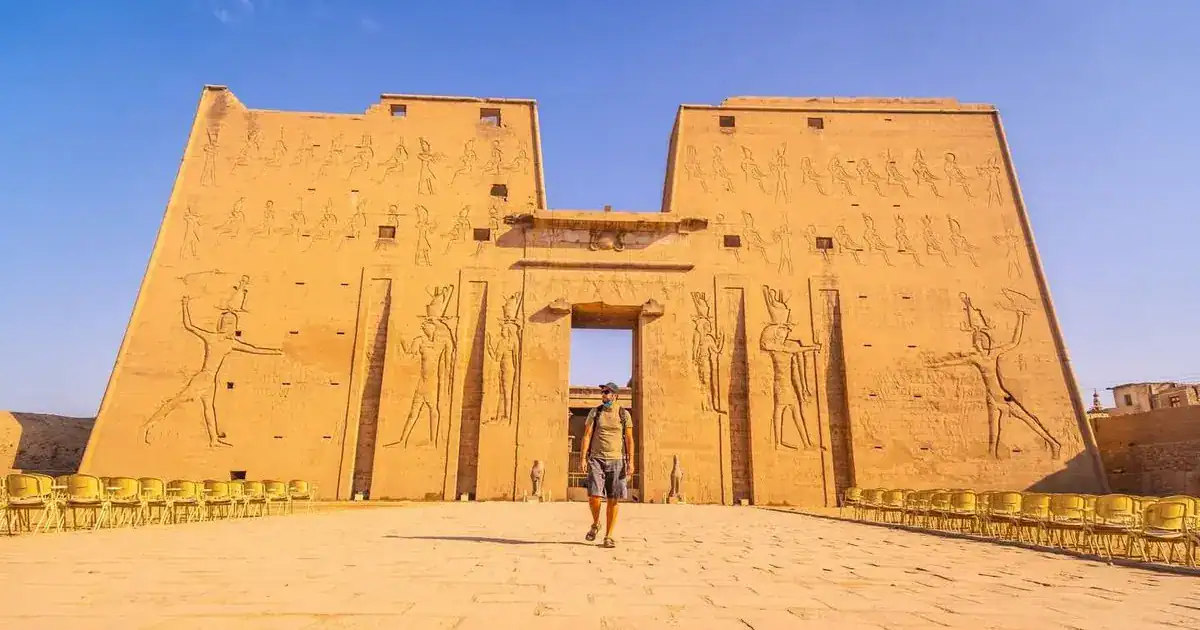
For travelers who want to see an ancient Egyptian temple in its most complete, intact form, the Temple of Horus at Edfu is arguably the finest example. Built during the Ptolemaic period (237–57 BCE), it is so well-preserved that you can walk its inner corridors and read entire mythological narratives carved into every wall. The detailed inscriptions here have taught Egyptologists much of what we know about ancient Egyptian religious practices and rituals.
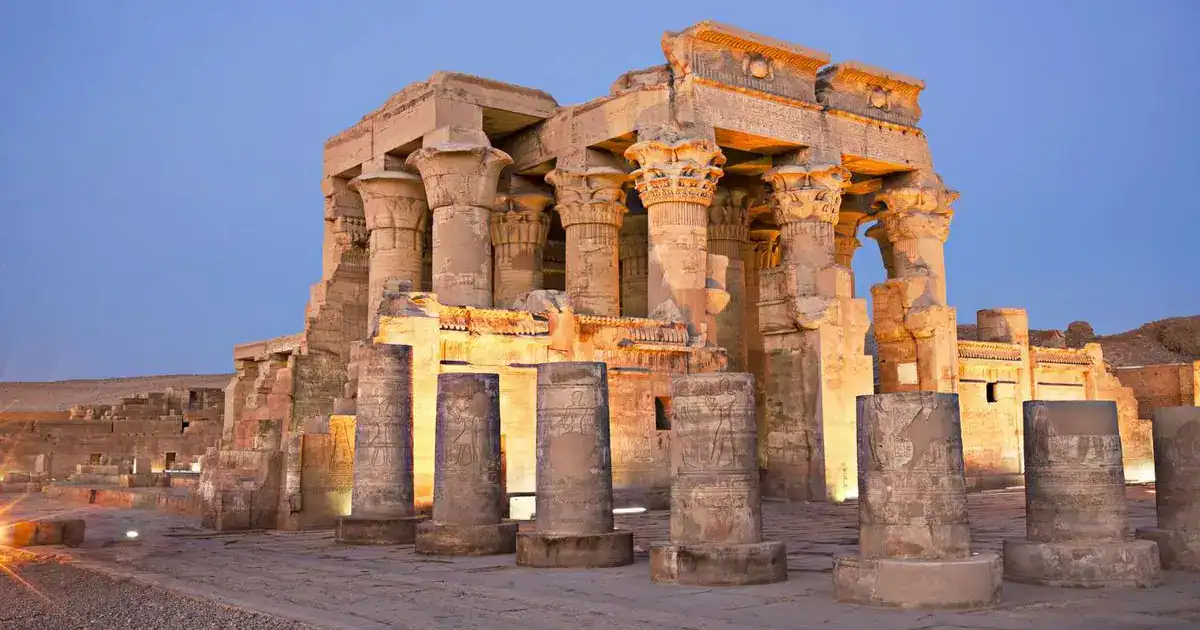
Just 60 kilometers south, the Temple of Kom Ombo sits dramatically on a bend of the Nile and is uniquely dedicated to two gods simultaneously: Sobek (the crocodile god) and Horus the Elder. Its symmetrical double design — two temples in one — is unlike any other structure in Egypt. The site also includes a small museum housing actual mummified crocodiles, once considered sacred animals kept in temple pools.
7. Medinet Habu — The Forgotten Giant
Often overlooked by visitors rushing between Karnak and the Valley of the Kings, Medinet Habu is one of the most dramatic and best-preserved mortuary temples in Egypt. Built by Ramesses III on the west bank of Luxor, its towering entrance gate — the Migdol, modeled after a Syrian fortress — is unlike anything else in Egyptian architecture. The interior walls are covered in vivid battle scenes depicting Ramesses III’s campaigns against the Sea Peoples, providing some of the most dramatic historical narratives carved in stone anywhere in the ancient world.
Expert Travel Tips for Visiting Ancient Egyptian Temples
Planning a trip to explore egypt temples requires some preparation to make the most of the experience. Here is what Egypt travel experts recommend:
- Visit at dawn or late afternoon. The light at these times transforms the temples into something magical, and the heat is manageable. The midday sun in summer can exceed 45°C (113°F) in Upper Egypt.
- Hire a licensed Egyptologist guide. The difference between walking through Karnak with and without a knowledgeable guide is profound. A good guide turns a wall of hieroglyphs into a living story.
- Allocate enough time. Karnak alone deserves at least 3–4 hours. Plan at least 5 days in Luxor and 2–3 days in Aswan to do the temples justice.
- Combine a Nile cruise with temple visits. A classic route from Luxor to Aswan by traditional felucca or luxury cruise ship allows you to visit Edfu, Kom Ombo, and Philae in a natural geographic sequence, as the ancient Egyptians themselves would have experienced them.
- Visit Abu Simbel at sunrise. The two-hour drive from Aswan is worth every minute when you see the dawn light catch those 20-meter statues for the first time.
- Bring a torch (flashlight). Inner sanctuaries and side chambers are often poorly lit, and a small flashlight reveals details that are otherwise invisible.
- Respect the sacred nature of these spaces. Many of Egypt’s temples are still considered sacred by local communities. Dress modestly and follow all site regulations.
For a fully curated itinerary covering Egypt’s greatest temples with luxury accommodation and private Egyptologist guides, explore our Luxury Egypt Tours — designed to make every moment of your visit extraordinary.Expert Travel Tips for Visiting Ancient Egyptian Temples
Planning a trip to explore egypt temples requires some preparation to make the most of the experience. Here is what Egypt travel experts recommend:
- Visit at dawn or late afternoon. The light at these times transforms the temples into something magical, and the heat is manageable. The midday sun in summer can exceed 45°C (113°F) in Upper Egypt.
- Hire a licensed Egyptologist guide. The difference between walking through Karnak with and without a knowledgeable guide is profound. A good guide turns a wall of hieroglyphs into a living story.
- Allocate enough time. Karnak alone deserves at least 3–4 hours. Plan at least 5 days in Luxor and 2–3 days in Aswan to do the temples justice.
- Combine a Nile cruise with temple visits. A classic route from Luxor to Aswan by traditional felucca or luxury cruise ship allows you to visit Edfu, Kom Ombo, and Philae in a natural geographic sequence, as the ancient Egyptians themselves would have experienced them.
- Visit Abu Simbel at sunrise. The two-hour drive from Aswan is worth every minute when you see the dawn light catch those 20-meter statues for the first time.
- Bring a torch (flashlight). Inner sanctuaries and side chambers are often poorly lit, and a small flashlight reveals details that are otherwise invisible.
- Respect the sacred nature of these spaces. Many of Egypt’s temples are still considered sacred by local communities. Dress modestly and follow all site regulations.
For a fully curated itinerary covering Egypt’s greatest temples with luxury accommodation and private Egyptologist guides, explore our Luxury Egypt Tours — designed to make every moment of your visit extraordinary.
Conclusion – Why Ancient Egyptian Temples Belong on Every Traveler’s List
The ancient Egyptian temples that line the banks of the Nile are not merely tourist attractions. They are among the most powerful, moving, and intellectually rich places on the planet. Every carved wall tells a story. Every column is a mathematical achievement. Every aligned sunrise is a reminder that the people who built these structures understood their universe in ways that continue to astonish us millennia later.
From the sheer scale of Karnak to the island serenity of Philae, from the cliff-cut drama of Abu Simbel to the double symmetry of Kom Ombo — the world of egypt temples is endlessly rich, endlessly rewarding, and ultimately impossible to describe fully in words. It must be experienced.
Whether you are a first-time visitor or a returning traveler, Egypt’s temple landscape always has something new to reveal. Start planning your journey today with our Egypt Classic Tours or elevate the experience with our Luxury Egypt Tours — and step into a world where the gods still seem to linger in the stone.
Ready to walk among the pharaohs?Contact us or Book your Egypt Tour now and let us create the journey of a lifetime for you.
Ancient Egyptian Temples — Your Questions Answered
Which European city is home to an ancient Egyptian temple?
The city of Madrid, Spain, is home to the Temple of Debod — a genuine ancient Egyptian temple originally built in the 2nd century BCE by the Nubian King Adikhalamani and later expanded by Egyptian pharaohs including Ptolemy VI. Like Abu Simbel and Philae, it was dismantled and relocated as a gift from Egypt to Spain in 1968 in gratitude for Spain’s contributions to the UNESCO campaign that saved Nubian monuments from the rising waters of Lake Nasser. It now stands in Parque del Oeste, beautifully reflected in a small lake, and is one of the most unexpected cultural treasures in all of Europe.
What were some of the most important features of ancient Egyptian temples?
Every ancient Egyptian temple complex followed a relatively standard architectural plan that was both symbolically and functionally significant. Key features included: massive entrance pylons (towering gateway walls), an open courtyard where ordinary Egyptians could gather during festivals, a hypostyle hall filled with columns representing the primordial marsh of creation, an inner sanctuary housing the god’s statue (accessible only to priests), sacred lakes used for ritual purification, and walls covered entirely with hieroglyphic inscriptions and painted reliefs depicting myths, royal victories, and religious ceremonies. Obelisks, flagpoles, and colossal statues of the pharaoh typically flanked the entrance.
Are there any ancient Egyptian temples still in existence today?
Absolutely — and remarkably, many are extraordinarily well-preserved. Egypt is home to dozens of ancient egyptian temples that you can visit today, including Karnak (the largest), Luxor Temple, Abu Simbel, Philae, Hatshepsut’s Mortuary Temple, Edfu, Kom Ombo, Medinet Habu, and the Ramesseum, among many others. Additional Egyptian temples can be found outside Egypt, including the Temple of Dendur at New York’s Metropolitan Museum of Art, the Temple of Debod in Madrid, and the Temple of Taffeh in the National Museum of Antiquities in Leiden, Netherlands. Planning visits to several of these in sequence is one of the great travel experiences in the world — our Egypt Classic Tours are designed with exactly this in mind.
Has there been any recent ancient Egyptian temple discovery?
Yes — Egypt continues to yield remarkable discoveries. In 2021, archaeologists completed the excavation of the Avenue of Sphinxes in Luxor, uncovering hundreds of previously buried sphinx statues along the 3-kilometer processional road connecting Karnak and Luxor Temples. In 2022, near Luxor, archaeologists unearthed what has been described as a “lost golden city” — the ancient city of Aten built by Amenhotep III — along with previously unknown ancient Egyptian temple structures and extensive artifact collections. The ancient egyptian temple discovery rate in Egypt remains astonishingly high, making it one of the most active and exciting regions in global archaeology.
How are ancient Egyptian temples different from Egyptian tombs?
This is one of the most common questions travelers ask — and the distinction is important. Tombs from ancient Egypt, such as those found in the Valley of the Kings, were private burial places designed to protect the royal mummy and ensure the deceased’s safe journey into the afterlife. They were sealed after burial and never meant to be entered again. Ancient Egyptian temples, by contrast, were active religious institutions — functioning houses of worship, economy, and administration, with priests conducting daily rituals, storehouses, workshops, and sometimes schools operating within their walls. While both tombs and temples were covered in religious imagery and hieroglyphs, their purposes were fundamentally different. In Luxor alone, you can visit both: the temples on the East Bank (the land of the living) and the royal tombs on the West Bank (the land of the dead).
Sources and Further Reading:UNESCO World Heritage — Abu Simbel to Philae | Egyptian Ministry of Tourism and Antiquities
Explore more: Luxury Egypt Tours | Egypt Classic Tours | Contact Our Travel Experts