
For thousands of years, Abydos Temple Egypt was not just a temple—it was the spiritual heart of ancient Egyptian religion. Pilgrims traveled here from across the kingdom to honor Osiris, the god of the afterlife. Even today, walking through the halls of Abydos Temple Egypt feels like stepping into a space that was meant for eternity.
The desert road south of Luxor cuts through quiet farmland before suddenly revealing one of Egypt’s most sacred places. Rising from the sand, Abydos Temple Egypt feels different from other ancient sites. The carvings are sharper. The atmosphere is calmer. And the history runs deeper than almost anywhere else along the Nile.
This guide will help you understand the temple’s remarkable history, its mysterious underground structures, and how to visit this extraordinary site today.
For travelers planning a wider itinerary across Egypt’s ancient wonders, exploring curated journeys like Egypt Classic Tours or flexible Egypt Day Tours can make visiting remote treasures like Abydos far easier.
Table of Contents
The Sacred History of Abydos Temple Egypt
The Myth of Osiris and Why Abydos Became Holy
Long before the grand temples of Luxor and Karnak dominated Egypt’s religious landscape, Abydos was already sacred ground.
According to ancient myth, this was the burial place of Osiris, the god who ruled the afterlife. His story shaped Egyptian belief for millennia. Osiris was murdered by his jealous brother Seth, dismembered, and scattered across Egypt. His wife Isis gathered the pieces and resurrected him, allowing him to rule the underworld.
Because of this legend, the temple of osiris at abydos egypt became one of the most important pilgrimage sites in the ancient world.
Egyptians believed that being buried near Abydos—or even placing a symbolic cenotaph here—would bring them closer to Osiris in the afterlife. Thousands of stelae and monuments left by pilgrims still surround the area.
The site’s importance is confirmed by archaeological research and historical references, including records documented by sources like
WikipediaAbydos, Egypt – Wikipedia
Pharaoh Seti I and the Creation of the Temple
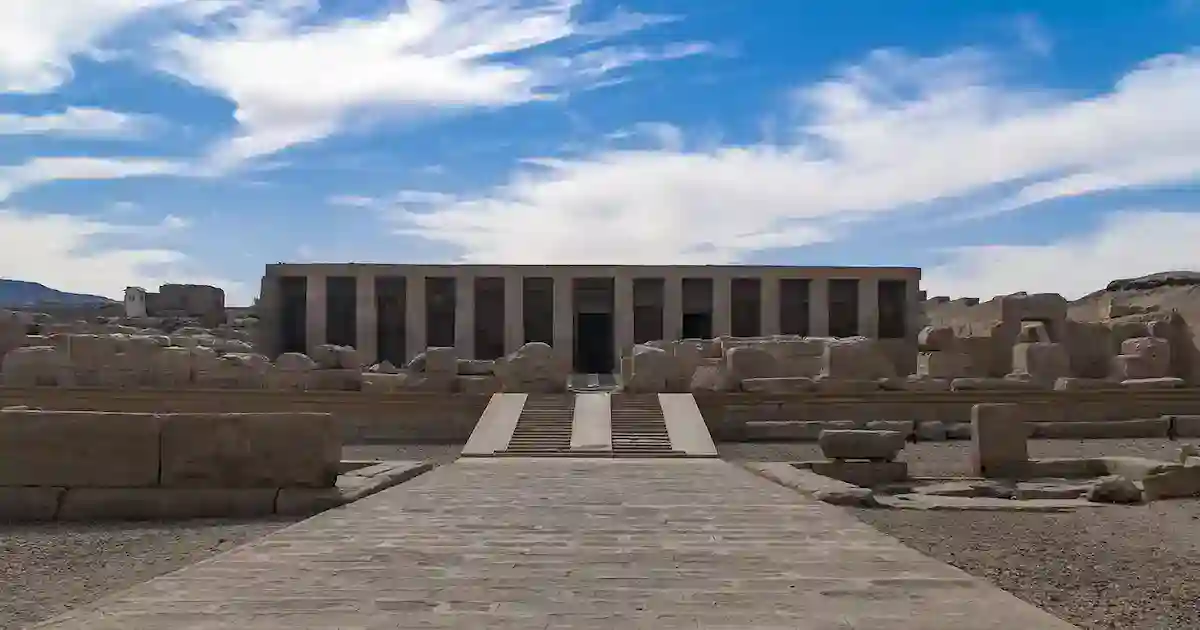
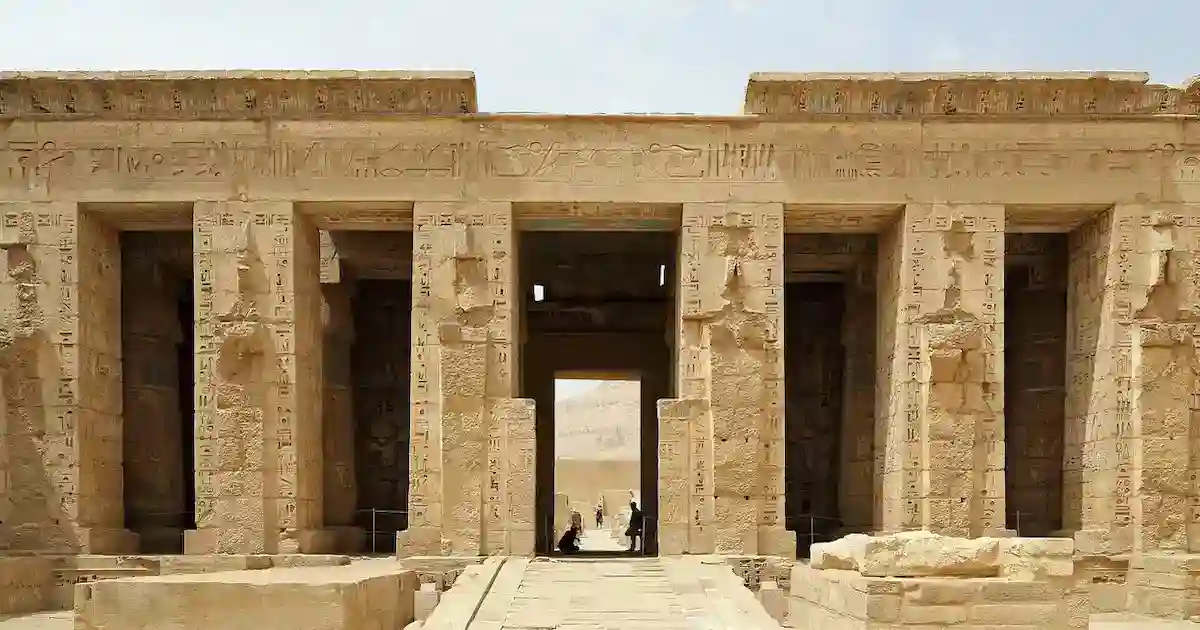
The temple visitors see today was built primarily by Pharaoh Seti I during the 19th Dynasty around 1290 BCE.
Seti I designed the temple of abydos egypt as a monumental tribute to both the gods and Egypt’s royal ancestors. His son, Ramses II, later completed parts of the complex.
Unlike many temples that were expanded repeatedly over centuries, the abydos egypt temple remains unusually cohesive. The carvings appear almost untouched by time.
Many Egyptologists consider these reliefs some of the finest in all of ancient Egyptian art.
Architecture and Design of the Temple of Abydos Egypt
The Unique L-Shaped Temple Layout
One of the first things experts notice about the temple of abydos egypt is its unusual layout.
Most Egyptian temples follow a straight axial plan, moving from outer courtyards toward increasingly sacred inner chambers. Abydos breaks that rule. Its design bends into a distinctive L-shape.
This unusual architecture allowed Seti I to dedicate seven sanctuaries to major gods including:
- Osiris
- Isis
- Horus
- Amun
- Ra-Horakhty
- Ptah
- Seti I himself
Each sanctuary contains intricate reliefs showing the pharaoh offering gifts to the gods.
Walking through these chambers today feels surprisingly intimate compared to Egypt’s larger temples.
The Famous Abydos King List
Hidden within one corridor is one of Egyptology’s most valuable historical documents: the Abydos King List.
This carved sequence records 76 Egyptian rulers from Menes to Seti I. For historians, it became a crucial tool for reconstructing Egypt’s royal chronology.
Interestingly, controversial rulers like Akhenaten were deliberately omitted, reflecting how ancient Egyptians curated their own history.
Visitors often miss this corridor unless guided by someone who knows the temple well.
The Osirion Temple in Abydos Egypt: Mystery Beneath the Sand
What Is the Osirion?
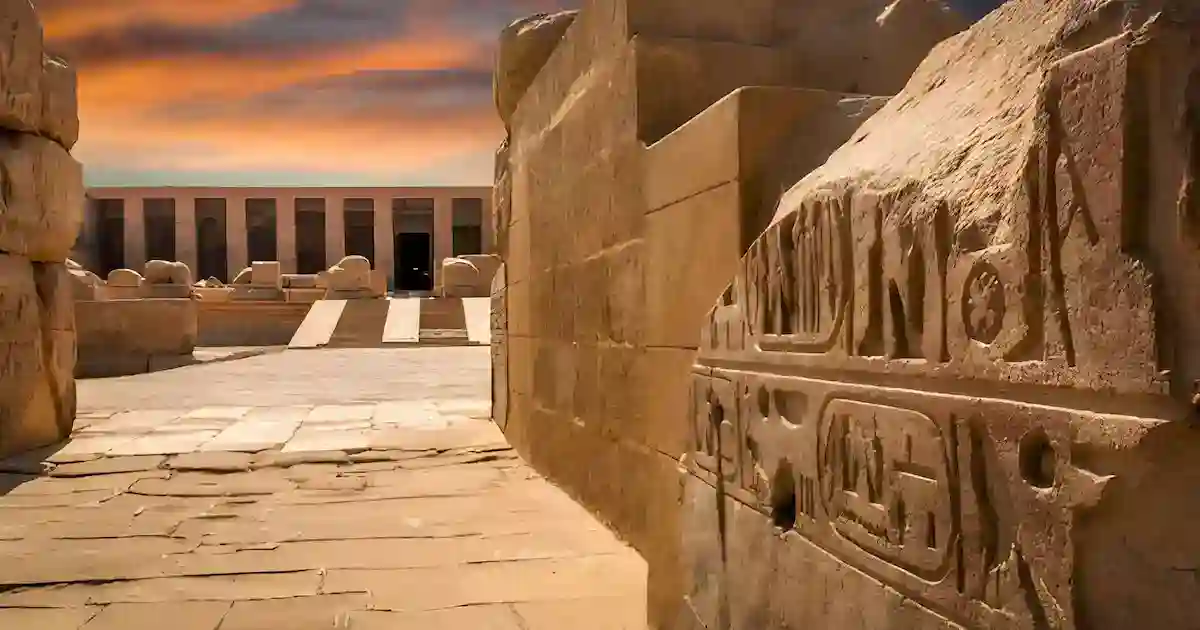
Behind the main temple lies one of the most mysterious structures in Egypt: the Osirion temple in abydos egypt.
Discovered in the early 20th century, the Osirion sits below ground level and appears dramatically different from the elegant temple above it.
Massive granite blocks form a central island surrounded by water channels.
Its construction style is so stark and monumental that early archaeologists believed it might predate the temple itself.
Symbolism and Theories About Its Purpose
Most scholars now believe the abydos egypt osirian temple was built by Seti I as a symbolic tomb for Osiris.
The design represents the primordial waters of creation described in Egyptian cosmology.
Standing inside the Osirion today, the atmosphere feels almost subterranean and otherworldly.
Unlike many Egyptian temples that emphasize grandeur and ceremony, this structure evokes mystery and rebirth.
For many travelers, it becomes the most unforgettable part of visiting Abydos.
What Makes the Temple of Osiris at Abydos Egypt So Special
The Spiritual Center of Ancient Egypt
Ancient Egyptians saw Abydos as the gateway to eternity.
The temple of osiris at abydos egypt hosted rituals reenacting the death and resurrection of Osiris. These ceremonies symbolized the cycle of life, death, and rebirth.
Priests performed elaborate festivals that drew pilgrims from across the Nile Valley.
Some historians compare its religious significance to Mecca or Jerusalem in later religious traditions.
Pilgrimage in the Ancient World
Evidence of pilgrimage is everywhere around the site.
Thousands of visitors carved stelae describing their journeys to the abydos egypt temple. Many hoped their inscriptions would ensure eternal remembrance.
For modern travelers, this legacy adds an emotional dimension to the visit.
You’re not simply exploring a temple—you’re walking through a place that once held deep personal meaning for people across an entire civilization.
Visiting Abydos Egypt Temple Today
Location and How to Get There
Abydos lies about 160 km north of Luxor near the town of Sohag.
Most travelers visit as a day trip from Luxor, often combined with the nearby Temple of Dendera.
Because public transportation is limited, many visitors prefer guided excursions such as those offered through Egypt Day Tours, which simplify logistics.
Best Time to Visit Abydos
The temple is open year-round, but early morning visits are best.
The desert light illuminates the reliefs beautifully, and tour groups are still scarce.
Winter months from October to April offer the most comfortable temperatures.
What to Look for During Your Visit
Highlights include:
- The Abydos King List
- The seven sanctuaries of Seti I
- The Osirion structure
- The remarkably preserved wall reliefs
Take your time here. Unlike the busier temples of Luxor, Abydos rewards slow exploration.
Travel Tips for Visiting Abydos Temple Egypt
Guided Tours vs Independent Travel
A knowledgeable guide can transform your visit.
Many of the temple’s most important features—like the King List or hidden relief scenes—are easy to overlook.
Luxury travelers often prefer curated itineraries such as Egypt Classic Tours, which include Abydos alongside iconic sites like Luxor and Aswan.
Combining Abydos with Other Sites
Abydos pairs perfectly with:
- Dendera Temple
- Luxor’s West Bank
- The temples of Karnak and Luxor
Combining these sites provides a deeper understanding of Egypt’s religious evolution.
Many travelers who initially plan only to see the pyramids later discover that Upper Egypt’s temples leave the strongest impression.
Conclusion
A visit to Abydos is unlike any other experience in Egypt. The atmosphere is quieter, the carvings are more refined, and the spiritual history runs deeper than almost anywhere along the Nile.
From the beautifully preserved halls of Seti I’s temple to the mysterious underground Osirion, this sacred landscape reveals a profound chapter of ancient Egyptian belief.
For travelers seeking something beyond the typical tourist path, Abydos Temple Egypt offers one of the most meaningful journeys into Egypt’s past. Whether you explore it through curated itineraries or a private day excursion, the site rewards those willing to venture a little further.
Abydos Temple Egypt – FAQ
Where is Abydos Temple Egypt located?
Abydos lies in Upper Egypt about 160 km north of Luxor near Sohag. Most visitors reach it via organized day trips or private transport from Luxor.
Why was Abydos important in ancient Egypt?
Abydos was believed to be the burial place of Osiris, god of the afterlife. Because of this, it became one of the most important pilgrimage sites in ancient Egyptian religion.
What is the Osirion at Abydos?
The Osirion is a mysterious underground structure located behind the main temple. It is thought to symbolize the tomb of Osiris and the primordial waters of creation.
Can you visit Abydos on a day trip from Luxor?
Yes. Many travelers visit Abydos as a day trip from Luxor, often combined with the Temple of Dendera. Organized Egypt Day Tours make the journey easier and more comfortable.
What makes Abydos Temple different from other Egyptian temples?
The temple’s exceptional relief carvings, the famous Abydos King List, and the mysterious Osirion make it one of the most unique archaeological sites in Egypt.