
Cairo reveals its soul slowly. It appears in the echo of the call to prayer drifting across ancient streets, in the scent of cardamom coffee rising from hidden cafés, and in the quiet majesty of its historic mosques. Among them all, Al Azhar Mosque stands as one of the city’s most extraordinary landmarks.
Located in the heart of Islamic Cairo, Al Azhar Mosque Cairo is far more than a place of worship. It is a living institution that has shaped Islamic scholarship for over a thousand years. Travelers often arrive expecting a beautiful mosque—but they leave having witnessed one of the most influential religious centers in the world.
In this guide, you’ll discover the fascinating history of Al Azhar Mosque Egypt, explore its remarkable architecture, and learn exactly how to visit one of Cairo’s most important cultural treasures. If you’re planning to explore the historic districts of the city, many curated Cairo Day Tours include this remarkable site as a highlight.
The Legacy of Al Azhar Mosque in Cairo
Few religious landmarks carry the historical and intellectual weight of Al-Azhar Mosque. For more than a millennium, it has stood at the heart of Cairo’s religious and academic life.
Origins of Al Azhar Mosque Egypt
The story begins in the year 970 AD when the Fatimid dynasty founded Cairo as their new imperial capital. Soon after, construction began on what would become Al Azhar Mosque Cairo Egypt.
The mosque was completed in 972 AD and quickly evolved into a center of learning. Its name, “Al-Azhar,” is believed to honor Fatima al-Zahra, the daughter of the Prophet Muhammad.
Over the centuries, the mosque grew into a respected university. Students traveled from across the Islamic world to study theology, law, philosophy, and language within its halls.
Today, Al Azhar Mosque Egypt remains both a spiritual sanctuary and a powerful symbol of Islamic scholarship.
The Role of Al-Azhar in Islamic Scholarship
What truly sets this Cairo mosque apart is its intellectual legacy.
The institution associated with it—Al-Azhar University—is widely considered one of the oldest universities in the world. For over a thousand years, scholars have debated theology beneath its arches.
According to Al‑Azhar University, students from more than 100 countries study here today, continuing a tradition that began over a millennium ago.
For travelers, stepping into cairo mosque al azhar feels like entering a living chapter of world history.
For deeper historical context, the mosque’s origins and development are documented in detail on UNESCO heritage research and academic archives.
A Journey Through the History of Al Azhar Mosque
Over the centuries, the mosque evolved alongside the city itself.
Fatimid Foundations
The Fatimids originally built egypt al azhar mosque as the central mosque of their new capital. Its early structure was relatively simple compared to the grand form visitors see today.
Yet even then, its purpose was clear: religious devotion and scholarship.
Within decades, students gathered beneath its arcades to study Islamic jurisprudence and theology.
Transformations Under Successive Dynasties
As power shifted across Egypt’s rulers, the mosque expanded and transformed.
During the Ayyubid dynasty, educational functions grew dramatically. Later, under the Mamluks, the mosque received some of its most iconic architectural features—particularly its striking minarets.
Ottoman rulers later restored and maintained the complex, ensuring that al azhar mosque cairo remained both a functioning mosque and a prestigious learning center.
Today, its layered architecture reflects centuries of cultural evolution.
Architecture of Al Azhar Mosque: A Masterpiece of Islamic Design
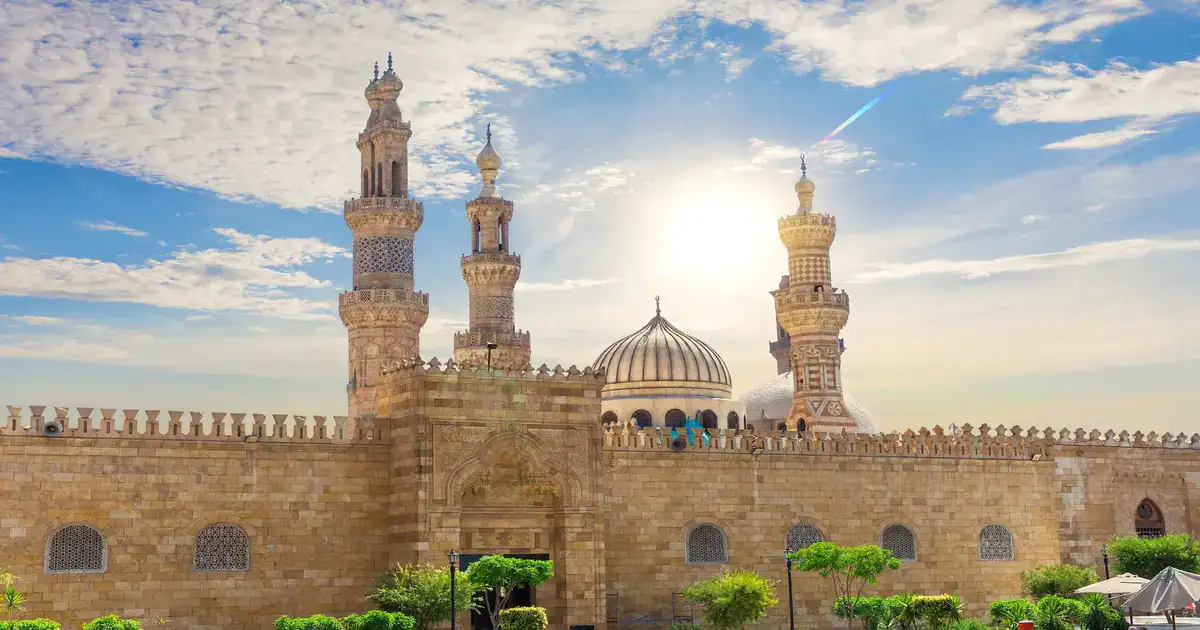
From a distance, the skyline of Islamic Cairo is punctuated by slender minarets. Among them, those of Al Azhar Mosque Cairo stand out immediately.
The Courtyard and Prayer Hall
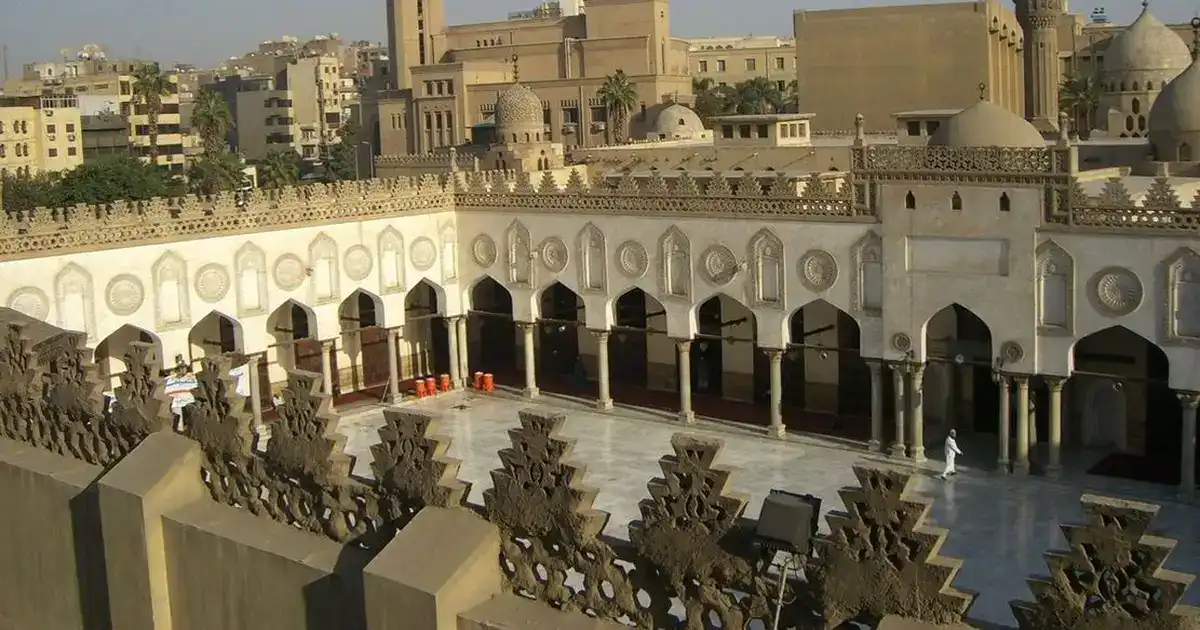
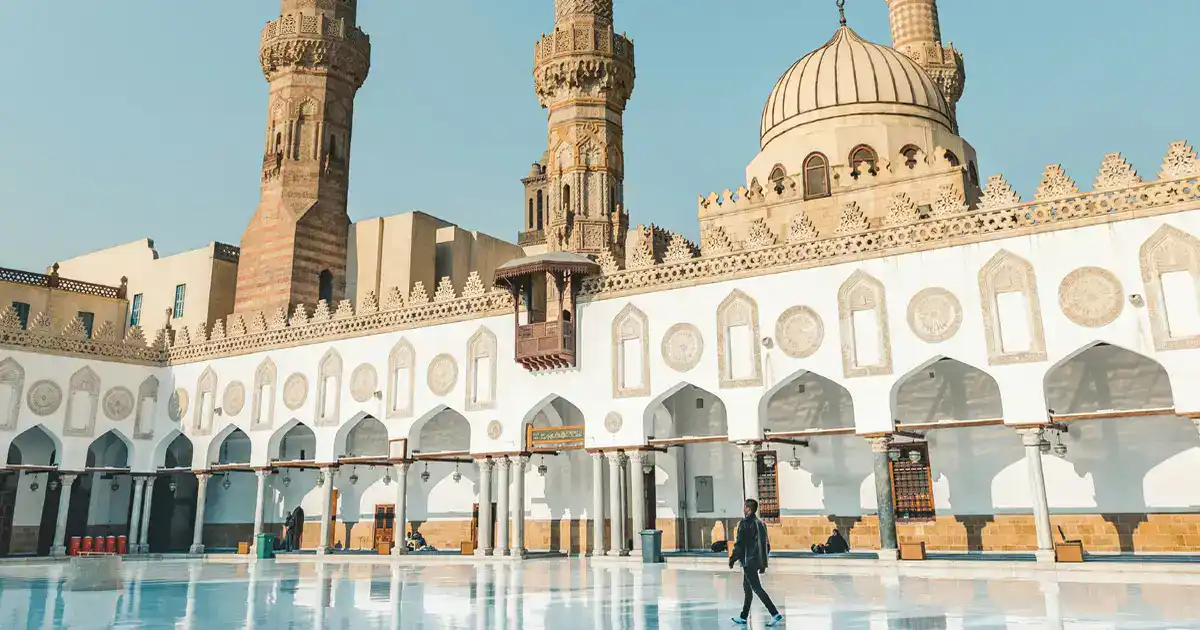
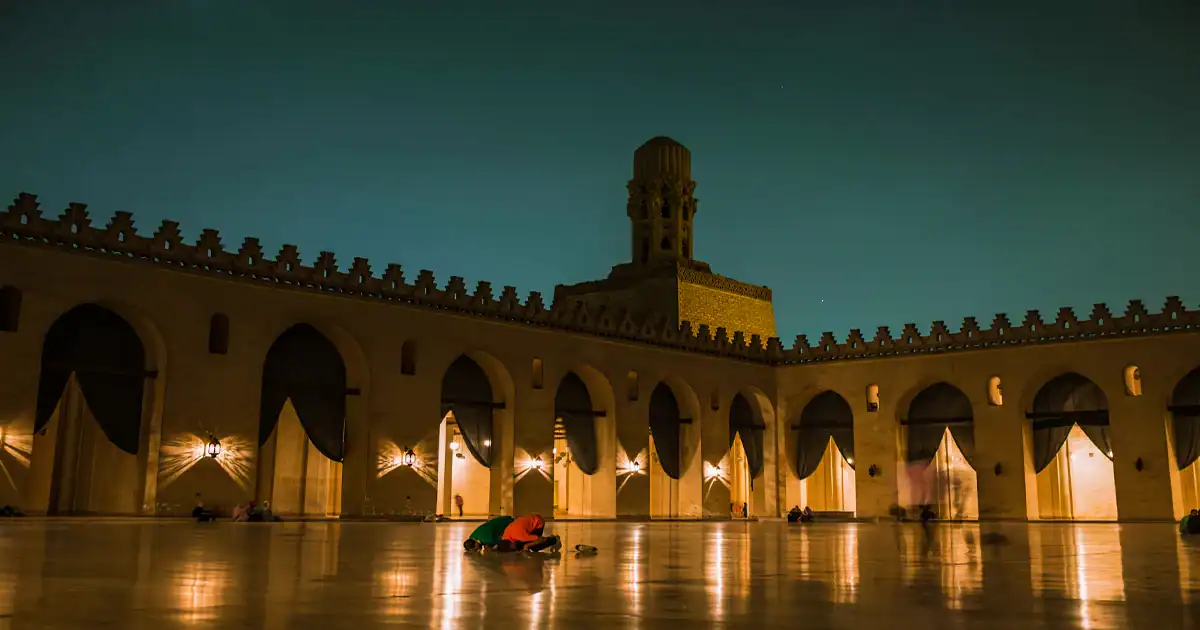
Visitors typically enter through a narrow historic street before emerging into a spacious marble courtyard.
The contrast is striking.
Surrounded by elegant arcades, the courtyard provides a calm refuge from the bustle of Cairo outside.
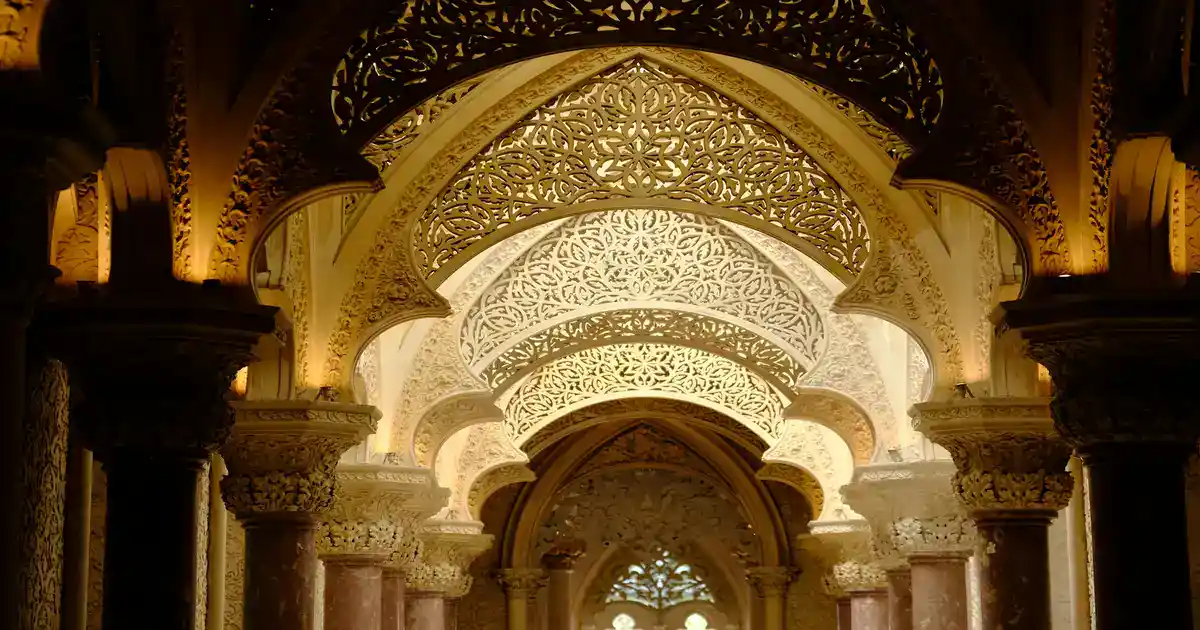
Inside the prayer hall, rows of columns and arches stretch across the space, forming a rhythmic architectural pattern typical of classical Islamic design.
Sunlight filters through the arches, illuminating centuries-old calligraphy and subtle decorative details.
The Famous Minarets of Al Azhar Mosque Cairo
One of the most distinctive features of al azhar mosque cairo egypt is its collection of five minarets.
Each reflects a different architectural era.
Some date to the Mamluk period, while others were added later during Ottoman restoration works.
Together they create a layered skyline that mirrors Cairo’s own history.
Architectural Details Worth Noticing
Look closely while exploring the mosque and you’ll notice delicate carvings, geometric stonework, and intricate wooden screens.
These details embody centuries of Islamic artistry.
For architecture enthusiasts, the mosque provides a rare opportunity to observe several periods of Islamic architecture within a single structure.
More historical architectural details can be explored on Wikipedia documentation for the mosque.
The Spiritual and Educational Role of Al Azhar Mosque
Despite welcoming visitors from around the world, the mosque remains deeply connected to daily religious life in Cairo.
Al Azhar University and Global Influence
Few educational institutions have influenced Islamic thought as profoundly as Al-Azhar.
The university has produced scholars, jurists, and religious leaders for centuries.
Its influence extends far beyond Egypt, shaping religious discourse across the Muslim world.
Even today, the mosque courtyard often hosts small groups of students studying classical texts under the guidance of teachers.
Religious Life at Cairo Mosque Al Azhar
Five daily prayers structure the rhythm of life here.
At prayer time, locals quietly gather beneath the arches. The atmosphere shifts instantly—from historic monument to living spiritual center.
Visitors are welcome to observe respectfully.
Experiencing cairo mosque al azhar during prayer time offers a glimpse into the spiritual heart of the city.
Visiting Al Azhar Mosque Cairo: What Travelers Should Know
For travelers exploring Islamic Cairo, visiting this historic mosque is surprisingly easy.
Opening Hours and Entry Tips
Unlike many historic landmarks, Al Azhar Mosque is free to enter.
Visitors can typically explore the courtyard and outer prayer halls outside of prayer times.
Guided visits through curated Egypt Day Tours often include historical explanations that greatly enrich the experience.
Dress Code and Cultural Etiquette
Because it is an active mosque, modest clothing is required.
For women, covering shoulders, arms, and legs is recommended. Men should avoid shorts.
Visitors should also remove their shoes before entering prayer areas.
Respectful behavior ensures that everyone can enjoy the space peacefully.
Best Time to Visit
Early morning or late afternoon offers the most atmospheric experience.
The soft light highlights the mosque’s architectural beauty while the surrounding streets remain lively but manageable.
Photographers especially appreciate the golden hour light illuminating the courtyard arches.
What to See Around Al Azhar Mosque
The mosque sits within one of Cairo’s most fascinating historic districts.
Historic Islamic Cairo Highlights
Just a short walk away, visitors can explore centuries-old madrassas, mosques, and medieval streets.
This district forms the heart of Historic Cairo, a UNESCO World Heritage Site.
Exploring on foot reveals hidden architectural treasures around nearly every corner.
Khan El Khalili and Surrounding Landmarks
One of Cairo’s most famous markets lies only minutes away.
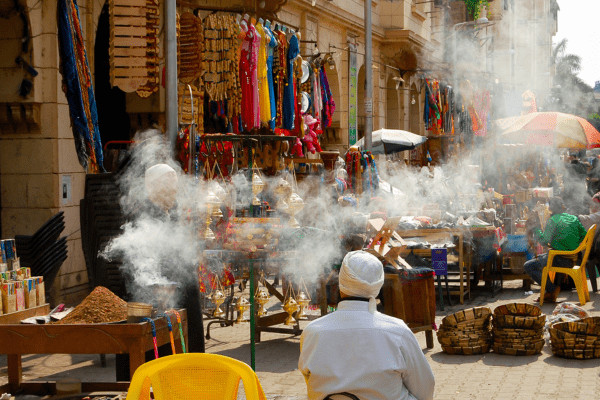
The legendary bazaar of Khan el‑Khalili is a labyrinth of spice shops, jewelry stalls, and traditional cafés.
Many visitors combine the mosque with a walk through the market for a full cultural experience.
Guided itineraries within Cairo Day Tours often link these sites into one seamless exploration of Islamic Cairo.
Conclusion
Few landmarks capture the essence of Cairo as powerfully as Al Azhar Mosque. For over a thousand years, it has stood as a beacon of faith, learning, and architectural beauty in the heart of the city.
Visitors come for the history and stay for the atmosphere—the quiet courtyard, the elegant minarets, and the sense of stepping into a place where centuries of scholarship unfolded.
If you’re planning a journey through Egypt’s capital, make sure Al Azhar Mosque Cairo is part of your itinerary. Guided cultural experiences through Egypt Day Tours can help you explore the surrounding historic districts while uncovering the deeper stories behind this extraordinary monument.
Al Azhar Mosque-FAQ
1. Where is Al Azhar Mosque located?
Al Azhar Mosque is located in Islamic Cairo near the historic Khan El Khalili market. It sits at the heart of one of the city’s most important historic districts.
2. Is Al Azhar Mosque free to visit?
Yes, visitors can enter the mosque free of charge. However, joining guided Cairo Day Tours can provide valuable historical context.
3. What is Al Azhar Mosque famous for?
The mosque is famous for its role as a global center of Islamic learning and for housing one of the world’s oldest universities.
4. What should visitors wear when visiting the mosque?
Visitors should wear modest clothing covering shoulders and knees. Shoes must be removed before entering prayer areas.
5. How long should I spend visiting Al Azhar Mosque?
Most travelers spend around 30–60 minutes exploring the mosque and its courtyard, though combining it with nearby historic attractions can extend the visit.